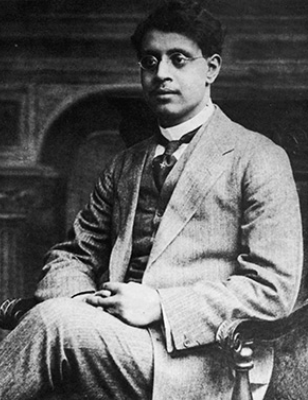
Sukumar Ray (1887-1923), a luminary in Bengali literature, graced the literary world during the late 19th and early 20th centuries with his unique blend of wit, humor, and poetic brilliance. Born into a family steeped in literary tradition, Ray inherited a legacy that would see him become a renowned poet, writer, and illustrator in his own right.
Sukumar Ray embarked on his academic journey at the prestigious Presidency College in Kolkata and later pursued higher education at the University of London in England. During his time abroad, he immersed himself in the study of fine arts, linguistics, and literature. The Western humor and literary traditions he encountered played a pivotal role in shaping his distinct brand of humor.
Upon his return to India, Sukumar Ray wholeheartedly embraced his creative calling, leaving an indelible mark as a poet, writer, and illustrator. His magnum opus, “Abol Tabol” (1923), remains a masterpiece of nonsense literature that continues to enchant readers of all ages. Filled with bizarre characters, whimsical rhymes, and satirical critiques of contemporary society, “Abol Tabol” stands as a timeless classic in Bengali literature.
Tragically, Sukumar Ray’s promising literary journey was abruptly cut short when he passed away at the tender age of 35, on September 10, 1923. Nevertheless, his legacy endures through his writings, which continue to evoke joy and laughter across generations. His talent for infusing humor with keen social observations and his gift for wordplay have established him as an enduring literary figure in Bengali literature.
The following two poems, “Baburam the Snake Charmer” and “Uncle’s Invention,” are examples of Ray’s unique literary talents.
Baburam the Snake Charmer
Hullo, there Baburam – what have you got in there?
Snakes? Aha – and do you think there’s one that you could spare?
You know, I’d love to have one, but let me tell you this–
The ones that bite aren’t right for me – nor the ones that hiss.
I’d also skip the ones that butt
As well the ones that whistle
Or the ones that slink about,
Or show their fangs, or bristle.
As for eating habits, I think it would be nice
To go for ones that only take a meal of milk and rice.
I’m sure you know the kind of snake I want from what I’ve said,
Do let me have one, Baburam, so I could bash its head.
Uncle’s Invention
Chandidas’s uncle has invented a device
Which is causing everyone to praise it to the skies.
When Uncle was a year old, or maybe even younger,
He came out with a lusty yell that sounded just like ‘Goonga.’
At such an age most other tots just manage ‘Glug’ and ‘Mum,’
So ‘Goonga’ like a thunderbolt, struck everybody dumb.
And all who heard, said ‘Here’s a boy – provided he survives—
Will one day surely bring about a change in human lives.’
It seems the day is here at last, and victory is won
With what will make a five-mile walk seem like only one.
I’ve seen the contrivance myself and say with confidence,
Never had invention had such greater significance.
Let me tell you how it strikes the eyes of a beholder:
First of all, one notes that you must strap it to your shoulder.
An arm extends, and from its end one notes there hangs a hook
To which you bait some food – stuff which you either buy or cook.
Naturally the choice depends upon you predilections
(It’s wiser to restrict yourself to hookable confections).
The sight of morsel dangling close provokes the urge to eat
Which, transcribed to your motive force, soon propels the feet.
Before you know you’re on the go, your mind, intent on feeding,
But since the food is travelling too you never stop your speeding.
The outcome, I need hardly add, will change our whole existence,
Because we’ll walk for nourishment, and never mind the distance.
No wonder there’s a move afoot to honor Uncle soon
For bestowing on humanity an everlasting boon.

 Sparks of Calliope