Walter Gretzky died two days before my Dad. They were both born in 1938. Other than that, they had almost nothing in common.
My Dad and me also had very little in common except our first names and our last
the propensity to drink as a means of dealing with anxiety and a deep and abiding love in Jesus Christ.
My childhood was a hopeless struggle, founded on pleasing my Dad, protecting my Mom and becoming the next Wayne Gretzky.
My Dad was deeply damaged. He was torn between trying to save us from this damage and sharing how it felt.
Finally, we became a family, found the courage to leave the source of our abuse.
I started to live my life and make my own mistakes and then, eventually, become sane.
Decades later, after a few vain attempts to make peace I found out my Dad was very ill.
I couldn’t go see him. In the times of Covid, 5 provinces away it just wasn’t possible.
From decades gone by the distance may as well have been a million miles, even in the same room.
My Dad died. The pain he felt and the pain he inflicted cannot be reconciled.
I never got to tell him how much he hurt me. I never got to say I forgave him. I never got to say goodbye.
“Ode to My Dad” first appeared in Canadian Stories.
Patrick Connors charted on the Toronto Poetry Map with his first chapbook, Scarborough Songs, released by Lyricalmyrical Press in 2013. Other publication credits include: The Toronto Quarterly, Spadina Literary Review, Sharing Spaces, Tamaracks, and Tending the Fire. His first full collection, The Other Life, was released in 2021 by Mosaic Press. His new chapbook, Worth the Wait, was released this Spring by Cactus Press. You can follow him on X, Instagram, or Facebook.
My mother taught me to stew fruit. To core and peel. Add raisins. A bit of brown sugar, cinnamon. Simmer till soft.
For this family treat, she used mostly blemished fruit, apples and pears she deemed perfectly good, save for a few brown spots.
At my own counter, paring knife in hand, I remember Mom in her green Formica kitchen humming while she sliced the bruises off battered fruit, never doubting for a moment she could make something sweet with whatever was left.
Before You Needed a Chair in the Shower
We often spent Sunday afternoons at scenic spots. We liked those sprawling parks, created from old estates with grand houses and grounds.
Now I leave you home when I drive away with my neighbor Shelley, already widowed.
You couldn’t navigate this leaf-covered trail with your cane. While I can still step quickly uphill, over exposed tree roots.
Shelley, cheerful beside me, suggests a stop after our walk at the market down the road, the kind of place we would have visited before your first trip to the ER.
Returning to the car, I think of your stammering steps from couch to table, the groaning effort to sit back down in a chair, and wish it wasn’t so painful to mention how much we both miss what we used to do together.
Jacqueline Jules is the author of Manna in the Morning (Kelsay Books, 2021) and Itzhak Perlman’s Broken String, winner of the 2016 Helen Kay Chapbook Prize from Evening Street Press. Her poetry has appeared in over 100 publications including The Sunlight Press, Gyroscope Review, and One Art. She is also the author of two poetry books for young readers: Tag Your Dreams: Poems of Play and Persistence. (Albert Whitman, 2020) and Smoke at the Pentagon: Poems to Remember (Bushel & Peck, 2023). Visit www.jacquelinejules.com.
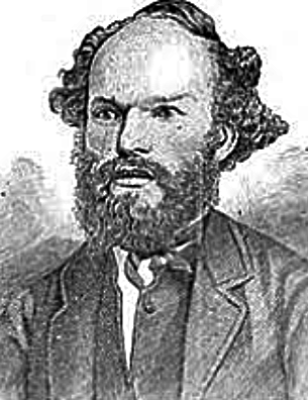
Everyone has certain things to be thankful for which come to mind around this time of year, and were Scottish born Canadian poet James McIntyre still alive, his might be achieving immortal literary fame despite being named by some critics as “The Worst Poet in History.”
James McIntyre (1828-1906) was a 19th-century Canadian poet, famously known as the “Cheese Poet” due to his unconventional choice of subjects for his verses. Born in Forres, Scotland, McIntyre emigrated to Canada in 1841, settling in Ingersoll, Ontario, where he worked as a stonemason.
Despite lacking formal education, McIntyre possessed a keen interest in poetry. His poetic endeavors gained recognition when he began composing verses that celebrated the dairy industry, particularly his ode to cheese. McIntyre’s light-hearted and whimsical poems often centered around everyday life, nature, and his surroundings.
One of his most well-known works, “Ode on the Mammoth Cheese,” humorously pays homage to a mammoth cheese produced in Ingersoll. McIntyre’s verses, characterized by their playful and sometimes satirical tone, garnered him local fame, earning him the title of the “Cheese Poet.”
While McIntyre’s poetry may not have been embraced by literary elites of his time, his work resonated with the ordinary people of Ontario. His poems were published in local newspapers, contributing to his popularity in the region. Despite the seemingly mundane nature of his chosen themes, McIntyre’s poems reflect a genuine love for his community and a unique perspective on the world around him during his lifetime.
James McIntyre’s legacy endures as a charming and eccentric, though not overly-talented, figure in Canadian literary history. His ability to find inspiration in the everyday, even in the humble cheese, sets him apart as a poet who celebrated the ordinary in an extraordinary way. McIntyre’s unconventional approach to poetry has perhaps left an indelible mark, ensuring that he is remembered not only as the “Cheese Poet” but also as a distinctive voice in the rich tapestry of Canadian literature.
Below are a couple examples of McIntyre’s odes.
Thanksgiving Ode, November 15, 1888
September came and with it frost The season’s pasture it seemed lost, And the wondrous yield of corn Of its green beauty it was shorn.
Frost it came like early robber, But gentle rains came in October, Which were absorbed by grateful soil; With green once more the pastures smile.
And cows again are happy seen Enjoying of the pastures green, And flow of milk again they yield From the sweet feed of grassy field.
And we have now a fine November, Warmer far than in September; The apple, which is queen of fruits, Was a good crop and so is roots.
The rains they did replenish springs, And it gratitude to each heart brings, When we reflect on bounteous season, For grateful feelings all have reason.
Ode on the Mammoth Cheese
Weight over seven thousand pounds.
We have seen thee, queen of cheese, Lying quietly at your ease, Gently fanned by evening breeze, Thy fair form no flies dare seize.
All gaily dressed soon you’ll go To the great Provincial show, To be admired by many a beau In the city of Toronto.
Cows numerous as a swarm of bees, Or as the leaves upon the trees, It did require to make thee please, And stand unrivalled, queen of cheese.
May you not receive a scar as We have heard that Mr. Harris Intends to send you off as far as The great world’s show at Paris.
Of the youth beware of these, For some of them might rudely squeeze And bite your cheek, then songs or glees We could not sing, oh! queen of cheese.
We’rt thou suspended from balloon, You’d cast a shade even at noon, Folks would think it was the moon About to fall and crush them soon.
The informational article above was composed in part by administering guided direction to ChatGPT. It was subsequently fact-checked, revised, and edited by the editor. The editor/publisher takes no authorship credit for this work and strongly encourages disclosure when using this or similar tools to create content. Sparks of Calliope prohibits submissions of poetry composed with the assistance of predictive AI.
Broken wing and cowering beside the ancient door While hollow echoes oscillate the empty chime within Concrete eyes of living death unable to explore The mystery that lies between intention and begin
Once young now in between the thread of life and mystery Of hands that held the fire’s tongue now singed and cooled apart The bell between chimes hollow still into an empty sea Of lifeless space, abandoned halls, the chambers of the heart
The shade within, the black beneath is comfort from the light Of life and scars and broken vows escorted through the noise Of busy days with concrete eyes unable to ignite A heated beat of pulsing veins and all hedonic joys
A scentless world of stone and shade and unacknowledged wrongs Of lust unlived and songs unsung for hollow vows to keep For sterile haunts of hallowed halls and abstinence prolonged Safety from unveiling bright where naked hungers steep
And now it comes, the door unlatched of final mystery What if? Her taste unknown escapes in final injury
Broken Wall
it took such effort of will to pull down this wall to meet you where you were to elevate my affections to equal yours
and now I stand beside the broken wall and carry these heavy affections that you once shared, only to find that I follow you in the cold and at a distance
A. G. Elrod is a Lecturer of English in The Netherlands university system and a PhD candidate in the Digital Humanities.
In troubled times of bleak divide
Where icy rifts grow twice as wide,
To gather is the gift that brings
A blast of warmth from blissful things
No earthly soul should be denied.
To toast and chat sat side by side
With feasting kin all unified
In thanks will give the spirit wings
In troubled times.
Just as the moon’s bloom turns the tide,
Just as the sun-soaked swallows glide,
Just as the dawn-kissed choir sings,
We’ll dine like kings as laughter rings
And hopes and highs and hearts collide
In troubled times.
Susan Jarvis Bryant is originally from England and now lives on the coastal plains of Texas. She has poetry published in a variety of places. Susan is the winner of the 2020 International SCP Poetry Competition and was nominated for the 2022 Pushcart Prize.
I have you leaning up against my side,
Our boys and girls around us on the couch.
Below the window, watching from outside,
Our younger selves, age twelve, crawl up and crouch.
The boy and girl each took a time machine,
The dial set to travel here today.
We met below that window, saw this scene,
And learned that you would be my wife someday.
The woman here whose head leans next to mine
Was also she who you’d grow up to be.
Our older selves thus showed the clearest sign:
No need to ask you, “Will you marry me?”
Back home, they’ll seek each other out and meet,
And here we are—the circle’s now complete.
Back to Sleep
In very early years, now far behind,
When I returned to earth at midnight deep
From nightmare scares within my frightened mind,
My mother rocked and sang me back to sleep.
I hid in bed from monster and from man
As blackened shadows seemed to slowly creep,
But once I finally to her bedroom ran,
My mother rocked and sang me back to sleep.
No sounds outside from people, beasts, or cars,
Her voice and arms would soothe me as I’d weep;
I saw her by the light of moon and stars—
My mother rocked and sang me back to sleep.
The happiest of moments in this was
When I collapsed into a sleeping heap,
Contented, safely dreaming, all because
My mother rocked and sang me back to sleep
“Younger Selves” and “Back to Sleep” were originally published by The Society of Classical Poets.
Joshua C. Frank works in the field of statistics and lives near Austin, Texas. His poetry has also been published in TheSociety of Classical Poets, Snakeskin, Atop the Cliffs, and The Asahi Haikuist Network, and his short fiction has been published in Nanoism.
The tall candles were throwing flickering pieces of light on the windows of the old house when I heard her voice whispering to me in a dream song. I saw a faint image of her face echoing in the candles’ flames, as raindrops tinted the windows with a mist. I had thought that the many years would have erased a sense of her soft touch and faded her visions that had encompassed my being for so long, allowing me to begin anew after the hollow years, but it was not to be so. The cruel clown in my mind, with his gaping painted mouth and his kohl eyes leering at me, caused me to ponder on all the fading memories of our togetherness, and then I wept.
Secret Memories
Wandering thoughts awakened by dawn’s incoming apricot mist, crept silently into the kitchen shadow of the old farmhouse, while I sat in dawn’s early hours sipping pekoe tea, and delving into all the precious memories only I can see. Softly silently My mind soars up peacefully visions of soft memories
James G. Piatt lives in Santa Ynez, California, with his wife Sandy, and a dog named Scout. He is a twice Best of The Net nominee and a four-time Pushcart nominee. His Poem, “Teach Me,” published by Long Story Short, was selected as its poem of the year in 2014, and he was chosen as the featured poet in publications eleven times. He has had five poetry books, The Silent Pond, Ancient Rhythms, LIGHT, Solace Between the Lines, and Serenity, over 1790 poems, five novels, and forty short stories published in scores of national and international literary magazines, anthologies, and books, He earned his doctorate from BYU, and his BS and MA from California State Polytechnic University, SLO.
Comes the tiger, comes the fear. Cannot show it; brandish spear. Icy fingers rise below Strum my heartstrings; keep breath slow.
I’m his dinner, run or lose Does not matter how I choose. Frenzied woman, boy, two girls Hunker down as clash unfurls.
Must look fearless lest they run. He would chase them, she’d be done; Hurl herself into his maw. Kids reach safety down the draw.
“When I rush him you all run” Softly, calmly, “and my son, If I die you must be brave. You’ve a family to save.”
I’ll engage him, they’ll run clear. “Run!” I yell and hoist my spear Scream and charge him, unlike prey. Tiger turns and runs away.
General “Mad” Anthony Wayne
(Eponym of Fort Wayne, IN; Wayne County in IN, MI, OH, MO; Waynesville in MO; et al.)
It’s not true. We were never taught to hate him. OK sure, we knew about him and we certainly didn’t admire him. But it is, as they say: “Nothing personal, just business”.
We kids heard all the old stories from Aunt Bess in Oklahoma. How he thrust Northward but failed then fell back to build Recovery.
Our people gave him a fit; for years we stymied him out-fought him, out-talked him. Our Miami Tribe and Nation gave him a great deal of trouble and set back.
But we never called him “mad”. We didn’t think of him as crazy. Well, not anymore so than the rest of you white eyes. It was you who gave him that name “Mad”. You see a difference we cannot.
He had the same lunacy
you all have.
Land is your booze–
you thirst for it.
So we stuffed your mouths
full of dirt
after we killed you.
Dean Z. Douthat is a retired engineer residing in a senior living facility in Ann Arbor, Michigan. His 3rd great grandfather was Little Turtle, Chief of the Miami Tribe, who headed a confederation of tribes that offered great resistance to the US taking over their territories, including much of Indiana and Ohio and the southern part of Lower Michigan. Little Turtle was finally defeated in 1794 at the Battle of Fallen Timbers and signed the Treaty of Fort Greenville in 1795.
Man can hardly count the generations past, since your great monument first dwarfed the land. To mortal man whose days are passing fast your growing hours are numerous grains of sand; yet by our God made hands, your walls were cast, and we made in the image of the One have met the dust, while you stand tall and grand, with age much closer to the ancient sun, than we who join the race, but briefly run.
Flowers
2024 Pushcart Prize Nominee
No bride could steal more awed and envying eyes, than your jewelled garb and brightly petalled shades. No scent brings on more searching suitors, nigh. Whom better serves a maiden’s hair array? What hue was not conceived that God bequeathed, so you may festoon all the meadow’s green? Through bees your dust of virile, rampant seed spreads blooms around the banks of lulling streams. Shy lover’s hearts are snatched and then unveiled by the piercing beauty of your dainty hand. What summer scene, in winter’s more bewailed, than where your striking splendour sprouts and stands? No pleasanter a look or fragrance, reigns, when your majestic bouquet sweeps the plains.
Gary Borck is from the UK and teaches in China. He loves to read and write poetry, (attempt to) write novels, and ramble in natural surroundings. Several of his poems have appeared in Grand Little Things and the Society of Classical Poets.
I’m glad we have this chance to chat, now, before my parents move in for the rest of their lives. There are things you need to know.
Frankly, they may not be easy to get along with. Toast, for example, the making of it, you see, for some reason very important—how brown, how hot, just when. Essential things like that.
Remembering past trips, too, can be irritating, the details—which hotel, in Warsaw, for God’s sake, where they first heard my sister would divorce her first husband, and just where that great Dutch cheese place was, there, in the mauve photo album, a few pages after me in a tux, the wedding.
They will tell you how they miss all those rooms in the house where they lived for forty years this Wednesday, coincidentally, my mother’s eighty-first birthday.
And whenever your ‘foreign’ gardeners mow and trim the prim edges of this emerald lawn my parents will tell you how they dream about their yard—all that grass, the matured maples, the hedge of lilacs defining the lot line out back.
You also need to know that you were not their first choice. They wanted the model with the sunroom like their porch, to be closer to the clubhouse, the workshop. But they were told that could take another couple of years, maybe three or four or more, and, as Mom puts it, at this point they can’t gamble, what with Dad likely going totally blind at any time, and her just not able to be their eyes and legs, both, here, in a whole new place.
“Man to Man with the Folks’ New Condo” first appeared in Tipton Poetry Journal.
For Therapy, I Mix Metaphors
From a frozen wedge of machine-split pine, tossed on this settling fire, one frayed, martyred fiber curls back and away like a wire, then flares, a flame racing the length of a fuse. Imagine this my innermost strand, a barely-dirt two-track off Frost’s road less traveled, a thin, trembling thread of desire, the uncharted blue vein of a tundral highway. Or in some dread cloister it dreams, and a sillier spirit suddenly moves— like four fresh fingers over flamenco frets, like dumb elegance uttering Old Florentine, never meaning one of its crooning words. It might dance—Tejano, Zydeco, any twenty Liebeslieder Waltzes, any juking jumble of a barrel-house blues—wherever arose an arousing tune, the thrum of a Kenyan’s drumming, the merest notion of Motown soul. I do know: there must be this lost but lively cord, an original nerve, perhaps abandoned, or jammed as if into an airless cavity of my old house. It waits, to spark, to catch, its insulated nest punctured by the stray tip of a driven nail. It craves some risky remodeling, that annoying era of air compressor, plaster grit, dumpster, and the exuberant exhalation of ancient dust.
“For Therapy, I Mix Metaphors” originally appeared in Lost Enough.
D. R. James, a year+ into retirement from nearly 40 years of teaching college writing, literature, and peace studies, lives, writes, and cycles with his psychotherapist wife in the woods near Saugatuck, Michigan. His latest of ten collections are Mobius Trip and Flip Requiem (Dos Madres Press, 2021, 2020), and his prose and poems have appeared internationally in a wide variety of print and online anthologies and journals.
 Sparks of Calliope