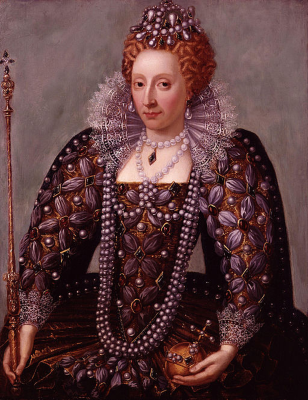
Elizabeth I, Queen of England and Ireland from 1558 to 1603, made significant contributions to English poetry during the Renaissance era. Her reign is often referred to as the Elizabethan Age, a period marked by flourishing arts and culture. Elizabeth I herself was not only a political figure but also a patron of the arts, supporting and influencing the literary endeavors of her time.
One of the notable aspects of Elizabeth’s impact on poetry was her support for poets at her court. She surrounded herself with a circle of talented writers, including some of the most celebrated poets of the period such as Sir Philip Sidney and Edmund Spenser. The court became a vibrant hub for literary activity, fostering creativity and innovation in poetry.
Elizabeth I also played a role as a poet herself. She was well-educated and fluent in multiple languages, allowing her to engage in literary pursuits. Her own works, often written in Latin, French, and English, showcased her intellect and poetic prowess. Her poem “On Monsieur’s Departure” is a poignant exploration of love and loss, reflecting the complexities of her personal life.
Moreover, Elizabeth I’s reign witnessed the rise of the Elizabethan sonnet tradition. The sonnet, a fourteen-line poetic form, gained popularity during this era, and poets like Sir Philip Sidney and William Shakespeare made significant contributions to its development. Elizabethan sonnets often explored themes of love, beauty, and nature, reflecting the intellectual and emotional richness of the time.
Elizabeth I’s influence extended beyond her lifetime, as her patronage and support laid the groundwork for the flourishing of English literature in the subsequent Jacobean era. The cultural and literary legacy of the Elizabethan Age endured for centuries, shaping the trajectory of English poetry.
In summary, Elizabeth I’s contribution to English poetry was multifaceted. As a patron of the arts, she created a nurturing environment for poets at her court. Additionally, her own poetic endeavors and the cultural milieu she fostered contributed to the vibrant literary landscape of the Elizabethan Age, leaving an indelible mark on English poetry.
Two of Elizabeth’s better known poems can be read below.
On Monsieur’s Departure
I grieve and dare not show my discontent,
I love and yet am forced to seem to hate,
I do, yet dare not say I ever meant,
I seem stark mute but inwardly do prate.
I am and not, I freeze and yet am burned,
Since from myself another self I turned.
My care is like my shadow in the sun,
Follows me flying, flies when I pursue it,
Stands and lies by me, doth what I have done.
His too familiar care doth make me rue it.
No means I find to rid him from my breast,
Till by the end of things it be supprest.
Some gentler passion slide into my mind,
For I am soft and made of melting snow;
Or be more cruel, love, and so be kind.
Let me or float or sink, be high or low.
Or let me live with some more sweet content,
Or die and so forget what love ere meant.
When I Was Fair and Young
When I was fair and young, then favor graced me.
Of many was I sought their mistress for to be.
But I did scorn them all and answered them therefore:
Go, go, go, seek some other where; importune me no more.
How many weeping eyes I made to pine in woe,
How many sighing hearts I have not skill to show,
But I the prouder grew and still this spake therefore:
Go, go, go, seek some other where, importune me no more.
Then spake fair Venus’ son, that proud victorious boy,
Saying: You dainty dame, for that you be so coy,
I will so pluck your plumes as you shall say no more:
Go, go, go, seek some other where, importune me no more.
As soon as he had said, such change grew in my breast
That neither night nor day I could take any rest.
Wherefore I did repent that I had said before:
Go, go, go, seek some other where, importune me no more.

 Sparks of Calliope
You’ve come back strong from the fraud, Randall – this is an excellent post and fascinating to see how the Elizabethans, including Elizabeth herself, were all such patterning wordsmiths. It can seem artificial, but in the hands of masters (and in the C20th what could be more ‘patterned’ than Do Not Go Gentle into that Good Night?) it produces poetry so superior to all the free verse twaddle tries to pass for ‘meaningful’! Great to see this. Thanks.
LikeLiked by 1 person