Two Poems by Peter J. King

A Fall Can Be a Little Thing

A fall can be a little thing
When bones are young and blood is thick —
Hardly noticed in your Spring
A fall can be.

          But time will play its usual trick:
          Your body struggles to take wing,
          Your mind still thinks itself a chick,

And when you walk, your arms aswing,
Disdaining a supporting stick,
You find how dangerous a thing
A fall can be.


Bedtimes

The pleasure gained from getting into bed,
          Relaxing into softness with a sigh,
          When I was young came only once a night,
And then oblivion till darkness fled.

But now thrice nightly I am forced to tread
          The path to loo and back to where I lie —
          An aging bladder serves to multiply
The pleasure gained from getting into bed.


Peter J. King, born and brought up in Boston, Lincolnshire, now lives in the Oxfordshire Cotswolds. He has been widely published in journals and anthologies; his latest collection is Ghost Webs (The Calliope Script). Aside from his own poetry, he also translates, mainly from modern Greek (with Andrea Christofidou) and German, writes short prose, and paints.

Two Poems by David D. Horowitz

Substance

Let every spammer, crook, and scammer
Purvey false images of glamor,
I still won’t trust them. To be sure,
No person’s perfect, godly, pure,
But honesty and truth still matter
Far more than sales from phony patter.
Snake oil sells, but truth’s the cure.


Talk is Cheap

As shadows coat the warehouse, pit bulls bark
Behind steel, padlocked, folding safety gates;
Spike-peaked rail fence; surveillance cams; barbed wire;
Chain-closed-off parking lot. One crazy spark
Could conflagrate into a block-long fire
Where every pair of eyes already hates.

Work here, compassion, in the cold and dark.


David D. Horowitz founded and manages Rose Alley Press, through which he has published eighteen titles, including his latest poetry collection, Slow Clouds over Rush Hour. His poems have appeared in many journals and anthologies, including Raven Chronicles, Better Than Starbucks, The Lyric, Coffee Poems, and Light. His essays regularly appear in Exterminating Angel. David frequently organizes and hosts poetry readings in the Seattle area, where he lives. Visit www.rosealleypress.com.

Two Poems by Shamik Banerjee

The Garden

Dense boughs and variegated blooms
    That well-festooned a garden
Are dying as November births
    Pellucid forms that harden
On them, my attic's roof, and grass.
   
Now every morning when I pass
    This place, once deeply green,
A stark, white blandness greets my eyes;
    No colour's to be seen.
But still, I thank the gardener who,

With high élan, prepared the view
    For all to like last spring.
He knows: next April, once again,
    This fertile spot will bring
Fresh leaves and blossoms like before.

I step into the garden's door
    Located in my heart
And wish to plant sweet buds of love
    For those now far apart—
Shunned kindred and deserted friends—

So when my wintertime ascends
    And I begin to harden,
Watching my frame, they'll think about
    The joy drawn from this garden
Whose soil will never yield again.


Black and White

The happy wind was singing to
September’s maiden day;
The friendly Sun was clinging to
The hillcrest and the bay;
And man with his assertive crown,
Proceeded through this vibrant town;
No hurdle clogged his way.

The girls were lowly chunnering,
And boys were raucous, yelling;
The pink-tinged clouds were colouring
The heaven’s vault, their dwelling;
But not one being, large or small,
Had the minutest clue at all
What rainfrogs were foretelling.

At noon, a bellow from the skies
Alarmed the birds in flight,
The spendthrift shoppers’ sated eyes
Shrank low from shock and fright;
Each shuffling soul then rushed to find
A roof or shelter of some kind;
The day appeared as night.

But far away, that leaden clime
Perked up the rural men,
Their fields lay bare all summertime—
No raindrops fell since then;
But those oppressive days had flown,
The fields were wet, their faces shone,
And life revived again.

How strange and polar nature is,
How magical its plan!
How orderly it metes out bliss,
And hopelessness to man!
Just as it did to us that day:
With its stormy onrush turned one gay,
And turned the other wan.

“Black and White” first appeared in Westward Quarterly.


Shamik Banerjee is a poet from India. His poems have been published in Sparks of CalliopeThe HypertextsLighten Up OnlineWestward Quarterly, and Disturb The Universe.

Two Poems by John Milton

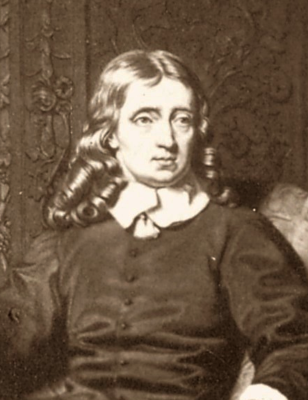
John Milton (1608-1674)

John Milton (1608-1674) was a towering figure in English literature, best known for his epic poem Paradise Lost. Born in London to a prosperous scrivener, Milton received an exceptional education, attending St. Paul’s School and later Christ’s College, Cambridge. His deep classical knowledge, coupled with a fervent religious belief, profoundly shaped his literary and political career.

Milton’s poetry is marked by its rich language, intellectual depth, and complex themes, often exploring human existence, divine justice, and individual liberty. Paradise Lost, published in 1667, stands as his magnum opus and one of the greatest works of English literature. The epic poem recounts the biblical story of the Fall of Man, delving into themes of free will, obedience, and the nature of good and evil. With its grand style and powerful blank verse, Paradise Lost not only reflects Milton’s mastery of classical epic conventions but also his innovative approach to poetic form and narrative.

In addition to his literary achievements, Milton was deeply involved in the political and religious upheavals of 17th-century England. A staunch Puritan and republican, he served as a civil servant under Oliver Cromwell’s Commonwealth and wrote several influential pamphlets advocating for freedom of speech, press, and divorce, most notably Areopagitica (1644). His political writings reflect his commitment to individual rights and a deep suspicion of tyranny in all its forms.

Milton’s later years were marked by personal and physical hardship. He became completely blind in 1652, yet continued to write and dictate his works, producing Paradise Regained and Samson Agonistes in his final years. Despite his blindness, Milton’s literary vision remained clear, his works continuing to inspire readers and writers with their exploration of the human condition, freedom, and divine justice. His influence can be seen in the works of later poets and thinkers, securing his place as one of the most important voices in English literature.

While Milton was most famous for his epic Paradise Lost, he wrote shorter poems such as these as well:


An Epitaph on the Admirable Dramatic Poet W. Shakespeare

What needs my Shakespeare for his honored bones
The labor of an age in piled stones?
Or that his hallowed reliques should be hid
Under a star-ypointing pyramid?
Dear son of Memory, great heir of Fame,
What need’st thou such weak witness of thy name?
Thou in our wonder and astonishment
Hast built thy self a livelong monument.
For whilst, to th’ shame of slow-endeavoring art,
Thy easy numbers flow, and that each heart
Hath from the leaves of thy unvalued book
Those Delphic lines with deep impression took,
Then thou, our fancy of itself bereaving,
Dost make us marble with too much conceiving,
And so sepulchred in such pomp dost lie
That kings for such a tomb would wish to die.


On His Blindness

When I consider how my light is spent
    Ere half my days in this dark world and wide,
    And that one talent which is death to hide
    Lodg’d with me useless, though my soul more bent
    To serve therewith my Maker, and present
    My true account, lest he returning chide,
    “Doth God exact day-labour, light denied?”
    I fondly ask. But Patience, to prevent
    That murmur, soon replies: “God doth not need
    Either man’s work or his own gifts: who best
    Bear his mild yoke, they serve him best. His state
    Is kingly; thousands at his bidding speed
    And post o’er land and ocean without rest:
    They also serve who only stand and wait.”


The informational article above was composed in part by administering guided direction to ChatGPT. It was subsequently fact-checked, revised, and edited by the editor. The editor/publisher takes no authorship credit for this work and strongly encourages disclosure when using this or similar tools to create content. Sparks of Calliope prohibits submissions of poetry composed with the assistance of predictive AI.
Two Poems by Michael R. Burch

Sunset

for my grandfather, George Edwin Hurt Sr., on the day he departed this life

Between the prophecies of morning
and twilight’s revelations of wonder,
the sky is ripped asunder.

The moon lurks in the clouds,
waiting, as if to plunder
the dusk of its lilac iridescence,

and in the bright-tentacled sunset
we imagine a presence
full of the fury of lost innocence.

What we find within strange whorls of drifting flame,
brief patterns mauling winds deform and maim,
we recognize at once, but cannot name.

“Sunset” first appeared in Contemporary Rhyme.


Man at Sixty

after Donald Justice

Learn to gently close
doors to rooms
you can never reenter.

Rest against the stair rail
as the solid steps
buck and buckle like ships’ decks.

Rediscover in mirrors
your father’s face
once warm with the mystery of lather,
now electrically plucked.


Michael R. Burch‘s poems have been published by hundreds of literary journals, taught in high schools and colleges, translated into 19 languages, incorporated into three plays and four operas, and set to music, from swamp blues to classical, 57 times by 31 composers.

Two Poems by Matthew Arnold

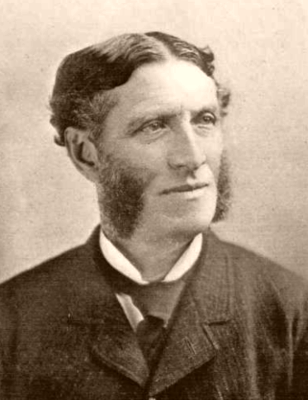
Matthew Arnold (1822-1888) was a prominent English poet, cultural critic, and educator who made significant contributions to Victorian literature and thought. Born into an intellectually distinguished family, Arnold was the son of the renowned headmaster Thomas Arnold of Rugby School, which deeply influenced his perspectives on education and culture.

Arnold’s poetry is often characterized by its reflection on the spiritual and emotional challenges of the modern age, as well as its exploration of human isolation and the loss of faith in an increasingly industrialized and secular world. His most famous poem, “Dover Beach,” epitomizes these themes, portraying a world where the “Sea of Faith” has retreated, leaving humanity exposed to the harsh realities of existence. The melancholy tone and contemplative style of Arnold’s poetry have cemented his place as a leading figure of Victorian poetry, bridging the gap between Romanticism and Modernism.

In addition to his poetry, Arnold was a formidable critic and essayist, particularly known for his works on cultural and literary criticism. His collection of essays, Culture and Anarchy (1869), remains one of his most influential works. In it, Arnold argued for the importance of “culture”—which he defined as the pursuit of perfection through knowledge and appreciation of the arts—as a means of countering the anarchy of industrial society. He believed that culture could act as a unifying force, bringing together different social classes and fostering moral and intellectual improvement.

Arnold’s work as an inspector of schools for over three decades also had a lasting impact on English education. His reports and writings on education emphasized the need for broad access to quality education and the importance of fostering a well-rounded, humane curriculum.

Though his poetry often reflects a sense of loss and disillusionment, Arnold’s commitment to cultural and educational ideals demonstrates his belief in the possibility of human improvement and the power of intellectual and moral development. His contributions to both literature and cultural criticism have left a lasting legacy, influencing not only his contemporaries but also future generations of writers and thinkers.

“Dover Beach” and “The Buried Life” are a couple of his better known poems:


Dover Beach

The sea is calm tonight.
The tide is full, the moon lies fair
Upon the straits; on the French coast the light
Gleams and is gone; the cliffs of England stand,
Glimmering and vast, out in the tranquil bay.
Come to the window, sweet is the night-air!
Only, from the long line of spray
Where the sea meets the moon-blanched land,
Listen! you hear the grating roar
Of pebbles which the waves draw back, and fling,
At their return, up the high strand,
Begin, and cease, and then again begin,
With tremulous cadence slow, and bring
The eternal note of sadness in.

Sophocles long ago
Heard it on the Ægean, and it brought
Into his mind the turbid ebb and flow
Of human misery; we
Find also in the sound a thought,
Hearing it by this distant northern sea.

The Sea of Faith
Was once, too, at the full, and round earth’s shore
Lay like the folds of a bright girdle furled.
But now I only hear
Its melancholy, long, withdrawing roar,
Retreating, to the breath
Of the night-wind, down the vast edges drear
And naked shingles of the world.

Ah, love, let us be true
To one another! for the world, which seems
To lie before us like a land of dreams,
So various, so beautiful, so new,
Hath really neither joy, nor love, nor light,
Nor certitude, nor peace, nor help for pain;
And we are here as on a darkling plain
Swept with confused alarms of struggle and flight,
Where ignorant armies clash by night.


The Buried Life

Light flows our war of mocking words, and yet,
Behold, with tears mine eyes are wet!
I feel a nameless sadness o’er me roll.
Yes, yes, we know that we can jest,
We know, we know that we can smile!
But there’s a something in this breast,
To which thy light words bring no rest,
And thy gay smiles no anodyne.
Give me thy hand, and hush awhile,
And turn those limpid eyes on mine,
And let me read there, love! thy inmost soul.

Alas! is even love too weak
To unlock the heart, and let it speak?
Are even lovers powerless to reveal
To one another what indeed they feel?
I knew the mass of men conceal’d
Their thoughts, for fear that if reveal’d
They would by other men be met
With blank indifference, or with blame reproved;
I knew they lived and moved
Trick’d in disguises, alien to the rest
Of men, and alien to themselves—and yet
The same heart beats in every human breast!

But we, my love!—doth a like spell benumb
Our hearts, our voices?—must we too be dumb?

Ah! well for us, if even we,
Even for a moment, can get free
Our heart, and have our lips unchain’d;
For that which seals them hath been deep-ordain’d!

Fate, which foresaw
How frivolous a baby man would be—
By what distractions he would be possess’d,
How he would pour himself in every strife,
And well-nigh change his own identity—
That it might keep from his capricious play
His genuine self, and force him to obey
Even in his own despite his being’s law,
Bade through the deep recesses of our breast
The unregarded river of our life
Pursue with indiscernible flow its way;
And that we should not see
The buried stream, and seem to be
Eddying at large in blind uncertainty,
Though driving on with it eternally.

But often, in the world’s most crowded streets,
But often, in the din of strife,
There rises an unspeakable desire
After the knowledge of our buried life;
A thirst to spend our fire and restless force
In tracking out our true, original course;
A longing to inquire
Into the mystery of this heart which beats
So wild, so deep in us—to know
Whence our lives come and where they go.
And many a man in his own breast then delves,
But deep enough, alas! none ever mines.
And we have been on many thousand lines,
And we have shown, on each, spirit and power;
But hardly have we, for one little hour,
Been on our own line, have we been ourselves—
Hardly had skill to utter one of all
The nameless feelings that course through our breast,
But they course on for ever unexpress’d.
And long we try in vain to speak and act
Our hidden self, and what we say and do
Is eloquent, is well—but ‘t is not true!
And then we will no more be rack’d
With inward striving, and demand
Of all the thousand nothings of the hour
Their stupefying power;
Ah yes, and they benumb us at our call!
Yet still, from time to time, vague and forlorn,
From the soul’s subterranean depth upborne
As from an infinitely distant land,
Come airs, and floating echoes, and convey
A melancholy into all our day.
Only—but this is rare—
When a belovèd hand is laid in ours,
When, jaded with the rush and glare
Of the interminable hours,
Our eyes can in another’s eyes read clear,
When our world-deafen’d ear
Is by the tones of a loved voice caress’d—
A bolt is shot back somewhere in our breast,
And a lost pulse of feeling stirs again.
The eye sinks inward, and the heart lies plain,
And what we mean, we say, and what we would, we know.
A man becomes aware of his life’s flow,
And hears its winding murmur; and he sees
The meadows where it glides, the sun, the breeze.

And there arrives a lull in the hot race
Wherein he doth for ever chase
That flying and elusive shadow, rest.
An air of coolness plays upon his face,
And an unwonted calm pervades his breast.
And then he thinks he knows
The hills where his life rose,
And the sea where it goes.


The informational article above was composed in part by administering guided direction to ChatGPT. It was subsequently fact-checked, revised, and edited by the editor. The editor/publisher takes no authorship credit for this work and strongly encourages disclosure when using this or similar tools to create content. Sparks of Calliope prohibits submissions of poetry composed with the assistance of predictive AI.
Two Poems by Robert Donohue

Lundy’s Undies

Mom worked for Lundy’s, and the firm’s design
Was for the diapers used in outer space.
More of a pouch, this needed interface
The engineers committed to refine.
But Mom worked personnel, and as a sign
Of what she was supposed to take with grace,
When Mom got married, so she knew her place,
It was expected that she would resign.

Despite this treatment, Mom was full of pride,
And thought her work important as the rest.
The astronauts had nothing left to hide
When putting Lundy’s product to the test,
And voyaging where none before could dare,
Because of Mom, they had clean underwear.


Search Engine

Back in the early Nineties, just before
The internet, if what you needed was
A book that happened to be out of print
These are the steps you followed; you would see
Your local antiquarian book dealer,
Fill out a card, and when your dealer had
Collected cards from other customers,
Then he or she would purchase a want ad
In AB Bookman’s Weekly. Other dealers
Who had the book in stock then mailed in quotes,
Your dealer would present these quotes to you
For your discission, and inevitably,
In all these quotes, you always got one from
Jeff Bezos, with his warehouse of old books.


Robert Donohue‘s poetry has appeared in Pulsebeat, The Road Not Taken, and The Rye Whiskey Review, among others. He lives on Long Island, NY.

“Last Night” by Matt Wood

A solar storm hit Earth last night.
I’d seen a headline warning about it,

so I wanted to keep an eye out.
Rare auroras filled the sky

as far south as our neighborhood
as about one billion tons of plasma

collided with the atmosphere at
one million miles per hour only

to be transmuted into the frailest
of colors fluttering like Paganini’s bow

through chromatic scales of stars.
But I forgot to look.

I wish I could say I saw it, but
I went to bed without even glancing

outside. I was thinking of work,
wondering if I’d have time to get

groceries tomorrow, wishing
the weather would change,

listening to the ceiling fan while
falling asleep beside you, who

were surely dreaming something
more amazing than anything

I could have missed.


Matthew Wood lives in Colorado and works as a mechanic. His work is forthcoming in Eunoia Review.

Two Poems by M. Benjamin Thorne

The Argument

I.

When I was nine, God was a bush aflame,
a sacred secret burning thing alive
in some empty and forsaken desert.

At ten he became a name invoked
over the bodies of dead relatives
I once knew, lowered into the strange earth.

Then later he became You. You, who fashioned
all from nothing with a simple wish.

II.

I stand at Babi Yar’s edge, peering down
to where 33,771 Jews and 100,000 others
were laid low: here the woman
who saw her daughter shot just before;
there an old man still thinking his life
can be bought for four teeth’s worth of gold.

Where were You then, when the barrel roughly
nuzzled the nape of this boy’s neck?

Where were You, when this girl’s blood
exploded onto her killer’s shirt?

The scratches etched by finger-bones
on gas chamber walls—each of them spells Yahweh.
Did You provide them one last sweet breath?

There are times I wish to disbelieve in You,
banish you into superstitious myth;
but still my faith persists, because only in a universe
so infinite as to contain You could such cruelty exist.

It is the times I feel You with me
that are the most unforgiveable.


Oracles

There are times when I wish desperately
to hear your voice again for the first time
so that I could come to it again
innocent, move through your words
as stars guided the ships to Delphi
delivering their cargo (questions),
and stand before the oracle’s cave,
see the goat, cold-water-splashed, shivering, 
and know that I may enter the mystery
and feel my being answered.


M. Benjamin Thorne is an Associate Professor of Modern European History at Wingate University. Possessed of a lifelong love of history and poetry, he is interested in exploring the synergy between the two. His poems appear or are forthcoming in Autumn Sky Poetry, Drunk Monkeys, Sky Island Journal, Wilderness House Literary Review, Cathexis Northwest, and The Westchester Review. He lives and sometimes sleeps in Charlotte, NC.

Two Poems by Kelly Terwilliger

The Album of Horses

The dust jacket is falling apart.
On the front, the horse and her foal,
white and brown, brittle now. And the red painted
panels of a stable wall on the back,
ready to crumble away,
pieces of book dust
horse dust.
You dream of horses— you told me
that’s how you fall asleep at night, and I’m sure
you didn’t imagine how happy this made me,
you showing me how you let go
walking into the green field
where the horses are waiting,
where I imagine them now, resting,
leaning down for a ripped mouthful of grass
or brushing against a companion’s flank.
Slow thoughts. Slow thoughts sliding by
as the wind crosses their backs without even lifting the hairs.
The skin ripples,
twitches under some lazy buzz.
When do you drift off? We never know, do we?
Partway across the field?
Or close enough to feel the animal heat—
already, the slipping away as fleeting
as dream itself.      Palominos,
I read, are not a breed
but a color more gold than gold.


Little Clouds

Turn my pockets out and there’s sand,
there’s always sand, no matter how far I go
from where I began.
But today, there are some clumps
of what had been a scrap of paper, now a wad
of little clouds, all their ink washed away.

This fluff is like something just born,
Before all definition.
I read somewhere that people once believed
bears licked their formless newborns
into being. In their winter caves,
bears shaping tiny bears with their tongues.

The sky is white today, and soft, too soft to write on.
Someone has found a way to write in water
so the writing stays, at least a little.
You need an implement so small
that moving it to trace a shape won’t create
an eddy that carries the word away.
So far, they’ve managed a hovered J, a G, a U
within the dot of an i.

Me, I’ve always liked how words dissolve
in water, dissipate in air.

Walking home, I see a puddle the size of a quarter.
It holds the sky’s reflection,
a milky white eye
on the darkened ground.


Kelly Terwilliger is the author of two collections of poems, A Glimpse of Oranges and Riddle, Fish Hook, Thorn, Key. She lives in Eugene, Oregon, where she works in schools as an oral storyteller and teaches storytelling to children and adults.