Two Poems by Martin Elster

Playground In Early Fall

A woman pushes her child
who swings on a leather strap
as wings of sprightly yellow jackets slap

the afternoon. Beguiled
by the scent of bones, charred meat,
a mongrel wanders, scavenging the trash

near grills, as scattered cash
might make you pause. Kids, fleet
as pups, play wolf-cub-rough. Their howls carry

across the length of the park.
They wriggle through tunnels, dark
as a serpent’s gut, and slither down slides as scary

as seeing the teeth of the hound
now nosing around the fence
that shields them from a world far too immense.

He marks it, scuffs the ground.
He seems sublimely numb
to the squall of squeals and shrieks (as if the noise

that blooms from these boisterous boys
and clamorous girls must come
from beyond the world), while those who are climbing and crawling

are unaware a fog
will make them deaf as the dog
to the whispering leaves of memory, falling, falling.


Greenland Shark

Swimming adagio
through frozen seas, you grow
far slower than a hickory
and, by some wicked trickery,

are the oldest vertebrate
on earth. Is that so great?
Perhaps. Or maybe not.
It would depend a lot

on whether you’re go-getting,
letting your gills down, jetting
through the Atlantic Ocean,
or lost. You haven’t a notion

you were a youth when Bruno
was born. Perhaps you do know
that you’ve, indeed, outlasted
the hoariest whale that blasted

its songs across the sea
or a bivalve thought to be
five hundred seven years old.
While swimming through the cold,

you’re surely not aware
of the net which soon will snare
your ancient bones. They’ll floor us.
“Amazing!” we will chorus.


Martin Elster, who never misses a beat, was for many years a percussionist with the Hartford Symphony Orchestra. Martin’s poems have appeared in numerous literary journals and anthologies in the U.S. and abroad. His honors include the 2022 Helen Schaible International Sonnet Contest winner, Rhymezone’s poetry contest, five Pushcart nominations, and a Best of the Net. A full-length collection, Celestial Euphony, was published by Plum White Press in 2019.
“Grave Thoughts” by Jeffrey Essmann

Perhaps, I thought, it’s time I bought a grave:
Just something humble by a chain link fence
With room enough my name there to engrave
And one or two geraniums to brave
With grace the passage still of earthly time
And mind the passersby of fairer climes
(An aisle down, where folks aren’t packed so dense).

It’s not so much that I’ve been feeling old
(At least not older than I rightly should)
But sense now everywhere some deeper cold
That nothing in me could have quite foretold,
And think: Perhaps just go there, take the tour;
Ask questions; look at holes; take a brochure;
Consider well my coffin: Metal? Wood?


Jeffrey Essmann is an essayist and poet living in New York. His poetry has appeared in numerous magazines and literary journals, among them: America Magazine, Dappled Things, the St. Austin Review, Pensive Journal, U.S. Catholic, Amethyst Review, The Society of Classical Poets, and various venues of the Benedictine monastery with which he is an oblate. He is editor of the “Catholic Poetry Room” page on the Integrated Catholic Life website.

Two Poems by Richard Lovelace

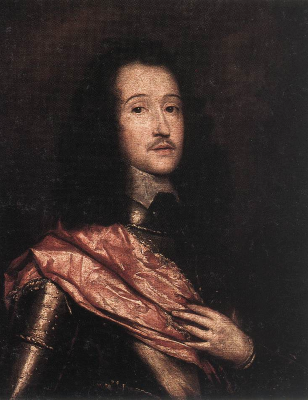
Richard Lovelace (1617–1657) was a prominent Cavalier poet of the 17th century, renowned for his lyrical elegance and association with the Royalist cause during the English Civil War. Born into a well-to-do Kentish family, Lovelace was educated at the prestigious Charterhouse School and later at Gloucester Hall, Oxford, where his charm, good looks, and poetic skill quickly gained him admiration and support among the literary elite. Known for his refined manners and loyalty to King Charles I, Lovelace’s life and work were deeply influenced by his unwavering commitment to the Royalist ideals of honor, loyalty, and courtly love.

Lovelace’s poetry is marked by its musical quality, emotive depth, and dedication to the ideals of chivalry. His most famous work, To Althea, from Prison, penned while he was briefly imprisoned for his Royalist sympathies, contains the immortal lines, “Stone walls do not a prison make, / Nor iron bars a cage.” This piece and others in his collection Lucasta (1649) express his belief in inner freedom and resilience, as well as his love for a woman he called Lucasta (thought to be a poetic pseudonym for his beloved Lucy Sacheverell). Lovelace’s verses often celebrate themes of loyalty, love, and liberty, reflecting his desire for both personal and political freedom during a time of national turmoil.

Lovelace’s commitment to the Royalist cause led him to serve in the military on behalf of King Charles I, fighting in the Bishops’ Wars in Scotland and later in the Civil War. However, his loyalty came at great personal cost. After repeated imprisonments and financial losses, he spent his later years in poverty and ill health, facing the bitter disillusionment that many Cavaliers experienced after the fall of the monarchy.

Lovelace’s legacy as a poet rests on his ability to merge graceful language with Cavalier ideals. His verses capture the spirit of a turbulent era, and his enduring works offer insight into the personal sacrifices of those loyal to a lost cause. Though his fame dwindled after his death, Lovelace’s poetry was rediscovered in the 19th century, appreciated for its lyrical beauty and its emblematic portrayal of honor and love. His work, including the two poems featured below, remains a touchstone of the Cavalier tradition, influencing later poets and reminding readers of the values of courage, loyalty, and resilience.


To Althea, From Prison

When Love with unconfinèd wings
Hovers within my Gates,
And my divine Althea brings
To whisper at the Grates;
When I lie tangled in her hair,
And fettered to her eye,
The Gods that wanton in the Air,
Know no such Liberty.

When flowing Cups run swiftly round
With no allaying Thames,
Our careless heads with Roses bound,
Our hearts with Loyal Flames;
When thirsty grief in Wine we steep,
When Healths and draughts go free,
Fishes that tipple in the Deep
Know no such Liberty.

When (like committed linnets) I
With shriller throat shall sing
The sweetness, Mercy, Majesty,
And glories of my King;
When I shall voice aloud how good
He is, how Great should be,
Enlargèd Winds, that curl the Flood,
Know no such Liberty.

Stone Walls do not a Prison make,
Nor Iron bars a Cage;
Minds innocent and quiet take
That for an Hermitage.
If I have freedom in my Love,
And in my soul am free,
Angels alone that soar above,
Enjoy such Liberty.


To Lucasta, Going to the Wars

Tell me not (Sweet) I am unkind,
         That from the nunnery
Of thy chaste breast and quiet mind
         To war and arms I fly.

True, a new mistress now I chase,
         The first foe in the field;
And with a stronger faith embrace
         A sword, a horse, a shield.

Yet this inconstancy is such
         As you too shall adore;
I could not love thee (Dear) so much,
         Lov’d I not Honour more.


The informational article above was composed in part by administering guided direction to ChatGPT. It was subsequently fact-checked, revised, and edited by the editor. The editor/publisher takes no authorship credit for this work and strongly encourages disclosure when using this or similar tools to create content. Sparks of Calliope prohibits submissions of poetry composed with the assistance of predictive AI.

“Rainbow Hues Throughout Life” by Janice Canerdy

When hourglass sands were mostly in the top
and life was like a poem penned for me,
when forests beckoned friends and me, “Come play,”
love of adventure ruled and I felt free.

When rainbow colors filtered through the trees
and Nature served to thrill, fulfill, and teach,
imagination wove grand tapestries
and—for a time—all seemed within my reach.

********************

Let children have their dreams and fantasies.
They’ll grow up soon enough and see what’s true.
May each define “success” and work for it,
find joy, and keep those rainbow hues in view.


Janice Canerdy is a retired high-school English teacher from Potts Camp, Mississippi. Her poems have appeared in numerous publications, including Light QuarterlyThe Road Not TakenLyricParodyBitterroot, the Society of Classical Poets JournalWestward QuarterlyLighten Up OnlineHalcyon DaysPenwood Review, the Mississippi Poetry Society JournalWhispering Angel Books, and Quill Books. Her book, Expressions of Faith (Christian Faith Publishing), was published in 2016.

Two Poems by Mike Chrisman

After the aquarium

I hadn’t known I would want a ceremony
when my big angelfish died
that I raised from a nickel-sized thing
to a silver dollar or greater, but I didn’t
want to toss it in the toilet
like my grandfather’s cigarette butts,
so my ten-year-old daughter and I
bundled up against February
and walked the road a half mile
until the culvert that opens
into a pool almost deep enough
to swim, certainly to snag a brookie
or two as the neighbor boys will,
then down the steep bank six or eight
feet through thigh-deep snow, my daughter
struggling in my path until we stood
at the pool’s edge, where I said some words
about a fish from the tropics gracing
our northern home, then thanked it before
bending down to let it slide
from the plastic bag, surrounded
by warm aquarium water, shiny
onto the icy brook’s surface, where
it spun briefly before catching
current southward, down Avery Brook
to the Deerfield, the wide Connecticut,
into Long Island Sound, the sea…
then father and daughter trudged
home, while the fish receded
into memory. As will we.


View from el parque central

on a wooden bench watching the tourists,
the Mayans, the pigeons navigating
among each other, the concrete
path littered with fallen
jacaranda petals. I’m sitting
to eat my little cup of ice cream
and remembering an ancient time:
summer, Central Illinois, and Zesto
soft-serve, plus three kids
happy with their cones;
a nickel each in ’55 –
cheap even then – and the short trip
home in our Chevy station wagon
perched on a more dangerous bench:
the tailgate lowered, where we ride
backward, our short legs nearly
touching the pavement … and jouncing
slowly across the train tracks –
“Hold on, kids!” to the house,
where our big collie waits
to greet us, his reward the sweet
and soggy cone-bottoms none of us
would have believed might survive
in memory seventy years after the fact.


Mike Chrisman is retired, living in Antigua, Guatemala. He worked for years in the mental health field in rural Western Massachusetts. He earned his MFA in Creative Writing at UMass Amherst. Chrisman has three daughters and five grandkids. His poetry book, Little Stories, has an ISBN, and his own translation of the Bible, The Bible: Warts and All  is on Amazon Kindle.

“The Early Bird Gets the Worm Ballade” by Mary Winslow

Before fishing hour, psalms speak low
when quiet starts becoming restless
Canadian geese muttering slow
bacon and butter sizzle and wake us
the morning chases off the stillness
next the mist, then it starts raining
dawn, but it feels midnight nonetheless
minds swaddled simple as sun’s sleeping

I glance at the clock on the bureau
the fog lingers on diaphanous
a sliver of night silvers shallow
see the worm, that threadbare little cuss
in daffodils birds rustle the campus
the thistle where morning comes flying
the hungry aren’t yet ambitious
minds swaddled simple as sun’s sleeping

This Atlas beast at daybreak should know
and yet doesn’t hurry into business
when the magic hour of life’s marrow
sliding from night into consciousness
those on the fiddle can poach in the mess
who stagger or roll, some sleepwalking
without regular terms of success
minds swaddled simple as sun’s sleeping

Envoy

The robin arrives in best spring dress
no need for plan, she’s simply walking
before the law, there’s naught to transgress
minds swaddled simple as sun’s sleeping


Mary Winslow has been writing poetry for over 30 years. Her poems have appeared in The Road Not Taken, the Antigonish Review and many other journals and magazines. Her translation of Norwegian poetry has appeared in the Journal, in Wales. She has taught English at colleges and universities throughout the United States. She lives about an 18-mile canoe paddle from the shores of Canada on the Olympic Peninsula and teaches part-time in the Writing Center at Peninsula College.

Two Poems by Wilfred Owen

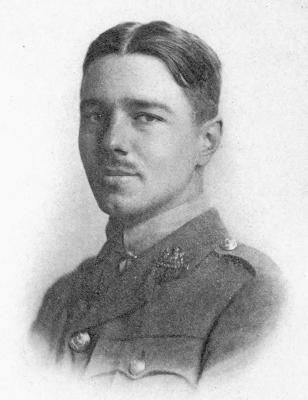
Wilfred Owen (1893–1918) was a British poet whose powerful works provide some of the most poignant insights into the horrors of World War I. Born in Oswestry, Shropshire, England, Owen grew up in a lower-middle-class family. His early education sparked an interest in poetry, and he was influenced by Romantic poets such as John Keats. However, it was his experiences as a soldier during World War I that would most profoundly shape his poetic voice and themes.

Owen enlisted in the British Army in 1915, at the age of 22. He was initially enthusiastic about joining the war effort, driven by a sense of duty and patriotism. His perspectives, however, drastically shifted after witnessing the brutal realities of trench warfare. In 1917, he suffered from shell shock (now known as post-traumatic stress disorder) and was sent to Craiglockhart War Hospital in Edinburgh, where he met fellow poet Siegfried Sassoon. This meeting proved crucial, as Sassoon became a mentor and friend, encouraging Owen to channel his experiences of war into his poetry.

Owen’s poems, written during the last two years of his life, are marked by their vivid imagery and intense emotional force. In stark contrast to romanticized portrayals of war, his poems expose war’s brutality and the suffering of soldiers. Works such as “Dulce et Decorum Est” and “Anthem for Doomed Youth” found below are renowned for their bold depictions of the physical and psychological trauma experienced by combatants. His use of half-rhyme, vivid descriptions, and shocking realism set his work apart from other war poetry of the time.

Tragically, Owen was killed in action on November 4, 1918, just one week before the Armistice that ended World War I. His death cut short a promising literary career, but his legacy endures through his powerful poetry, which continues to resonate with readers. Published posthumously, his work has become some of the most significant literary accounts of World War I, forever altering the perception of war in English literature.


Dulce et Decorum Est

Bent double, like old beggars under sacks,
Knock-kneed, coughing like hags, we cursed through sludge,
Till on the haunting flares we turned our backs,
And towards our distant rest began to trudge.
Men marched asleep. Many had lost their boots,
But limped on, blood-shod. All went lame; all blind;
Drunk with fatigue; deaf even to the hoots
Of gas-shells dropping softly behind.

Gas! GAS! Quick, boys!—An ecstasy of fumbling
Fitting the clumsy helmets just in time,
But someone still was yelling out and stumbling
And flound’ring like a man in fire or lime.—
Dim through the misty panes and thick green light,
As under a green sea, I saw him drowning.

In all my dreams before my helpless sight,
He plunges at me, guttering, choking, drowning.

If in some smothering dreams, you too could pace
Behind the wagon that we flung him in,
And watch the white eyes writhing in his face,
His hanging face, like a devil’s sick of sin;
If you could hear, at every jolt, the blood
Come gargling from the froth-corrupted lungs,
Obscene as cancer, bitter as the cud
Of vile, incurable sores on innocent tongues,—
My friend, you would not tell with such high zest
To children ardent for some desperate glory,
The old Lie: Dulce et decorum est
Pro patria mori.


Anthem for Doomed Youth

What passing-bells for these who die as cattle?
      — Only the monstrous anger of the guns.
      Only the stuttering rifles' rapid rattle
Can patter out their hasty orisons.
No mockeries now for them; no prayers nor bells; 
      Nor any voice of mourning save the choirs,—
The shrill, demented choirs of wailing shells;
      And bugles calling for them from sad shires.

What candles may be held to speed them all?
      Not in the hands of boys, but in their eyes
Shall shine the holy glimmers of goodbyes.
      The pallor of girls' brows shall be their pall;
Their flowers the tenderness of patient minds,
And each slow dusk a drawing-down of blinds. 


The informational article above was composed in part by administering guided direction to ChatGPT. It was subsequently fact-checked, revised, and edited by the editor. The editor/publisher takes no authorship credit for this work and strongly encourages disclosure when using this or similar tools to create content. Sparks of Calliope prohibits submissions of poetry composed with the assistance of predictive AI.

Two Poems by Mark B. Hamilton

Work Days*

Four details under command,
sentries posted and hidden
near fellers, haulers, and carpenters,
protecting the wattling men.

Trees slash through breezes,
their branches trimmed and begun.
In warmth, our breath has a gill
poured now-and-again.

Those who favor chunking wood
have their own hand-hewn tools
in constant motion wearing smooth,
while the lazy ones act the fools.

With hide buckets full of mud,
leaves and twigs for wattle,
one man inside, one man out,
both chinking on one bottle.

Logs are notched and placed,
oxen shaking their coats,
the goods and blankets drying out
as Floyd tallies up the Boat.

Willard and Roberson return
with letters from St. Louis,
sharing news of wooden walks
and women sightings to remind us.

They help to stow the heavy stores
neatly in good order, amusing us all
with stories of excess to please us,
while stretching them up real tall.

The ice builds. We caulk and trim.
Whitehouse and York apace,
two sawyers with a saw that sings
back and forth in place.

Winds do give, then take away
that bee-sweet scent of resin,
from seasoned arms a tug-of-war
between them both can win.

Repeating a task is never easy,
to relax your strength until
a calming frees the bind—a pace
is best that ends in skill.

* An original history-based poem adapted from: Gary E. Moulton, editor, The Journals of the Lewis & Clark Expedition, Volume 2, (Lincoln: University of Nebraska Press, 1986), ibid, 141-42.
“Work Days” previously appeared in Plainsongs.


Camp & Mess

The palisades of oak would cast their shade
inside the fort, until the sun had risen
to form a space of heated mud that made
our work unpleasant. In short, it was an oven.
Our endless constant chores caused little pride,
the continual supervision was an irritation
unless scrubbing a kettle, or stretching a hide
was one’s cherished idea of an army ambition.
Yet everyday, a lucky man was reassigned
to work outside the gate. His replacement
would grouse, argue and bray, only to find
that barracks duty was not a personal affront.
The work was for the common good, and central
to our health—as necessary as salting a barrel.

“Camp & Mess” previously appeared in The Lyric.


Mark B. Hamilton (MFA, University of Montana) works in diachronic forms to transform content, adapting from both Eastern and Western traditions.

His poems appear widely in the US, and sometimes abroad: e.g., The Lyric Magazine, Naugatuck River Review, About Place Journal, Oxford Poetry, and Stand Magazine. Recent ecopoetry volumes include: LAKE, RIVER, MOUNTAIN (Cornerstone Press, University of Wisconsin, 2024), the chapbook UPSTREAM (Finishing Line Press, 2024), and the book OYO: The Beautiful River (Shanti Arts Publishing, 2020).

As a scholar of pre-industrial America, his researched essays have been published in: The Heritage of the Great Plains, The Bulletin of the Chicago Society of Herpetology, We Proceeded On, and History Magazine, with inclusion into the Folk Life Archives, US Library of Congress. For additional information about the author, visit:  MarkBHamilton.WordPress.com.

“Ghost Girl” by Joshua Frank

One sunny May, I ran to play,
When I was twelve years old,
Upon the hill. I miss her still—
A girl with curls of gold
In ribbon ties, big sky-blue eyes,
And waving, dark-red dress
Soon ran my way and asked to play—
How could I not say yes?

“I’m Beth,” she said. “My mother’s dead;
I’m hiding from her ghost.”
I thought, “A shame, her gruesome game,”
But soon I was engrossed.
We laughed and played along the grade,
Cavorted up the hill,
And soon rolled down, clothes turning brown,
Collapsed, and then lay still.

Then Beth and I stared toward the sky,
Then wrestled, then caressed,
And very soon that afternoon,
Our love began the rest.
We hoped our playing would one day
Give rise to married bliss.
I gazed into her pools of blue;
We leaned in for the kiss.

A woman’s ghost gave off the most
Horrendous, ghastly chill.
We stood upright in cold and fright;
Her ghost-hand reaped the kill.
I saw Beth die. Her ghost stood high
And quickly shed its shell.
Her ribbons fastened to the grass
As down her body fell.

Both, hand in hand, flew off the land.
Beth’s ghost was forced to go
Away from me like Annabel Lee,
But where, I’ll never know.
Then Beth up high bid me goodbye;
She waved as she looked back.
The two ghosts flew into the blue,
And everything went black.

I felt Mom shake me wide awake;
She’d found me on the hill.
“Are you all right?” She yelled in fright.
I sat up feeling ill.
I told her of my one-day love
And how she met her death.
My mother deemed it all a dream
And said there was no Beth.

So I believed I’d been deceived
And never met the lass,
Until I found, upon the ground,
Her ribbon coiled on grass.
The ghost who took her didn’t look
And left it unawares.
I picked the band up in my hand
And three blonde, curly hairs.

“Ghost Girl” was first published by The Society of Classical Poets.


Joshua C. Frank works in the field of statistics and lives in the American Heartland.  His poetry has been published in The Society of Classical PoetsSnakeskinThe LyricSparks of CalliopeWestward QuarterlyNew English ReviewAtop the CliffsOur Day’s EncounterThe Creativity WebzineAsses of ParnassusLothlorien Poetry JournalAll Your PoemsVerse VirtualThe Asahi Haikuist NetworkLEAF Journal, and the anthology Whose Spirits Touch, and his short fiction has been published in New English ReviewThe Creativity Webzine, and Nanoism.

Two Poems by Felicia Nimue Ackerman

Death Can Be Good

Death can be good.
I’ll tell you how.
Just have it come
Decades from now.

“Death Can Be Good” first appeared in Time Magazine.


Simon’s Sentiments

Can’t resist those cakes and pies?
I don’t judge you by your size.
I won’t care if you get fat.
I’ll still love you–
I’m your cat.

“Simon’s Sentiments” first appeared in The Providence Journal.


Felicia Nimue Ackerman is a professor of philosophy at Brown University and has had over 300 poems published in a wide range of places, including twenty-four in past issues of Sparks of Calliope.