Sparks of Calliope is taking a brief intermission. We will return on December 6, 2024. There will be no poems published for:
November 27, 2024
November 30, 2024
December 3, 2024
Thank you for coming to see us!
A Journal of Poetic Observations
Sparks of Calliope is taking a brief intermission. We will return on December 6, 2024. There will be no poems published for:
November 27, 2024
November 30, 2024
December 3, 2024
Thank you for coming to see us!
I walk along an autumnal country road.
Eventually, there will be a fork,
and of course, I will have to make a decision.
But for now, there are these reverberations.
Ones I cannot identify.
Although I suppose with today’s gadgets,
I could find a way to do so. Only I do not.
Is that a caw?
And that other—the howl of a coyote?
What of this crooning buzz that seems
to be emerging from the brush alongside the creek
now low from lack of rainfall?
Or is it coming from the creek itself?
When will the rains come?
Here, bales of hay are lined up against the horizon’s line;
there, they dot the fields.
A low stone wall marks a crucial boundary
whose meaning I will never know.
This is not the time to envision disputes
or hours spent in courtrooms
or feuds long-lasting that occasionally erupt into the summoning of police.
Far off in a distance, a structure of some sort
is barely visible through the trees I know are not evergreens,
but whose identities escape me. I smile at the proverbial kindness
of these strangers.
The structure could be a house or a shed or a romantic getaway.
Perhaps young lovers sneak off there now to perform paradise
in the now almost-ruin.
Perhaps not.
As you can tell, the intentions of its builders and its possible
denizens elude me.
Horses neigh in the distance.
I wonder what color their coats are
and whether they’ve had a good day grazing.
A rooster crows repeatedly. Urgently, I imagine.
But what do I know of rooster calls?
I picture his beard jiggling.
What danger does he sense that causes this late-hour crowing?
For all my gliding, my footsteps echo on the asphalt.
An occasional truck roars by.
Or so it seems to me,
given the stillness of the road, the time of day.
And the unjangle of my nerves.
The sky is saturated with streaks of rose and gold and flame.
A clash that is the custom, a conflagration in harmony.
I cannot locate the borders of each color,
but they are all there.
Each as was intended. Here, that—if perhaps only that—I know.
Against this panorama,
and through this choir concert of unknown,
past and present, I reciprocate the unhesitant embrace of
the beginning of the close of day.
Yermiyahu Ahron Taub is a poet, writer, and translator of Yiddish literature. Honored by the Museum of Jewish Heritage as one of New York ’s best emerging Jewish artists, Taub has been nominated four times for a Pushcart Prize. Born and raised in an Orthodox community in Philadelphia, Taub received his secondary education at the Talmudical Yeshiva of Philadelphia and the Mechina High School of the Ner Israel Rabbinical College in Baltimore, Md. He graduated Phi Beta Kappa and summa cum laude from Temple University, where he was also named a President’s Scholar. Taub earned a Master of Arts degree in history from Emory University and a Master of Library and Information Science degree from Queens College, City University of New York. He lives in Washington, D.C.
At the stoplight, a gentleman picks his nose, pokes
with the don’t-give-a-dollop only old folks
and toddlers get away with. To his left,
a car’s tinted windows rumble from the heft
of a thumping bass while a yellow
van brightens the cloudy morning. “Hello!”
the world seems to shout, but nothing can pluck
his attention from the gold nugget stuck
at the back of his nostrilous cave. Past how
many nose hairs does his finger now
dig? I turn to tell my uncle to watch the scraping,
but he’s frowning, and I sense there’s no escaping
the looming lecture. His hand on my shoulder,
he says, “You shouldn’t stare at people older
than you. You don’t know what they’ve
been through. When you’re old enough to shave,
you’ll understand,” and I say, “Okay, I’ll quit being
nosy.” He nods. I’ve mastered this whole agreeing
with grown-ups thing so that they’ll stop. Later
that night, I walk in and see my uncle writing a letter,
and just as I’m about to ask him who he’s writing
to, he sneezes, nearly knocking over the lamp lighting
his desk. He puts down his pen and picks his nose.
I now know where his understanding grows.
Bradley Samore has worked as an editor, writing consultant, English teacher, creative writing teacher, basketball coach, and family support facilitator. His writing has appeared in The Florida Review, Carve, The Dewdrop, and other publications. He was named a Joint Winner of the Creative Writing Ink Poetry Prize. You can find his website here.
It’s just a little scratch, but the blood fountain streams
Conquering the edges, bubbling redness gleams
Through the bandage seams,
The wound not cleaned,
It’s just a little dream.
I allowed the wooden sword to jab
The space between my arm and torso,
Empty air, newly stabbed, of course I was Mercutio.
Dad directed with zeal,
My 5 year old brother inscrutable,
The crucial lines, I spoke and died,
I love passion, the vitriol,
I hate the bedtime rituals.
We grew up not needing stitches,
Our gashes shared, bare to fresh air,
The flair, any flood of blood, unscared.
Sound the alarm, but not on the farm,
Invincibility was born here.
No laws, just blue gray old wooden barns,
Playing cards and tackling the Bard.
I truly never knew fear.
But I’m bleeding on the bar room floor,
I think I need a doctor, but I need a beer before.
Walgreens: the first aid aisle, you depleted it,
Treated the wound while I swore,
Seated awkwardly on the bathroom floor,
Tybalt’s sword, just the frame of a door,
But of course you came through when I needed it.
A scratch, a hot bed of germs and nerves,
Urgent care was there,
But I didn’t have the urge.
I don’t mind getting hurt,
Just sometimes lack the courage
To clean the wound
But I dreamed of you
And it came true,
‘Twill serve.
The sky looks grumpy with the ground.
All in all I’m put off.
If I sleep and sleep
Until it clears up
Will you be here still?
What if the sun goes,
Like permanent,
Like plants and birds and sea creatures are out
In the blink of an eye,
If I disappear
And you disappear
Where does the love go?
I live for you!
Terrified.
My breath stuck, your face cupped in my hands,
Nothing is gradual,
Lines chase lines
And life’s getting fragile.
I live for you. What if you die?
A friend has a brain aneurysm,
Waiting to explode and disappear life.
Red and horribly larger,
Thin from puffing out pressure wrong,
Silent and raging
And racing towards nothing.
The sun is one and many
Depending on how far you look out.
All I want is what’s right in front of me.
I have never been so happy
Or helpless.
Jessie McLean, unpublished and entirely without accolades, loves poetry because no matter how lonely the writer gets, a few lines from someone else’s writing can make beauty out of a shared pain. McLean realizes that sometimes we can describe a thought or feeling in a way it’s never been said before. Then the unique and the universal settle together, calling for art, but also connection.
Here at Sparks of Calliope, we define “classic” poets as poets who are widely read, have been studied academically, and whose work is in the public domain. Classic is commonly defined as “a body of work of recognized and established value.” This is not to be confused with the other definition of classic as involving the study of Ancient Greek and Latin literature. Here is a quick list of the top 5 British classic poets with links to biographies and a couple of samples from each. We would love to get your take on this order in the comments!
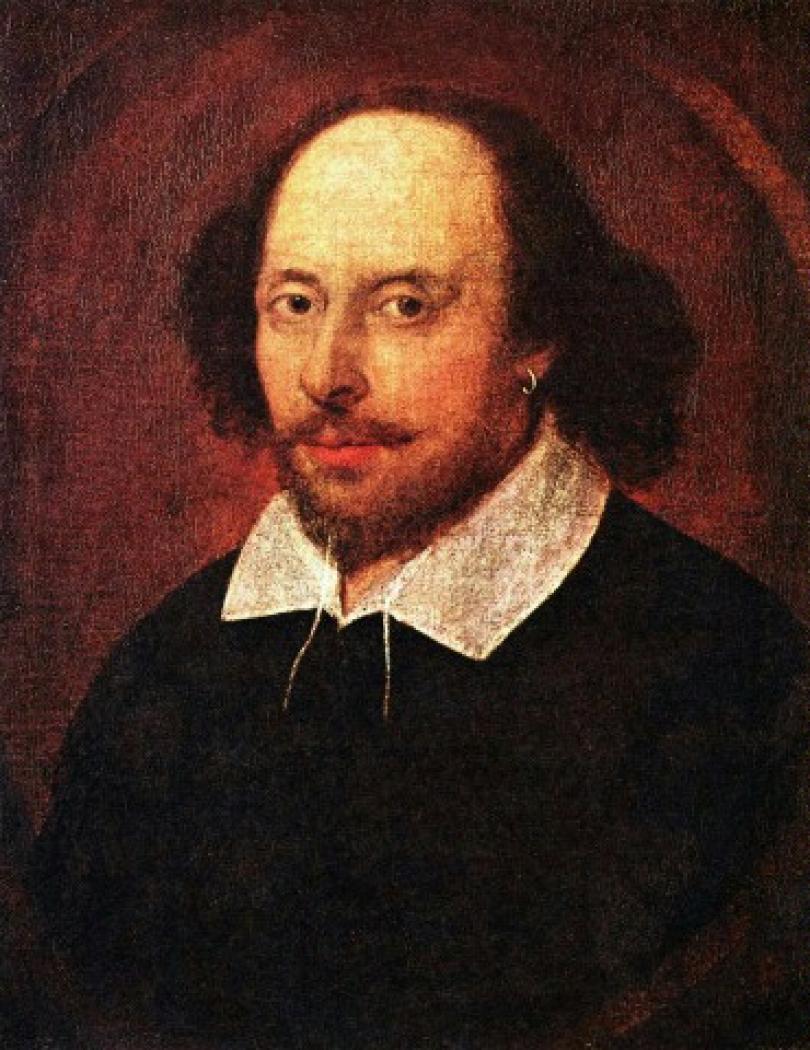
Undoubtedly the most famous poet of all time in the English-speaking world, William Shakespeare’s works are still being reproduced, adapted, and referenced in popular culture more than 400 years after his death. His famous plays overshadow his poetry, but do not detract from his recognition as a skillful poet in his own right. His literary influence on Western Civilization can hardly be overstated. We chose to feature “Sonnet 116” and “Sonnet 18” as two of his most popular poems.
2. George Gordon Byron, 6th Baron Byron (1788-1824)
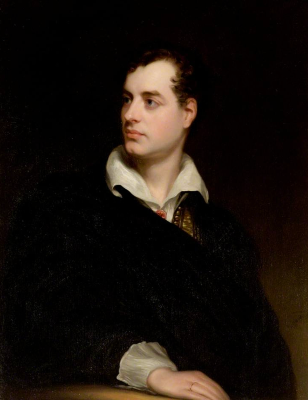
Lord Byron was the English version of Giacomo Casanova. Most famous for his lengthy poem entitled “Don Juan,” we chose “She Walks in Beauty” and “And Thou Art Dead, as Young and Fair” to represent the best of his work. Despite his current place of esteem in the hearts of his countrymen, his unpopularity with certain portions of the population during his lifetime led him to self-exile, and he died from illness while fighting the Turks in the Greek War of Independence.
3. John Keats (1795-1821)
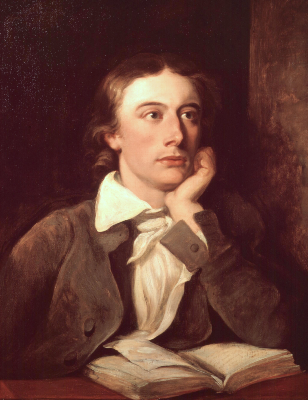
Admired for literary works of profound depth despite his young age and short time on this earth, John Keats is the poster child for the Romantic movement. We chose “Ode to a Nightingale” and “Ode to a Grecian Urn” to demonstrate his emotional depth and skillful use of imagery. While his life was cut short due to tuberculosis–he died at the age of 25–he nevertheless managed to write works which continue to inspire and earn him a place among the top five British poets of all time.
4. Percy Bysshe Shelley (1792-1822)
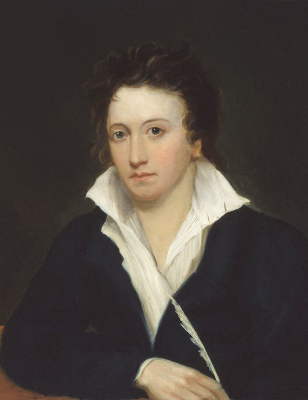
Described by one modern critic as “a lyric poet without rival,” Percy Shelley’s place as one of the best all-time classic British poets is not undisputed. Both T. S. Elliot and W. H. Auden are on record as fierce critics of his work. The notorious historical figure Karl Marx, on the other hand, was said to be an admirer. An atheist and political activist, Percy Shelley did not live to see much of his work published. However, the quality of his work earns him a place on our list. We chose “Ozymandias” and “To a Skylark” to showcase his talent.
5. John Milton (1608-1674)
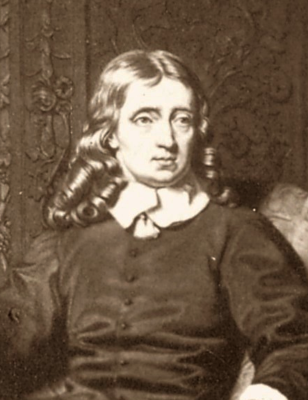
His most famous work, Paradise Lost, is so lengthy that seldom appears in samplings such as this; however, John Milton wrote shorter poems that are worthy examples of his abilities. He wrote his poems from a position of deeply-held religious beliefs and with a highly educated background. His works are highly intellectual if not profoundly philosophical, exploring themes such as divine justice and individual liberty along with other aspects of human existence. We decided upon “An Epitaph on the Admirable Dramatic Poet W. Shakespeare” and “On His Blindness” to highlight his writing ability.
Did we get our order right? What would yours be instead? How would you round out the top 10? We look forward to reading your comments!
The day his youngest son was born
with a hole in his heart
my grandfather made a novena.
As a child I was told the cruel history:
how he poured hot soup over my
grandmother’s head,
chained his sons in the garage to a coal stove,
made them go without food,
would not allow children to talk at the dinner table,
slapped them across the head if they did.
As an adult I faced his hilly garden,
admired the ascending rows of
peppers, garlics, tomatoes, onions, grape vines.
Pointing to a plant I did not recognize
he motioned me to a shed
where rows and rows of unfamiliar
leaves hung on string,
the aroma making them known to me.
He pulled one large leaf down,
crinkled it between his plump fingers,
deftly rolled a cigar,
lit a match;
it smelled like home to me.
We descended the cellar stairs of that
house he had built with those dangerous hands,
where his casks of wine lined the stone walls.
There was no cruelty in that hand
that passed me a glass.
For sixty years it moved with us,
that Satsuma vase.
Other object disappeared over the years,
but the vase was always there,
the original design brought by Korean potters
to Japan in the early 1600s
to the island of Kyushu.
It fell once,
surviving a clean break.
Mom glued it back together.
She believed it worth something,
held this vase in awe:
the Japanese man and woman
in feudal dress,
bold colors of red, blue, orange,
the backdrop a seascape
an island in the distance,
a three clawed dragon wraps
the circumference,
flamboyant figures in enamel
outlined in gold against chocolate
and white dotted moriage.
I can’t remember when
we didn’t own this vase
Mother purchased at auction.
When she died it became mine.
It would have been the perfect
place for her ashes, but there
is no stopper or lid.
She is there though
all the same.
D. Marie Fitzgerald is a retired English and creative writing instructor. She is the author of six collections, and her work has appeared in several publications, most recently Down in the Dirt, Cholla Needles, and Academy of the Heart and Mind. She currently hosts a monthly featured readers series in Palm Springs, California and runs a poetry critique group.
On this young autumn’s sun-squint light-bright morn,
I snuggle like a Joey safe reclined
In pouch, so glad to dream sweet days fast gone.
I see round pink tails take their own sweet time
To nibble my much-loved, green garden down
Ignoring all but fragrant balm and thyme.
At last awake in William’s hut, I see
Only bits of chewed plants’ scattered debris.
This day, pink roses still greet the sun
and spread such scents I know with Puck in mind.
Rose Eglantine’s sweet nose my nose will stun
with floral scents to reach my soul now primed
to sense fall airs. I bend my head anew
to see the last surviving roses’ view.
I yet recall the day we stopped to buy
our marriage rings at the local jewelry store.
We searched each case. We peered through countertops
before the lone salesman (no sales “they” then)
displayed our choice. Breathless, we bought our bands.
Soon came new years to raise our four offspring
and then our children’s children grown too fast,
fast lost in widespread universities to play,
to learn, to sport, to seek new paths, new loves
fresh absent empty nest advice from us.
So many years have flown like birds gone south.
These nights we search Hulu and Netflix shows
reviewing places, we could not glob trot
or watching old BritBox comedy acts
with neighbor friends we’d gathered in our ring.
Full round the ring our lives have spun,
our life cycle now most likely marred
when Death brings news of loved ones rowed
across the river Styx. We clasp our hands,
our long ringed fingers locked, a single bond.
James Bellanca, 87, is a retired high school English teacher and author/publisher of teacher education guides who came lately to writing poetry. As a gardener, he learned to celebrate the natural world in his backyard. He favors formal narratives in which he weaves nature with themes of peace, justice, family with sardonic commentary into the foibles of senior life. His work has appeared in Witcraft, Down in the Dirt Magazine, Ethereal Haunted Journal, The Oakleaf, and Solution Tree Press. He organically gardens with his wife and friends in Lake Forest, Illinois.
The bonsai trees pose behind the glass
like little girls wearing too much makeup
or old women dressed like children.
Their leaves and spring blossoms
are too large for their branches, disproportionate
their slim trunks gouged and twisted
with memories of inflicted droughts, near-fatal cuts.
The man in charge of the display whispers to the trees
as he works them over with the shears, tells them they’re pretty
as he keeps them from growing up. Roots, thick and sinuous,
quietly search for a way out beneath the display
of dry moss and gravel, tap against the glass at night
tell stories so slow they take decades to end.
some babies just know that they’re born on thin ice
well-behaved children
of rape and desertion, as if they know how deep
a hole they have to climb out of just
to
stay. some babies just know
that they’re born on thin ice, that they’re always
a hair’s breadth from being
abandoned, that they live in
the shadows of state care, foster homes, or
a paper bag dumped by the side of the road.
some babies just know.
Holly Day was recently published in Analog SF, Cardinal Sins, and New Plains Review, and her books include Music Theory for Dummies and Music Composition for Dummies. She currently teaches classes at The Loft Literary Center in Minnesota, Hugo House in Washington, and The Muse Writers Center in Virginia.
 Sparks of Calliope