Two Poems by Jarad Bushnell

Where Someplace Now a Downy

The moon has risen up
The snow has fallen down
The cold has set itself inside
Each member of the town

While on my porch in quiet
I breathe the misty chill
Remark to self the silence
Of each surrounding hill

Where someplace now a Downy
Is sleeping in a tree
Waiting out the cold snap
Alongside wife he be

In bed of woodchip blanket
In home of limb of dead
He spends the night deep dreaming
With fluffy belly fed

And once near morn he stirs
To sound below on ground
His little lady hears it too
His warming wing spreads ‘round

Her slender shoulders, tense
Her dark red open eye
Her velvet head is burrowed deep
Into his side, she sighs

As little chests return to
The night’s deep rhythmic beat
Before the sun stirs up the hills
Before the moon’s retreat


Anniversary Poem 2022

While tidying up I uncovered a tote
Buried beneath a closet heap
A pouch of prints showing how I’d dote
On that girl whose heart I continue to keep
Of adventures had in distant days
A multitudinous display

There were campers in Iceland and Coney Island;
Her bob cut, my jeans and black shirt;
In the former days when I was too thin
We’d shoot pool and stay out and make out and flirt!
Enjoying all there was to find
I came across two of one kind

In both that eager Emerald Eye
Held trance with chin turned low
In both on breeze a tress let fly
To barely brush her even brow
Wait – Do curls compared appear
To differ by a millimeter?

No sense in keeping dupes to cherish
But if unique and one be tossed
With it a piece of me will perish
With it an instant will be lost
It’s an awful thought to entertain
So back in tote I placed prints again


Jarad Bushnell is a data scientist who lives in Philadelphia with his wife and cat. His poetry has appeared in Grand Little ThingsWestWard Quarterly, and others. He enjoys calisthenics, birdwatching, and exploring nature. You can find his published work at JaradBushnellPoetry.com.
Two Poems by Paul Buchheit

To Seize the Day

With every pulse a pixie scatters dust
to mark her presence, as the gods ordain:
she heaves and thrashes with a harlot’s lust
to satisfy the scurrilous refrain
of moments hurtling in a desperate
appeal to never end, while humankind,
possessed of dreamlike powers to emit
a billion self-delusions in its mind,
adorns itself in jewels, velvet robes,
and masquerades of immortality.

But merciless the timeless eye that probes
and parodies the human foolery
of squandering tomorrows to ascend
to glory just before tomorrows end.


To Embrace One’s Fortune

When breath of dusk is gathering inside,
and paths are blurred by brooding clouds of mist;
when kindred spirits hesitate to guide
your errant journey, and the Fates persist
in taunting you by lashing heavy stone
to every step: then stoke your neural fires
until the glimmer in your mind has grown
to waves of longing, rousing your desires
to revel in the ancient mysteries
of being. Lots were cast for centuries,
and moments passed in infinite degrees
of time and place for fleeting ecstasies
to spark your life — yet lives to never be
are numerous as droplets in the sea!


Paul Buchheit, a lifelong Chicagoan and retired college teacher, is an author of books, poems, progressive essays, and scientific journal articles. He recently completed his first historical novel, 1871: Rivers on Fire. His most recent non-fiction book was Disposable Americans, published in 2017 by Routledge.

Two Poems by Mark J. Mitchell

The Helen Portrait

Dies nächt sinf nicht für die menge gemacht
(Nights are not made for the masses)
          —Rainier Maria Rilke
          The Book of Pictures

Night. She hopes she looks east. One husband liked
early sun on her impossible face. Night
makes her sing of touch. He asked a picture
be made. She’d lean on a terrace, east wall
ahead of her—for the light. She knew his fall—
that death—waited there. He meant to see her

at his end. Small man came with a smooth
board, pumiced. He arranged paint wells, burnt sticks.
Then he looked at her for days. He didn’t move.
She stood, silent as a laurel. She knew
what was and what was coming. Her eyes fixed
the distance. On the third day he tried
a stroke of charcoal, sounding like a wound
on an unshaved face. She looked out and sighed
the sigh of one who knew. He sketched. At noon,
he left. The board was bare. She’s seen his hand
moving. Heard it draw. She breathed, but kept still.
Next dawn, he tried again. Again. Again.
No pictures exists and no picture will.


The Blind Room

The blind room hides decks of blank cards. You look
for symbols, faces, you see richest dark
revealing meanings you can’t quite read—
not here. This special place, built out need
for one place you’re never meant to see.
Rest blind. The room hides and those blank cards look
back at you, cheating but chaste. Unmarked.

You deal crisp cards by touch. It’s still a game
that must get played. Of course you’ll bet blind,
dropping colorless chips on what must be
green felt. Click. One. Two. More? At least three
players. A voice says, “call.” Rakes chips. He
says, “deal.” New cards touch your fingers. The game
goes on. Repeats. The voices are soft, kind.

They play, careful as pianists. Each note,
each card is important. When they begin,
you lose. The hands, the blank cards, must be played.
Toss plastic at the kitty. Never raise
no matter which suits you think you hold. Say
check. Play cards like a piano. Take notes.
Soon, these blinds will open. Light must pour in.


Mark J. Mitchell was born in Chicago and grew up in southern California. His latest poetry collection, Roshi San Francisco, was just published by Norfolk Publishing. Starting from Tu Fu was recently published by Encircle Publications. A new collection, Something to Be, and a novel are forthcoming. His first chapbook won the Negative Capability Award, and he has been nominated for Best of the Net and twice for the Pushcart Prize. He lives in San Francisco with his wife, the activist and documentarian Joan Juster. Find him on Twitter, Facebook, or his website.

Two Poems by Christy Jones

Shared noodles, over concrete

for Vida

“I hid from it. I mean, I ran to the garage,”
She said. Her beef stroganoff had paled, cooled
As she spoke, stilted-steady, knowing the words
Could exit and be their own creatures, not in cages
But not free-range, either; in houses, properly locked.
I remembered when, before, we’d seen a dead bird

In this same place, speaking of other treacheries, the bird
Carcass, when noticed, halting her sentence like a frightened garage
Door about to hit some invisible leaf. We couldn’t go back, locked
Into this deeper thing of death: a body cooled
Splayed, feet up, on concrete. I wondered aloud if cages
Could have protected it, but those were just words

To say. I ate my own stroganoff, wondering what words
Could be offered for this destruction. If a bird
Demanded our sympathy, what of us in eight-story cages,
Holding a jagged memory of a garage
Escape? What had she wondered? ‘Had he cooled
Off? Would it happen again? What was it in me that wasn’t locked

Tightly enough? Or was I locked
At all?’ And when she spoke it, in brave precocity, the words
Offered back were a warning, a critique, a shame: no cooled
vengeance like an osprey’s sacrifice for her baby bird.
Her presence wasn’t fit for the family home; only the garage.
Somehow, the song of her nest was not “Men like that deserve to be in cages,”

But they were extended to her. Steel-quiet cages
Draped in the dark, evil velvet of honor, locked
From the outside while she found safety in a garage.
“I was weak,” she said. “That’s not how I see it,” I started, words
Clotting in my mouth. We couldn’t go back, not from the bird,
Not from this, but I let my lips part; my teeth cooled

By oxygen inhaled at a new angle. It had to be cooled,
All this breath enclosed and set free from rib cages,
Faint and fragile as the hollow bones of a bird,
Not simply a bone-pile, but formed, locked
Into the skeleton of her history, a truly emerging anatomy of words
Guiding her here from a cramped, macabre garage

She looked backward and forward at the cages, understanding they must be cooled
To be seen; the garage slowly, laboriously pushed open to allow the bird
A new flight. She locked the styrofoam holding her lunch and graced me with more words.


Seaworthy

My every tangled lobe is occupied
by water’s heave, yet ocean’s daughter, too;
I won’t be shackled by the tide.

I thought I had no true right to reside
upon a newborn island’s point of view;
my every tangled lobe preoccupied.

I’ve felt the snarling wind as I decide,
revolving liquid, jetsam to a roux,
replete with shackles by the tide.

Succumbing to the apathetic ride
of what’s been done as what I needs must do;
my every tangled lobe now ossified.

My will gasps air, remembers I’m supplied
my own brave oar to flex the waves anew.
I snap the shackles of the tide.

So though the currents seep dissatisfied,
I row north toward a holy rendezvous.
Though every tangled lobe is occupied;
I won’t be shackled by the tide.


Christy Jones is a Minnesotan poet, singer, actress, and playwright. She earned her MFA in Creative Writing from Lindenwood University and has works published or forthcoming in The CollidescopeReckoning Press, Eunoia Review, and Crêpe & Penn, among others. For amusing retweets on linguistic oddities and musical theater errata, follow her on Twitter at @cjosings.

“Conjure” by Dana Ravyn

For those who I have loved, I cannot know
if time has been so fair or cruel to me.
Have thoughts of me just faded long ago,
or held me tenderly in memory?
At night I peel back the waning layers
and coax their voices sweetly to their tongues,
to resurrect the songs of muted players,
the notes unplucked and chords we could have strummed.
The faded faces where their eyes once glowed
stare back from every shadow on my wall.
I’d give up all I’ve hoped and all I’ve known,
if their sighs whispered now and let me fall.
Outside the chains of time their love is free,
but do they ever yearn to conjure me?


Dana Ravyn is a poet, novelist, and educator. She has published a novel (Fearless Heart), a chapbook (Swidden Dreams), and haiku and poetry in print internationally. Her new series of poems will appear in Red Haircrow’s upcoming anthology, Varied Spirits, in early 2023. Dana lives in the Rehoboth Beach, Delaware, area.

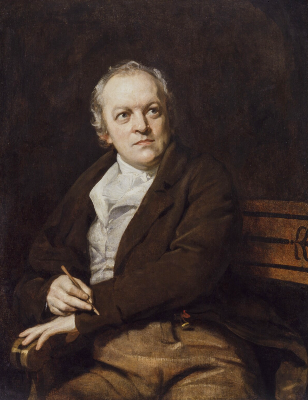
Two Poems by William Blake

William Blake (1757-1827)

Arguably known as much for his painting skills as for his poetry, British Romantic poet William Blake (1757-1827) was recognized for neither during his lifetime. Blake has been posthumously recognized for the philosophical undercurrents in his self-proclaimed prophetic works.

Blake was said to be influenced at one point, as were many writers of his time, by the ideals of the American and French Revolutions. His vocal criticism of organized religion and idiosyncratic viewpoints likely did nothing to help him gain prominence in literary circles during his lifetime; however, the rise and fall of many writers’ reputations throughout the centuries has more to do with the ideologies and sentiments of modern critics than actual fair analysis of one’s work in the context of their own time and circumstance.

The third of seven children, Blake was homeschooled by his mother after age 10. He entered into an apprenticeship for seven years to become a professional engraver, after which he became a student at the Royal Academy. In 1781, he married the illiterate Catherine Boucher, who he taught not only to read and write, but how to engrave. She subsequently helped him in his craft for the rest of his life.

Blake’s most recognizable poems include “The Tyger” and “The Chimney Sweeper: When My Mother Died I Was Very Young,” both of which are found below.


The Tyger

Tyger Tyger, burning bright,
In the forests of the night;
What immortal hand or eye,
Could frame thy fearful symmetry?

In what distant deeps or skies.
Burnt the fire of thine eyes?
On what wings dare he aspire?
What the hand, dare seize the fire?

And what shoulder, & what art,
Could twist the sinews of thy heart?
And when thy heart began to beat.
What dread hand? & what dread feet?

What the hammer? what the chain,
In what furnace was thy brain?
What the anvil? what dread grasp.
Dare its deadly terrors clasp?

When the stars threw down their spears
And water’d heaven with their tears:
Did he smile his work to see?
Did he who made the Lamb make thee?

Tyger Tyger burning bright,
In the forests of the night:
What immortal hand or eye,
Dare frame thy fearful symmetry?


The Chimney Sweeper: When My Mother Died I Was Very Young

When my mother died I was very young,
And my father sold me while yet my tongue
Could scarcely cry ” ‘weep! ‘weep! ‘weep! ‘weep!”
So your chimneys I sweep & in soot I sleep.

There’s little Tom Dacre, who cried when his head
That curled like a lamb’s back, was shaved, so I said,
“Hush, Tom! never mind it, for when your head’s bare,
You know that the soot cannot spoil your white hair.”

And so he was quiet, & that very night,
As Tom was a-sleeping he had such a sight!
That thousands of sweepers, Dick, Joe, Ned, & Jack,
Were all of them locked up in coffins of black;

And by came an Angel who had a bright key,
And he opened the coffins & set them all free;
Then down a green plain, leaping, laughing they run,
And wash in a river and shine in the Sun.

Then naked & white, all their bags left behind,
They rise upon clouds, and sport in the wind.
And the Angel told Tom, if he’d be a good boy,
He’d have God for his father & never want joy.

And so Tom awoke; and we rose in the dark
And got with our bags & our brushes to work.
Though the morning was cold, Tom was happy & warm;
So if all do their duty, they need not fear harm.

Two Poems by Edmund Spenser

Edmund Spenser (1552-1599)

A contemporary of William Shakespeare and Ben Jonson, British Renaissance poet Edmund Spenser (1552-1599) is probably best known as the author of “The Fairie Queen,” an epic fantasy poem celebrating the monarch of the time, Queen Elizabeth I.

Spenser, however, did much more than write a flattering poem paying tribute to the queen and her family line. He also wrote many sonnets and is considered one of the founders and most respected craftsmen of English verse.

Born in London and twice married, Spenser’s life was spent writing and socializing in literary circles. His foray into politics was suppressed during his lifetime, possibly due to his incendiary viewpoints regarding the Irish. His prose pamphlet entitled “A View of the Present State of Ireland” argued for destroying the customs and language of the Irish people, by violence if necessary, to force them into a more submissive stance toward the English. He died in London at age 46 and was buried in Poets’ Corner in Westminister Abbey.

Aside from his most famous (and very lengthy) epic fantasy poem, “The Fairie Queen,” the following two sonnets are from his collection Amoretti and are among the most notable poems Spenser wrote.


Amoretti LXXIX: Men Call You Fair

Men call you fair, and you do credit it,
For that your self ye daily such do see:
But the true fair, that is the gentle wit,
And vertuous mind, is much more prais’d of me.
For all the rest, how ever fair it be,
Shall turn to naught and lose that glorious hue:
But only that is permanent and free
From frail corruption, that doth flesh ensue.
That is true beauty: that doth argue you
To be divine, and born of heavenly seed:
Deriv’d from that fair Spirit, from whom all true
And perfect beauty did at first proceed.
He only fair, and what he fair hath made,
All other fair, like flowers untimely fade.


Amoretti LIV: Of This Worlds Theatre in Which We Stay

Of this worlds Theatre in which we stay,
My love lyke the Spectator ydly sits
Beholding me that all the pageants play,
Disguysing diversly my troubled wits.
Sometimes I joy when glad occasion fits,
And mask in myrth lyke to a Comedy:
Soone after when my joy to sorrow flits,
I waile and make my woes a Tragedy.
Yet she beholding me with constant eye,
Delights not in my merth nor rues my smart:
But when I laugh she mocks, and when I cry
She laughes, and hardens evermore her hart.
What then can move her? if not merth nor mone,
She is no woman, but a sencelesse stone.

Two Poems by Carey Jobe

The Creek’s Stones

No neighbor’s surprised Stone Creek
is threading the needle’s eye of August
aridity. As for weeks, parched cirrus
gauge the sky’s depth, rain’s delay:
Minnows trapped in shrinking puddles
probe edges, catch the colors

of the pebbles, crawstone oddities
littering the shambling creek bed
—quarters in banked spits, pennies
brimming wishing pools. Could a trickle’s
persistent drollery planish
their dented disks? I pick one,

a wet, hard smoothness. Brown-milky
seepage soon heals the scar.
Uninteresting, a drab wart-gray,
it denies my reflection, the drought
that strands it, even—a fossil
of blue Devonian bays, white beaches

kilned to bedrock, now resuming its
nature as sand. I toss it—clack!—
scan the creek. As if thrown years,
it’s vanished down this tributary
of things going unnoticed, to surface
randomly as a childhood memory

polished smoother. Could Stone Creek
erode them all? How?—Wet pebbles sprawl
under glazing sun, each a shape
partly resistance but mostly
acquiescence, like a mind’s
travel from rough to rounder.


Fear Under No Moon

Thieves’ Night, a moonless night.
Leaves crumple softly in my black yard.
I overheard,
listen hard:
a dog trailing some scent of fright?
cat on a bird,
or what?
Imagination’s lighted match,
and I forgot
to turn the deadbolt, latch…
Night fear, I’ll say. My mind’s dream play
with whispers, not…
—a watchdog’s bolted cry!
Houses off, but clear. By the pillow my
eyes go wide,
go blind. I am warned. Listen! Beside
the wall—the whistling corner sweep
of wind? Yes, wind! Still, I
won’t sleep…
Someone is outside. Someone real
at a task that ends before sunrise.
His owllike eyes
at my windowsill,
transfix me, chill
terror glistening like a spark
along my spine. No scream in the dark
is so truly fear
as this quiet nearing on moonless ground,
all things I hear
in a glimpse of sound.


Carey Jobe is a retired attorney and judge who has published poetry over a 45-year period.  His work has recently appeared in The Lyric, The Road Not Taken, and Orchards Poetry Journal.  He has published a collection of poetry, By River or Gravel Road (Aegina Press, 1997).  He resides in Crawfordville, Florida.

Two Poems by Tanya Standish McIntyre

Sugaring

Hundred-year-old maples joined in a ring 
around our house, roots grown through the wall 
of our cellar; cellar of the deep stone well, the yawling 
prisoner cat; cellar of revenants, wraiths 
and chains – stories they would tell at night to cure 
anyone of sleep. In March, up from the earth, by
some magical ancient osmosis, with the faint taste of
bananas, sap rose with steady drips, overflowing 
our galvanized buckets from a hole bored in
the pulpy layers with a red-handled bit stock.

How sealed within
a case we are, as children, before words
let us out; how dusk deepens, pressing into
the belly, as though day
would take us with it – all day I shattered
layers of pond ice with a stick, releasing
more and more to the stream, the glass music lost
and found, until I could not feel my hands.

Wood smoke wound with our syrup 
made its way west to the hills – a winter’s end 
offering to forgotten gods, who watched us 
but never intervened – gods whom 
by then, had abandoned all
of them, but me.


The Pond

A foot of black mud where the frogs
spent winters, lived at the bottom
finer than silk and grey
clay, beneath the cattails where red-winged
blackbirds perched as sentinels, guarding nests
no one ever saw, flashing their
scarlet symmetry, gliding from fencepost to fencepost
like generals surveying from the top
of each ridge, through the loom
of giant dancers, the willow’s wicker cages
sashaying to wind’s serenade to sky; the accordion
bellows of frog legs – spotted turquoise
leopards; the flighted avatars – dragonflies;
water-skimming pond-skaters
defying natural law – I want to make a raft,
drift just like Huck
through the starry marsh
marigolds at midnight, my little sister,
a loaf of bread and a string for catching
minnows; under the moon
with a long birch stick, lying in wait
for surprise, endless as summer
through the moats of cloud castles.


Tanya Standish McIntyre is a poet and visual artist based in rural Quebec, Canada. Her debut collection, The House You Are Born In, is forthcoming in McGill-Queens University Press’s Hugh MacLennan Poetry Series in December ’22. Drawing upon memories of her early years on an ancestral farm and the marking relationship with her grandfather, an early review calls it “a stunning debut by a promising new poetic voice, haunting and uplifting in equal measure.” Visit her website at tanyastandishmcintyre.com.

“What Euclid and I Might Share” by Kiluwe Mbuyu

Euclid alone saw Beauty bare,
And strove to make her smile
We, too, have met; I shan’t forget
Her craft and gentle guile
In amber hair (her finest fare),
I knew her for a while

What might we share? That man, so rare,
Had more than I can offer
But he and I look to the sky
And both our pity proffer
To stars that brim with light too dim
To touch our darling author

When blackest night defied all sight
We still had light to see
One look from her, that smile so sure;
She shone so brilliantly
What golden chance! To get to dance
With one as fine as she

But seasons come, and seasons go
And time is no man’s friend
Euclid grew old, the fire went cold
The days began to blend
He found himself an empty shelf
He lost her in the end

This, too, we share: a child’s despair
For castles washed from shore
Though made of sand, a dream so grand
Had seemed to be in store
I held her near, when she was here
But she is here no more

Perhaps the air is poorer fare
Without her voice alight
Perhaps the stars confess their scars
And weep throughout the night
I only know what gentle woe
Now holds me oh-so tight

But there is more to reckon for
Than air and stars and I
Thus, Beauty found will not be bound
By those she passes by
She’ll travel far, beneath new stars
Beneath a distant sky


Kiluwe Mbuyu is an undergraduate student at Wesleyan University, working on a degree in mathematics.  You can find more of their work on Instagram at @kiluwe.poems.