“Tarnished” by Gerard Sarnat

Ger’s glasses naturally rose-colored,
although trying hard to prevent
such on all of our cheeks

I ask the weekly Men’s Group
which has met at my house
for many many decades

to abide by these COVID-19 rules:
“Following up from last previous
discussion, I’d suggest to you

1. No one who’s ill or recently exposed
to someone suspiciously sick
(whatever that means)

should currently come to meetings.
2. We maximize elbow or Wuhan
toe taps, foot touching, etc. — but

at least I am passing for now on those
wonderful hugs sure do miss already.
If above is [quite understandably]

too tight-ass / hysterical, perhaps convene
elsewhere?  Simply cannot afford for
Lela or me to be sick. If acceptable

see ya Wednesday.” …Unanimous agreement
reached seems another golden step building
more responsible plus mature community

— until my partner / boss for a half-century
opines, “Getting together is unnecessary!”
thus putting her kibosh on well-laid plan.


Gerard Sarnat, MD’s won the Poetry in Arts First Place Award/Dorfman Prizes and has been nominated for a handful of recent Pushcarts/Best of Net Awards. He authored HOMELESS CHRONICLES (2010), Disputes, 17s, and Melting The Ice King (2016). Sarnat is widely published, including recently by academic-related journals at Stanford, Oberlin, Wesleyan, Johns Hopkins, Harvard, Pomona, Brown, Penn, Columbia, Sichuan, Canberra, University of Chicago as well as in Ulster, Gargoyle, Main Street Rag, American Journal Poetry, Poetry Quarterly, New Delta Review, Brooklyn Review, LA Review, San Francisco Magazine, and the New York Times. Mount Analogue selected KADDISH for distribution nationwide on Inauguration Day. Sarnat’s poetry was chosen for a 50th Harvard reunion Dylan symposium.
“Two Broken Sticks” by William Doreski

When electric power fails, a sneer
drifts from the haunted forest
and nibbles our extremities.

The night wind rackets in shades
of dolor we otherwise dodge,
being creatures of sprightly mood.

Tonight I lie in a dreamless stupor
and dream anyway, rehearsing
my love of a tiny woman

represented by two broken sticks
dropped on a street in Cambridge
west of the MIT campus.

I don’t remember that woman
seeming so brittle, but the sticks
are undeniable. I drop a tear

in the gutter as the howling
of our deaf old cat wakes me
into dark too thick to stir with

those broken little sticks of pine.
No use explaining this dream
to you, busy feeding the pets.

No use bracing myself against
the windy dawn just brimming
with the last tatter of rain dispersed.

You wouldn’t believe how distant
the streets of Cambridge became
since I last crossed the rainbow

of Longfellow’s cut-stone bridge.
I should have left the two sticks crossed
at an intersection. Too late

to recover them. Just believe,
as I do, that electric power
will restore itself in time

to link us to the Anthropocene,
where dark fades into fresh colors
even the dirt-poor can wear.


William Doreski has published three critical studies and several collections of poetry. His work has appeared in many print and online journals. He has taught at Emerson, Goddard, Boston University, and Keene State College. His most recent book is Train to Providence, a collaboration with photographer Rodger Kingston.

“Frozen Heart” by Jennifer Ruth Jackson

I watch you tremble.  The cracked, dry pieces
of your hands a winter mosaic—flakes
and webs of blood where fissures grow deep.
Will you lay your palm on my cheek of chiseled stone?
Sculpt my emotions one last time to mimic regret!
Icicles clink together like champagne flutes
in my hair—a toast to an extinguished flame.
Breathe steam against my lips and pretend you left
your soul within me.  Skate away on our black-glass
pond of a past, breaking through.


Jennifer Ruth Jackson is an award-winning poet and fiction writer whose work has appeared in Red Earth ReviewBanshee, and more.  She runs a blog for disabled and/or neurodivergent writers called The Handy, Uncapped Pen from an apartment she shares with her husband. Follow her on Twitter @jenruthjackson.

“Taking Stock” by Stephen Kingsnorth

I carried a Pisa pile
towards the door desk, grayish tinge.
The bright street frontage, poster glow
felt-tip scrawl announced, not Alexandria,
but fire damaged stock for sale.

High School me, taken self to town,
found this people-free paradise;
miser pocket-money in pig-skin purse
and upstairs warehouse, rickets stairs.

Cubic capacity, volume of books,
as if building razed, scarred library,
leaving untidy, uneven
brick foundation course which might
totter, crumble, bravely stand,
though interleaved mortar might fall about.

Column or torus, cheapest heaps,
towers, footstools, pilae stacks,
with floor before another plinth,
classic publishers fading pink,
a hypocaust for everyman,
Dutton, Dent and Routledge,
English bricks in global walls.

Picking through rough rubble site,
bombsite pages still bound, intact,
I sifted authors, faint pencil fly
just a dime/tanner, though ‘just’ is mine.

Juvenile choices from printer’s block tray,
lines with words, incunabula
of literature, devoured by hungry,
on every page of history,
appetite never satisfied.

Short boy, still teen, conservative in style,
probably in jacket, tie,
like tight-rope walker
stretched balance reaching towards cash register.
I waited while she totted total dollar/shillings spent.

Seeing selection for my shelves,
she posed was I a teaching man?
Now feel six feet tall
I chuckled, denied,
but volumes carried, swelled with pride,
a glow recalling embers laid
around these for basement prices paid.
If she could read those light lead-marks,
eye-sight good in that dingy site,
more confident my bus stop stride.

Though fifty on, two yards from here,
those tomes look grand; yet still unread.


Stephen Kingsnorth (Cambridge M.A., English and Religious Studies), retired to Wales from ministry in the Methodist Church, has had pieces accepted by over a dozen on-line poetry sites, including Sparks of Calliope; and Gold Dust, The Seventh Quarry, The Dawntreader, Foxtrot Uniform Poetry Magazines, and Vita Brevis Anthology.  His website is Poetry Kingsnorth.

“Doppelgänger” by Diane Elayne Dees

(Robert Gordy, Untitled Face)

She appears to be Neanderthal, her face
is flat, her nose quite broad, her forehead high.
Her jaw is square, her mouth a gaping space;
a pupil seems to pop out of each eye.
It may just be the way her ancient skull
is structured, but she looks so terrified,
as if her very essence has been dulled,
and she can neither scream for help nor cry.

I see her every day, framed on my wall,
and my sadness for her cannot be contained.
I feel for her, her grief, but most of all—
I feel for my own loss, my constant pain.
I look at her and relive my own trauma;
she looks back at me, intimating karma.


Diane Elayne Dees’s chapbook, I Can’t Recall Exactly When I Died, is forthcoming from Clare Songbirds Publishing House; also forthcoming, from Kelsay Books, is her chapbook, Coronary Truth. Diane’s microchap, Beach Days, is available for download and folding from the Origami Poems Project site. Diane, who lives in Covington, Louisiana, publishes Women Who Serve, a blog that delivers news and commentary on women’s professional tennis throughout the world. Her author blog is Diane Elayne Dees: Poet and Writer-at-Large.

“Mars” by Casey Killingsworth

There was this show on the massive amount of food
prepared everyday on a luxury ship, thousands
of pounds of shrimp and chicken and unspeakable
numbers of workers trapped on that boat,
racing against the clock to make every meal perfect.
I don’t even know if we have words to judge this.

Sometimes I don’t feel like I belong here, like I’m
different in the way a shrimp is different
from a chicken, the way they look at
the world with either feathers or from
underneath the ocean and in the end sharing
space on someone’s plate is all they have in common.

Sometimes I feel like I’m from another planet,
you know, like I’m lying there on someone else’s plate.
Then I walk down the street watching everyone watch
themselves in store windows believing the same thing,
how different they are. And I start thinking, well, maybe
we are all from Mars, or maybe we’re already on Mars,
and we’ve been here all along.

And if that’s true, then maybe we’re not so different after all.


Casey Killingsworth has work in The American Journal of PoetryKimera, Spindrift, Rain, Slightly WestTimberline Review, COG, Common Ground Review, Typehouse,  Bangalore Review, Two Thirds North, and other journals. His book of poems, A Handbook for Water, was published by Cranberry Press in 1995. He also has a book on the poetry of Langston Hughes, The Black and Blue Collar Blues (VDM, 2008). Casey has a Master’s degree from Reed College.


“Moonwalking” by Ken Gosse

“I once met a man who had walked on the moon.”
That’s the start of an essay, and I’m not immune
to its essence, explaining how, for many writers,
“Imposter Syndrome” makes us feel like outsiders.

I’m sure this is true for whatever you do;
there may be exceptions, but probably few.
I don’t belong here as an author of verse,
but I’ll keep on writing, for better (and worse)—

or maybe I do, though I don’t feel that way.
I’m used to it now; happens most every day.
The greatest among us is also the least
in some way or other and though we all feast

on these gifts, they’re not evenly spread ’midst our bones
nor ’posited equally throughout all zones.
It seems that some people get more than fair share
while most of us feel we’re left out as an heir.

But each has some talent, so seek what’s inside.
Let’s use them to complement, not to divide.
When someone amazing encounters your space,
don’t run off and hide in your reticent place.

Consider they, too, may have some fear of you,
feeling they don’t belong—they can’t do what you do!
We’re in this together. Let’s give it our best;
even though we’re all different, we’re all like the rest.


Note: Inspired by Neil Gaiman’s comments, shared on Facebook by Aerogramme Writers’ Studio, about his encounter with Neil Armstrong at an event where the astronaut felt like he didn’t belong in a group teaming with “artists and scientists, writers and discoverers.”


Ken Gosse prefers writing short, rhymed verse with traditional meter, usually filled with whimsy and humor. First published in First Literary Review–East in November 2016, his poems are also in The Offbeat, Pure Slush, Parody, Home Planet News Online, Eclectica, and other publications. Raised in the Chicago suburbs, now retired, he and his wife have lived in Mesa, AZ, over twenty years.

Two Poems by Emily Dickinson

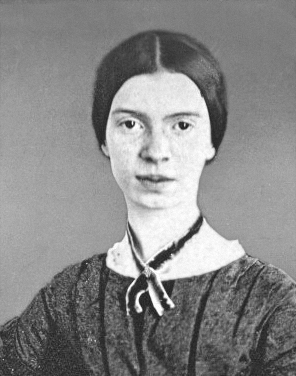
Emily_Dickinson_daguerreotype_(Restored_and_cropped)
Emily Dickinson, ca. 1848

Emily Dickinson very much belongs among the greatest poets of her era; however, her story is a cautionary tale for anyone who thinks poetry comes with any kind of fame or recognition. Unappreciated in her lifetime on the scale she deserved, her work is nonetheless a timeless collection of treasures which keeps her name upon the lips of even the most novice of literature aficionados. Here are two classics by Emily Dickinson.


“”HOPE” IS THE THING WITH FEATHERS”

“Hope” is the thing with feathers
That perches in the soul
And sings the tune without the words
And never stops at all,
And sweetest in the gale is heard;
And sore must be the storm
That could abash the little bird
That kept so many warm.
I’ve heard it in the chillest land
And on the strangest sea,
Yet never, in extremity,
It asked a crumb of me.


“SUCCESS”

Success is counted sweetest
By those who ne’er succeed.
To comprehend a nectar
Requires sorest need.
Not one of all the purple host
Who took the flag to-day
Can tell the definition,
So clear, of victory,
As he, defeated, dying,
On whose forbidden ear
The distant strains of triumph
Break, agonized and clear.

Two Poems by Edgar Allan Poe

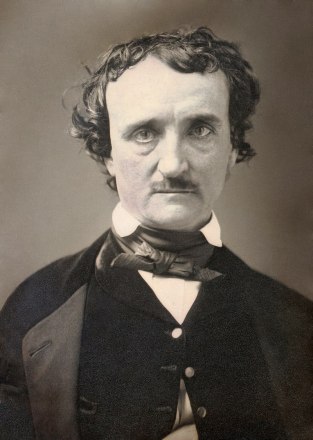
Edgar Allan Poe 1849
Edgar Allan Poe, 1849.

Edgar Allan Poe died in 1849, yet he is a poet and writer whose name is still familiar to many outside of academic circles. While often dark, his work has a depth of emotion which keeps it a relevant reminder of the human condition even into the 21st century. My own daughter is named after one of the following poems which speaks of love as a bond which transcends this mortal coil. Here are two popular poems by Edgar Allan Poe.


“ANNABEL LEE”

It was many and many a year ago,
In a kingdom by the sea,
That a maiden there lived whom you may know
By the name of Annabel Lee;
And this maiden she lived with no other thought
Than to love and be loved by me.

I was a child and she was a child,
In this kingdom by the sea,
But we loved with a love that was more than love—
I and my Annabel Lee—
With a love that the winged seraphs of Heaven
Coveted her and me.

And this was the reason that, long ago,
In this kingdom by the sea,
A wind blew out of a cloud, chilling
My beautiful Annabel Lee;
So that her highborn kinsmen came
And bore her away from me,
To shut her up in a sepulchre
In this kingdom by the sea.

The angels, not half so happy in Heaven,
Went envying her and me—
Yes!—that was the reason (as all men know,
In this kingdom by the sea)
That the wind came out of the cloud by night,
Chilling and killing my Annabel Lee.

But our love it was stronger by far than the love
Of those who were older than we—
Of many far wiser than we—
And neither the angels in Heaven above
Nor the demons down under the sea
Can ever dissever my soul from the soul
Of the beautiful Annabel Lee;

For the moon never beams, without bringing me dreams
Of the beautiful Annabel Lee;
And the stars never rise, but I feel the bright eyes
Of the beautiful Annabel Lee;
And so, all the night-tide, I lie down by the side
Of my darling—my darling—my life and my bride,
In her sepulchre there by the sea—
In her tomb by the sounding sea.


“ALONE”

From childhood’s hour I have not been
As others were—I have not seen
As others saw—I could not bring
My passions from a common spring—
From the same source I have not taken
My sorrow—I could not awaken
My heart to joy at the same tone—
And all I lov’d—I lov’d alone—
Then—in my childhood—in the dawn
Of a most stormy life—was drawn
From ev’ry depth of good and ill
The mystery which binds me still—
From the torrent, or the fountain—
From the red cliff of the mountain—
From the sun that ‘round me roll’d
In its autumn tint of gold—
From the lightning in the sky
As it pass’d me flying by—
From the thunder, and the storm—
And the cloud that took the form
(When the rest of Heaven was blue)
Of a demon in my view—


Three Poems by Robert Frost

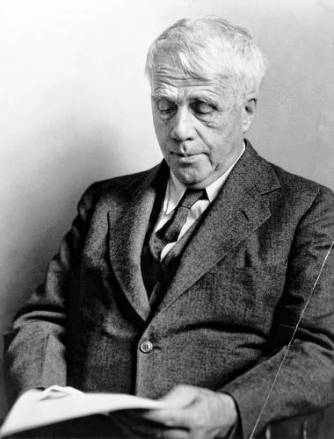
Robert Frost in a 1941 photograh. (Library of Congress photograph)
Robert Frost in a 1941 photograph. (Library of Congress photograph)

When I was an undergraduate in college, I had a professor who held the distinction of having every poet laureate of the United States in his car at one time or another since Robert Frost. He told an amusing story of having almost run Robert Frost over with his car while Frost was walking on the Amherst campus. Frost has long been one of my favorite poets and remains an influence 57 years after his death and over 95 years after the following poems were published. Here are three of my favorite Robert Frost poems which entered the public domain on January 1, 2019.


“STOPPING BY THE WOODS ON A SNOWY EVENING”

Whose woods these are I think I know.
His house is in the village, though;
He will not see me stopping here
To watch his woods fill up with snow.
My little horse must think it queer
To stop without a farmhouse near
Between the woods and frozen lake
The darkest evening of the year.
He gives his harness bells a shake
To ask if there is some mistake.
The only other sounds the sweep
Of easy wind and downy flake.
The woods are lovely, dark, and deep,
But I have promises to keep,
And miles to go before I sleep,
And miles to go before I sleep.


“THE ROAD NOT TAKEN”

Two roads diverged in a yellow wood,
And sorry I could not travel both
And be one traveler, long I stood
And looked down one as far as I could
To where it bent in the undergrowth;

Then took the other, as just as fair,
And having perhaps the better claim,
Because it was grassy and wanted wear;
Though as for that the passing there
Had worn them really about the same,

And both that morning equally lay
In leaves no step had trodden black.
Oh, I kept the first for another day!
Yet knowing how way leads on to way,
I doubted if I should ever come back.

I shall be telling this with a sigh
Somewhere ages and ages hence:
Two roads diverged in a wood, and I—
I took the one less traveled by,
And that has made all the difference.


“FIRE AND ICE”

Some say the world will end in fire,
Some say in ice.
From what I’ve tasted of desire
I hold with those who favor fire.
But if it had to perish twice,
I think I know enough of hate
To say that for destruction ice
Is also great
And would suffice.