5 Best Classic English Poets

Here at Sparks of Calliope, we define “classic” poets as poets who are widely read, have been studied academically, and whose work is in the public domain. Classic is commonly defined as “a body of work of recognized and established value.” This is not to be confused with the other definition of classic as involving the study of Ancient Greek and Latin literature. Here is a quick list of the top 5 British classic poets with links to biographies and a couple of samples from each. We would love to get your take on this order in the comments!

  1. William Shakespeare (1564-1616)

Undoubtedly the most famous poet of all time in the English-speaking world, William Shakespeare’s works are still being reproduced, adapted, and referenced in popular culture more than 400 years after his death. His famous plays overshadow his poetry, but do not detract from his recognition as a skillful poet in his own right. His literary influence on Western Civilization can hardly be overstated. We chose to feature “Sonnet 116” and “Sonnet 18” as two of his most popular poems.

2. George Gordon Byron, 6th Baron Byron (1788-1824)
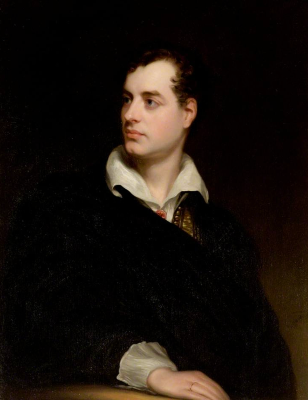
Lord Byron was the English version of Giacomo Casanova. Most famous for his lengthy poem entitled “Don Juan,” we chose “She Walks in Beauty” and “And Thou Art Dead, as Young and Fair” to represent the best of his work. Despite his current place of esteem in the hearts of his countrymen, his unpopularity with certain portions of the population during his lifetime led him to self-exile, and he died from illness while fighting the Turks in the Greek War of Independence.

3. John Keats (1795-1821)
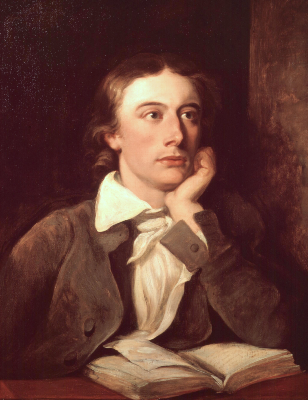
Admired for literary works of profound depth despite his young age and short time on this earth, John Keats is the poster child for the Romantic movement. We chose “Ode to a Nightingale” and “Ode to a Grecian Urn” to demonstrate his emotional depth and skillful use of imagery. While his life was cut short due to tuberculosis–he died at the age of 25–he nevertheless managed to write works which continue to inspire and earn him a place among the top five British poets of all time.

4. Percy Bysshe Shelley (1792-1822)
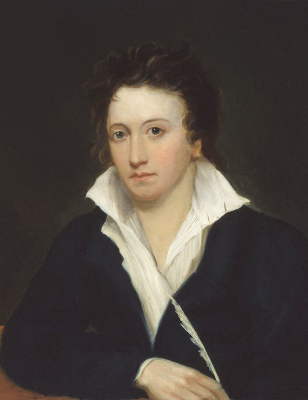
Described by one modern critic as “a lyric poet without rival,” Percy Shelley’s place as one of the best all-time classic British poets is not undisputed. Both T. S. Elliot and W. H. Auden are on record as fierce critics of his work. The notorious historical figure Karl Marx, on the other hand, was said to be an admirer. An atheist and political activist, Percy Shelley did not live to see much of his work published. However, the quality of his work earns him a place on our list. We chose “Ozymandias” and “To a Skylark” to showcase his talent.

5. John Milton (1608-1674)
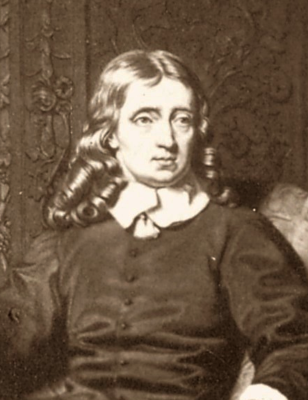
His most famous work, Paradise Lost, is so lengthy that seldom appears in samplings such as this; however, John Milton wrote shorter poems that are worthy examples of his abilities. He wrote his poems from a position of deeply-held religious beliefs and with a highly educated background. His works are highly intellectual if not profoundly philosophical, exploring themes such as divine justice and individual liberty along with other aspects of human existence. We decided upon “An Epitaph on the Admirable Dramatic Poet W. Shakespeare” and “On His Blindness” to highlight his writing ability.

Did we get our order right? What would yours be instead? How would you round out the top 10? We look forward to reading your comments!
Two Poems by D. Marie Fitzgerald

A Changed Heart

The day his youngest son was born
with a hole in his heart
my grandfather made a novena.

As a child I was told the cruel history:
how he poured hot soup over my
grandmother’s head,
chained his sons in the garage to a coal stove,
made them go without food,
would not allow children to talk at the dinner table,
slapped them across the head if they did.

As an adult I faced his hilly garden,
admired the ascending rows of
peppers, garlics, tomatoes, onions, grape vines.

Pointing to a plant I did not recognize
he motioned me to a shed
where rows and rows of unfamiliar
leaves hung on string,
the aroma making them known to me.
He pulled one large leaf down,
crinkled it between his plump fingers,
deftly rolled a cigar,
lit a match;
it smelled like home to me.

We descended the cellar stairs of that
house he had built with those dangerous hands,
where his casks of wine lined the stone walls.

There was no cruelty in that hand
that passed me a glass.

“A Changed Heart” previously appeared in A Perfect World by One Spirit Press, Cholla Needles, and Academy of the Heart and Mind.


Japanese Vase

For sixty years it moved with us,
that Satsuma vase.
Other object disappeared over the years,
but the vase was always there,
the original design brought by Korean potters
to Japan in the early 1600s
to the island of Kyushu.

It fell once,
surviving a clean break.
Mom glued it back together.
She believed it worth something,
held this vase in awe:
the Japanese man and woman
in feudal dress,
bold colors of red, blue, orange,
the backdrop a seascape
an island in the distance,
a three clawed dragon wraps
the circumference,
flamboyant figures in enamel
outlined in gold against chocolate
and white dotted moriage.

I can’t remember when
we didn’t own this vase
Mother purchased at auction.
When she died it became mine.
It would have been the perfect
place for her ashes, but there
is no stopper or lid.
She is there though
all the same.

“Japanese Vase” was first published in Plainsongs and appears in A Perfect World published by One Spirit Press.


D. Marie Fitzgerald is a retired English and creative writing instructor. She is the author of six collections, and her work has appeared in several publications, most recently Down in the Dirt, Cholla Needles, and Academy of the Heart and Mind. She currently hosts a monthly featured readers series in Palm Springs, California and runs a poetry critique group.

Two Poems by James Bellanca

On Waking to Shakespeare’s Garden in Autumn

On this young autumn’s sun-squint light-bright morn,
I snuggle like a Joey safe reclined
In pouch, so glad to dream sweet days fast gone.
I see round pink tails take their own sweet time
To nibble my much-loved, green garden down
Ignoring all but fragrant balm and thyme.
At last awake in William’s hut, I see
Only bits of chewed plants’ scattered debris.
This day, pink roses still greet the sun
and spread such scents I know with Puck in mind.
Rose Eglantine’s sweet nose my nose will stun
with floral scents to reach my soul now primed
to sense fall airs. I bend my head anew
to see the last surviving roses’ view.


Rings

I yet recall the day we stopped to buy
our marriage rings at the local jewelry store.
We searched each case. We peered through countertops
before the lone salesman (no sales “they” then)
displayed our choice. Breathless, we bought our bands.

Soon came new years to raise our four offspring
and then our children’s children grown too fast,
fast lost in widespread universities to play,
to learn, to sport, to seek new paths, new loves
fresh absent empty nest advice from us.

So many years have flown like birds gone south.
These nights we search Hulu and Netflix shows
reviewing places, we could not glob trot
or watching old BritBox comedy acts
with neighbor friends we’d gathered in our ring.

Full round the ring our lives have spun,
our life cycle now most likely marred
when Death brings news of loved ones rowed
across the river Styx. We clasp our hands,
our long ringed fingers locked, a single bond.


James Bellanca, 87, is a retired high school English teacher and author/publisher of teacher education guides who came lately to writing poetry. As a gardener, he learned to celebrate the natural world in his backyard. He favors formal narratives in which he weaves nature with themes of peace, justice, family with sardonic commentary into the foibles of senior life. His work has appeared in Witcraft, Down in the Dirt Magazine, Ethereal Haunted Journal, The Oakleaf, and Solution Tree Press. He organically gardens with his wife and friends in Lake Forest, Illinois.

Two Poems by Holly Day

In the Park

The bonsai trees pose behind the glass
like little girls wearing too much makeup
or old women dressed like children.
Their leaves and spring blossoms
are too large for their branches, disproportionate
their slim trunks gouged and twisted
with memories of inflicted droughts, near-fatal cuts.

The man in charge of the display whispers to the trees
as he works them over with the shears, tells them they’re pretty
as he keeps them from growing up. Roots, thick and sinuous,
quietly search for a way out beneath the display
of dry moss and gravel, tap against the glass at night
tell stories so slow they take decades to end.


Inherent

some babies just know that they’re born on thin ice
well-behaved children
of rape and desertion, as if they know how deep
a hole they have to climb out of just
to

stay. some babies just know
that they’re born on thin ice, that they’re always
a hair’s breadth from being
abandoned, that they live in
the shadows of state care, foster homes, or
a paper bag dumped by the side of the road.

some babies just know.


Holly Day was recently published in Analog SF, Cardinal Sins, and New Plains Review, and her books include Music Theory for Dummies and Music Composition for Dummies. She currently teaches classes at The Loft Literary Center in Minnesota, Hugo House in Washington, and The Muse Writers Center in Virginia.

Two Poems by Martin Elster

Playground In Early Fall

A woman pushes her child
who swings on a leather strap
as wings of sprightly yellow jackets slap

the afternoon. Beguiled
by the scent of bones, charred meat,
a mongrel wanders, scavenging the trash

near grills, as scattered cash
might make you pause. Kids, fleet
as pups, play wolf-cub-rough. Their howls carry

across the length of the park.
They wriggle through tunnels, dark
as a serpent’s gut, and slither down slides as scary

as seeing the teeth of the hound
now nosing around the fence
that shields them from a world far too immense.

He marks it, scuffs the ground.
He seems sublimely numb
to the squall of squeals and shrieks (as if the noise

that blooms from these boisterous boys
and clamorous girls must come
from beyond the world), while those who are climbing and crawling

are unaware a fog
will make them deaf as the dog
to the whispering leaves of memory, falling, falling.


Greenland Shark

Swimming adagio
through frozen seas, you grow
far slower than a hickory
and, by some wicked trickery,

are the oldest vertebrate
on earth. Is that so great?
Perhaps. Or maybe not.
It would depend a lot

on whether you’re go-getting,
letting your gills down, jetting
through the Atlantic Ocean,
or lost. You haven’t a notion

you were a youth when Bruno
was born. Perhaps you do know
that you’ve, indeed, outlasted
the hoariest whale that blasted

its songs across the sea
or a bivalve thought to be
five hundred seven years old.
While swimming through the cold,

you’re surely not aware
of the net which soon will snare
your ancient bones. They’ll floor us.
“Amazing!” we will chorus.


Martin Elster, who never misses a beat, was for many years a percussionist with the Hartford Symphony Orchestra. Martin’s poems have appeared in numerous literary journals and anthologies in the U.S. and abroad. His honors include the 2022 Helen Schaible International Sonnet Contest winner, Rhymezone’s poetry contest, five Pushcart nominations, and a Best of the Net. A full-length collection, Celestial Euphony, was published by Plum White Press in 2019.

“Grave Thoughts” by Jeffrey Essmann

Perhaps, I thought, it’s time I bought a grave:
Just something humble by a chain link fence
With room enough my name there to engrave
And one or two geraniums to brave
With grace the passage still of earthly time
And mind the passersby of fairer climes
(An aisle down, where folks aren’t packed so dense).

It’s not so much that I’ve been feeling old
(At least not older than I rightly should)
But sense now everywhere some deeper cold
That nothing in me could have quite foretold,
And think: Perhaps just go there, take the tour;
Ask questions; look at holes; take a brochure;
Consider well my coffin: Metal? Wood?


Jeffrey Essmann is an essayist and poet living in New York. His poetry has appeared in numerous magazines and literary journals, among them: America Magazine, Dappled Things, the St. Austin Review, Pensive Journal, U.S. Catholic, Amethyst Review, The Society of Classical Poets, and various venues of the Benedictine monastery with which he is an oblate. He is editor of the “Catholic Poetry Room” page on the Integrated Catholic Life website.

Two Poems by Richard Lovelace

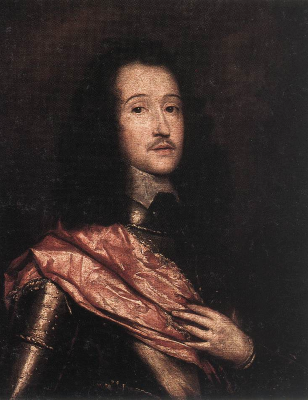
Richard Lovelace (1617–1657) was a prominent Cavalier poet of the 17th century, renowned for his lyrical elegance and association with the Royalist cause during the English Civil War. Born into a well-to-do Kentish family, Lovelace was educated at the prestigious Charterhouse School and later at Gloucester Hall, Oxford, where his charm, good looks, and poetic skill quickly gained him admiration and support among the literary elite. Known for his refined manners and loyalty to King Charles I, Lovelace’s life and work were deeply influenced by his unwavering commitment to the Royalist ideals of honor, loyalty, and courtly love.

Lovelace’s poetry is marked by its musical quality, emotive depth, and dedication to the ideals of chivalry. His most famous work, To Althea, from Prison, penned while he was briefly imprisoned for his Royalist sympathies, contains the immortal lines, “Stone walls do not a prison make, / Nor iron bars a cage.” This piece and others in his collection Lucasta (1649) express his belief in inner freedom and resilience, as well as his love for a woman he called Lucasta (thought to be a poetic pseudonym for his beloved Lucy Sacheverell). Lovelace’s verses often celebrate themes of loyalty, love, and liberty, reflecting his desire for both personal and political freedom during a time of national turmoil.

Lovelace’s commitment to the Royalist cause led him to serve in the military on behalf of King Charles I, fighting in the Bishops’ Wars in Scotland and later in the Civil War. However, his loyalty came at great personal cost. After repeated imprisonments and financial losses, he spent his later years in poverty and ill health, facing the bitter disillusionment that many Cavaliers experienced after the fall of the monarchy.

Lovelace’s legacy as a poet rests on his ability to merge graceful language with Cavalier ideals. His verses capture the spirit of a turbulent era, and his enduring works offer insight into the personal sacrifices of those loyal to a lost cause. Though his fame dwindled after his death, Lovelace’s poetry was rediscovered in the 19th century, appreciated for its lyrical beauty and its emblematic portrayal of honor and love. His work, including the two poems featured below, remains a touchstone of the Cavalier tradition, influencing later poets and reminding readers of the values of courage, loyalty, and resilience.


To Althea, From Prison

When Love with unconfinèd wings
Hovers within my Gates,
And my divine Althea brings
To whisper at the Grates;
When I lie tangled in her hair,
And fettered to her eye,
The Gods that wanton in the Air,
Know no such Liberty.

When flowing Cups run swiftly round
With no allaying Thames,
Our careless heads with Roses bound,
Our hearts with Loyal Flames;
When thirsty grief in Wine we steep,
When Healths and draughts go free,
Fishes that tipple in the Deep
Know no such Liberty.

When (like committed linnets) I
With shriller throat shall sing
The sweetness, Mercy, Majesty,
And glories of my King;
When I shall voice aloud how good
He is, how Great should be,
Enlargèd Winds, that curl the Flood,
Know no such Liberty.

Stone Walls do not a Prison make,
Nor Iron bars a Cage;
Minds innocent and quiet take
That for an Hermitage.
If I have freedom in my Love,
And in my soul am free,
Angels alone that soar above,
Enjoy such Liberty.


To Lucasta, Going to the Wars

Tell me not (Sweet) I am unkind,
         That from the nunnery
Of thy chaste breast and quiet mind
         To war and arms I fly.

True, a new mistress now I chase,
         The first foe in the field;
And with a stronger faith embrace
         A sword, a horse, a shield.

Yet this inconstancy is such
         As you too shall adore;
I could not love thee (Dear) so much,
         Lov’d I not Honour more.


The informational article above was composed in part by administering guided direction to ChatGPT. It was subsequently fact-checked, revised, and edited by the editor. The editor/publisher takes no authorship credit for this work and strongly encourages disclosure when using this or similar tools to create content. Sparks of Calliope prohibits submissions of poetry composed with the assistance of predictive AI.

“Rainbow Hues Throughout Life” by Janice Canerdy

When hourglass sands were mostly in the top
and life was like a poem penned for me,
when forests beckoned friends and me, “Come play,”
love of adventure ruled and I felt free.

When rainbow colors filtered through the trees
and Nature served to thrill, fulfill, and teach,
imagination wove grand tapestries
and—for a time—all seemed within my reach.

********************

Let children have their dreams and fantasies.
They’ll grow up soon enough and see what’s true.
May each define “success” and work for it,
find joy, and keep those rainbow hues in view.


Janice Canerdy is a retired high-school English teacher from Potts Camp, Mississippi. Her poems have appeared in numerous publications, including Light QuarterlyThe Road Not TakenLyricParodyBitterroot, the Society of Classical Poets JournalWestward QuarterlyLighten Up OnlineHalcyon DaysPenwood Review, the Mississippi Poetry Society JournalWhispering Angel Books, and Quill Books. Her book, Expressions of Faith (Christian Faith Publishing), was published in 2016.

Two Poems by Mike Chrisman

After the aquarium

I hadn’t known I would want a ceremony
when my big angelfish died
that I raised from a nickel-sized thing
to a silver dollar or greater, but I didn’t
want to toss it in the toilet
like my grandfather’s cigarette butts,
so my ten-year-old daughter and I
bundled up against February
and walked the road a half mile
until the culvert that opens
into a pool almost deep enough
to swim, certainly to snag a brookie
or two as the neighbor boys will,
then down the steep bank six or eight
feet through thigh-deep snow, my daughter
struggling in my path until we stood
at the pool’s edge, where I said some words
about a fish from the tropics gracing
our northern home, then thanked it before
bending down to let it slide
from the plastic bag, surrounded
by warm aquarium water, shiny
onto the icy brook’s surface, where
it spun briefly before catching
current southward, down Avery Brook
to the Deerfield, the wide Connecticut,
into Long Island Sound, the sea…
then father and daughter trudged
home, while the fish receded
into memory. As will we.


View from el parque central

on a wooden bench watching the tourists,
the Mayans, the pigeons navigating
among each other, the concrete
path littered with fallen
jacaranda petals. I’m sitting
to eat my little cup of ice cream
and remembering an ancient time:
summer, Central Illinois, and Zesto
soft-serve, plus three kids
happy with their cones;
a nickel each in ’55 –
cheap even then – and the short trip
home in our Chevy station wagon
perched on a more dangerous bench:
the tailgate lowered, where we ride
backward, our short legs nearly
touching the pavement … and jouncing
slowly across the train tracks –
“Hold on, kids!” to the house,
where our big collie waits
to greet us, his reward the sweet
and soggy cone-bottoms none of us
would have believed might survive
in memory seventy years after the fact.


Mike Chrisman is retired, living in Antigua, Guatemala. He worked for years in the mental health field in rural Western Massachusetts. He earned his MFA in Creative Writing at UMass Amherst. Chrisman has three daughters and five grandkids. His poetry book, Little Stories, has an ISBN, and his own translation of the Bible, The Bible: Warts and All  is on Amazon Kindle.

“The Early Bird Gets the Worm Ballade” by Mary Winslow

Before fishing hour, psalms speak low
when quiet starts becoming restless
Canadian geese muttering slow
bacon and butter sizzle and wake us
the morning chases off the stillness
next the mist, then it starts raining
dawn, but it feels midnight nonetheless
minds swaddled simple as sun’s sleeping

I glance at the clock on the bureau
the fog lingers on diaphanous
a sliver of night silvers shallow
see the worm, that threadbare little cuss
in daffodils birds rustle the campus
the thistle where morning comes flying
the hungry aren’t yet ambitious
minds swaddled simple as sun’s sleeping

This Atlas beast at daybreak should know
and yet doesn’t hurry into business
when the magic hour of life’s marrow
sliding from night into consciousness
those on the fiddle can poach in the mess
who stagger or roll, some sleepwalking
without regular terms of success
minds swaddled simple as sun’s sleeping

Envoy

The robin arrives in best spring dress
no need for plan, she’s simply walking
before the law, there’s naught to transgress
minds swaddled simple as sun’s sleeping


Mary Winslow has been writing poetry for over 30 years. Her poems have appeared in The Road Not Taken, the Antigonish Review and many other journals and magazines. Her translation of Norwegian poetry has appeared in the Journal, in Wales. She has taught English at colleges and universities throughout the United States. She lives about an 18-mile canoe paddle from the shores of Canada on the Olympic Peninsula and teaches part-time in the Writing Center at Peninsula College.