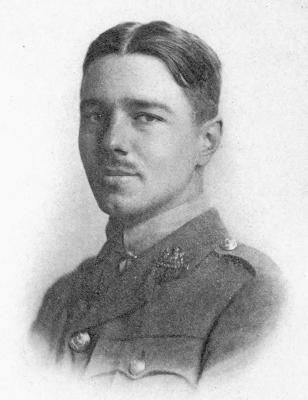
Two Poems by Wilfred Owen

Wilfred Owen (1893–1918) was a British poet whose powerful works provide some of the most poignant insights into the horrors of World War I. Born in Oswestry, Shropshire, England, Owen grew up in a lower-middle-class family. His early education sparked an interest in poetry, and he was influenced by Romantic poets such as John Keats. However, it was his experiences as a soldier during World War I that would most profoundly shape his poetic voice and themes.

Owen enlisted in the British Army in 1915, at the age of 22. He was initially enthusiastic about joining the war effort, driven by a sense of duty and patriotism. His perspectives, however, drastically shifted after witnessing the brutal realities of trench warfare. In 1917, he suffered from shell shock (now known as post-traumatic stress disorder) and was sent to Craiglockhart War Hospital in Edinburgh, where he met fellow poet Siegfried Sassoon. This meeting proved crucial, as Sassoon became a mentor and friend, encouraging Owen to channel his experiences of war into his poetry.

Owen’s poems, written during the last two years of his life, are marked by their vivid imagery and intense emotional force. In stark contrast to romanticized portrayals of war, his poems expose war’s brutality and the suffering of soldiers. Works such as “Dulce et Decorum Est” and “Anthem for Doomed Youth” found below are renowned for their bold depictions of the physical and psychological trauma experienced by combatants. His use of half-rhyme, vivid descriptions, and shocking realism set his work apart from other war poetry of the time.

Tragically, Owen was killed in action on November 4, 1918, just one week before the Armistice that ended World War I. His death cut short a promising literary career, but his legacy endures through his powerful poetry, which continues to resonate with readers. Published posthumously, his work has become some of the most significant literary accounts of World War I, forever altering the perception of war in English literature.


Dulce et Decorum Est

Bent double, like old beggars under sacks,
Knock-kneed, coughing like hags, we cursed through sludge,
Till on the haunting flares we turned our backs,
And towards our distant rest began to trudge.
Men marched asleep. Many had lost their boots,
But limped on, blood-shod. All went lame; all blind;
Drunk with fatigue; deaf even to the hoots
Of gas-shells dropping softly behind.

Gas! GAS! Quick, boys!—An ecstasy of fumbling
Fitting the clumsy helmets just in time,
But someone still was yelling out and stumbling
And flound’ring like a man in fire or lime.—
Dim through the misty panes and thick green light,
As under a green sea, I saw him drowning.

In all my dreams before my helpless sight,
He plunges at me, guttering, choking, drowning.

If in some smothering dreams, you too could pace
Behind the wagon that we flung him in,
And watch the white eyes writhing in his face,
His hanging face, like a devil’s sick of sin;
If you could hear, at every jolt, the blood
Come gargling from the froth-corrupted lungs,
Obscene as cancer, bitter as the cud
Of vile, incurable sores on innocent tongues,—
My friend, you would not tell with such high zest
To children ardent for some desperate glory,
The old Lie: Dulce et decorum est
Pro patria mori.


Anthem for Doomed Youth

What passing-bells for these who die as cattle?
      — Only the monstrous anger of the guns.
      Only the stuttering rifles' rapid rattle
Can patter out their hasty orisons.
No mockeries now for them; no prayers nor bells; 
      Nor any voice of mourning save the choirs,—
The shrill, demented choirs of wailing shells;
      And bugles calling for them from sad shires.

What candles may be held to speed them all?
      Not in the hands of boys, but in their eyes
Shall shine the holy glimmers of goodbyes.
      The pallor of girls' brows shall be their pall;
Their flowers the tenderness of patient minds,
And each slow dusk a drawing-down of blinds. 


The informational article above was composed in part by administering guided direction to ChatGPT. It was subsequently fact-checked, revised, and edited by the editor. The editor/publisher takes no authorship credit for this work and strongly encourages disclosure when using this or similar tools to create content. Sparks of Calliope prohibits submissions of poetry composed with the assistance of predictive AI.

Two Poems by Mark B. Hamilton

Work Days*

Four details under command,
sentries posted and hidden
near fellers, haulers, and carpenters,
protecting the wattling men.

Trees slash through breezes,
their branches trimmed and begun.
In warmth, our breath has a gill
poured now-and-again.

Those who favor chunking wood
have their own hand-hewn tools
in constant motion wearing smooth,
while the lazy ones act the fools.

With hide buckets full of mud,
leaves and twigs for wattle,
one man inside, one man out,
both chinking on one bottle.

Logs are notched and placed,
oxen shaking their coats,
the goods and blankets drying out
as Floyd tallies up the Boat.

Willard and Roberson return
with letters from St. Louis,
sharing news of wooden walks
and women sightings to remind us.

They help to stow the heavy stores
neatly in good order, amusing us all
with stories of excess to please us,
while stretching them up real tall.

The ice builds. We caulk and trim.
Whitehouse and York apace,
two sawyers with a saw that sings
back and forth in place.

Winds do give, then take away
that bee-sweet scent of resin,
from seasoned arms a tug-of-war
between them both can win.

Repeating a task is never easy,
to relax your strength until
a calming frees the bind—a pace
is best that ends in skill.

* An original history-based poem adapted from: Gary E. Moulton, editor, The Journals of the Lewis & Clark Expedition, Volume 2, (Lincoln: University of Nebraska Press, 1986), ibid, 141-42.
“Work Days” previously appeared in Plainsongs.


Camp & Mess

The palisades of oak would cast their shade
inside the fort, until the sun had risen
to form a space of heated mud that made
our work unpleasant. In short, it was an oven.
Our endless constant chores caused little pride,
the continual supervision was an irritation
unless scrubbing a kettle, or stretching a hide
was one’s cherished idea of an army ambition.
Yet everyday, a lucky man was reassigned
to work outside the gate. His replacement
would grouse, argue and bray, only to find
that barracks duty was not a personal affront.
The work was for the common good, and central
to our health—as necessary as salting a barrel.

“Camp & Mess” previously appeared in The Lyric.


Mark B. Hamilton (MFA, University of Montana) works in diachronic forms to transform content, adapting from both Eastern and Western traditions.

His poems appear widely in the US, and sometimes abroad: e.g., The Lyric Magazine, Naugatuck River Review, About Place Journal, Oxford Poetry, and Stand Magazine. Recent ecopoetry volumes include: LAKE, RIVER, MOUNTAIN (Cornerstone Press, University of Wisconsin, 2024), the chapbook UPSTREAM (Finishing Line Press, 2024), and the book OYO: The Beautiful River (Shanti Arts Publishing, 2020).

As a scholar of pre-industrial America, his researched essays have been published in: The Heritage of the Great Plains, The Bulletin of the Chicago Society of Herpetology, We Proceeded On, and History Magazine, with inclusion into the Folk Life Archives, US Library of Congress. For additional information about the author, visit:  MarkBHamilton.WordPress.com.

“Ghost Girl” by Joshua Frank

One sunny May, I ran to play,
When I was twelve years old,
Upon the hill. I miss her still—
A girl with curls of gold
In ribbon ties, big sky-blue eyes,
And waving, dark-red dress
Soon ran my way and asked to play—
How could I not say yes?

“I’m Beth,” she said. “My mother’s dead;
I’m hiding from her ghost.”
I thought, “A shame, her gruesome game,”
But soon I was engrossed.
We laughed and played along the grade,
Cavorted up the hill,
And soon rolled down, clothes turning brown,
Collapsed, and then lay still.

Then Beth and I stared toward the sky,
Then wrestled, then caressed,
And very soon that afternoon,
Our love began the rest.
We hoped our playing would one day
Give rise to married bliss.
I gazed into her pools of blue;
We leaned in for the kiss.

A woman’s ghost gave off the most
Horrendous, ghastly chill.
We stood upright in cold and fright;
Her ghost-hand reaped the kill.
I saw Beth die. Her ghost stood high
And quickly shed its shell.
Her ribbons fastened to the grass
As down her body fell.

Both, hand in hand, flew off the land.
Beth’s ghost was forced to go
Away from me like Annabel Lee,
But where, I’ll never know.
Then Beth up high bid me goodbye;
She waved as she looked back.
The two ghosts flew into the blue,
And everything went black.

I felt Mom shake me wide awake;
She’d found me on the hill.
“Are you all right?” She yelled in fright.
I sat up feeling ill.
I told her of my one-day love
And how she met her death.
My mother deemed it all a dream
And said there was no Beth.

So I believed I’d been deceived
And never met the lass,
Until I found, upon the ground,
Her ribbon coiled on grass.
The ghost who took her didn’t look
And left it unawares.
I picked the band up in my hand
And three blonde, curly hairs.

“Ghost Girl” was first published by The Society of Classical Poets.


Joshua C. Frank works in the field of statistics and lives in the American Heartland.  His poetry has been published in The Society of Classical PoetsSnakeskinThe LyricSparks of CalliopeWestward QuarterlyNew English ReviewAtop the CliffsOur Day’s EncounterThe Creativity WebzineAsses of ParnassusLothlorien Poetry JournalAll Your PoemsVerse VirtualThe Asahi Haikuist NetworkLEAF Journal, and the anthology Whose Spirits Touch, and his short fiction has been published in New English ReviewThe Creativity Webzine, and Nanoism.

Two Poems by Felicia Nimue Ackerman

Death Can Be Good

Death can be good.
I’ll tell you how.
Just have it come
Decades from now.

“Death Can Be Good” first appeared in Time Magazine.


Simon’s Sentiments

Can’t resist those cakes and pies?
I don’t judge you by your size.
I won’t care if you get fat.
I’ll still love you–
I’m your cat.

“Simon’s Sentiments” first appeared in The Providence Journal.


Felicia Nimue Ackerman is a professor of philosophy at Brown University and has had over 300 poems published in a wide range of places, including twenty-four in past issues of Sparks of Calliope.

And the nominees are…

Best of the Net

Sparks of Calliope nominated six poems for inclusion in the 2025 Best of the Net Anthology, sponsored by Sundress Publications. Eligible poems appeared between July 1, 2023, and June 30, 2024, and were previously unpublished.

Best of the Net 2025 Nominees

“Flowers” by Gary Borck

“Along the Shoulder” by Terence Culleton

“Dear Son” by Jacqueline Jules

“Honeymoon” by James Mulhern

“The Metaphor of Work” by Ali Rowland

“Anticipation” by Beate Sigriddaughter


If you would like to view our previous nominations, you can find them here.

Two Poems by M. Brooke Wiese

Tuesday Morning

On Tuesday morning on my way to work
I slipped and fell between two subway cars
while trying to avoid the smells and groping.
Everyone on board heard the screeching

wheels as it braked and torqued and buckled.
I overheard the engineer’s muffled chatter,
telling headquarters what exactly was the matter
as I lay shoehorned in between the rails

beneath the massive chassis, white-knuckled, hoping,
as the great behemoth’s underside slid
slowly over me, gouging my forehead,
flaying my palms, and leaving rust flakes in my eyelashes.

Suddenly at sea, submerged, I swam
beneath my Leviathan, touching my forehead to her
as I suckled, safe in the water, her calf,
her only daughter. I breached with whale-song and splashes.

I awoke in heaven, or someplace like it.
It was so beautiful, and everyone
was beautiful. My mother said, “Hold on.”
She looked so young. “Don’t come,” she said. “Don’t come.”

On Wednesday I was in the morning papers.
On Thursday I was back at work and coping.
To be honest, the weekend was lost in bars.
And Tuesday I slipped between two subway cars.


Rubaiyat Written in the Hospital Waiting Room

In the waiting room of a famous cancer
hospital in New York, a man
is sleeping, head back, mouth agape,
his wife’s bag beside him on the cream and tan damask.

He seems to be the only one asleep.
With a direct view of a large, tranquil seascape
on the far wall, perhaps he dreams
of fishing in Barbuda, or some other escape.

At least in here, thank god, there are no screams.
It’s quiet as a library, or the gentle rains
that come in late summer. People talk softly
or not at all, lost in their thoughts and daydreams.

An older woman in a persimmon sari
with green-apple edging sits surrounded by family,
standing in blue jeans or suits; only one is weeping –
I know what she’s thinking, “If only, if only…”

Old friends, two women are speaking.
Someone from Housekeeping is busy sweeping.
A thin young woman I’ve seen before, barely
out of her teens, looks thinner. She’s disappearing.

And what of me? Yes, that’s me over there,
beneath the painting, reporting on how this lottery is unfair:
a life suspended, neither in nor out, nothing nor all –
all while awaiting a turn in the chemo chair.

When I was small the Ouija Board foretold I’d fall
and die at thirty-one, but then, oh well…
Now, like all of us here, my every “then”
is forestalled, as we listen, always, for the Reaper’s footfall.


M. Brooke Wiese has published most recently in The Road Not Taken, Sparks of Calliope, The Chained Muse, and Pulsebeat Poetry Journal, and is forthcoming in Spoon River Poetry Review. Her chapbook has been accepted by Finishing Line Press, and her sonnets have been taught by poet Billy Collins to his college students.

Two Poems by Carol Lynn Grellas

At Dinner Time

–after “On the Back Porch” by Dorianne Laux

I lean against the chilly glass and peer
through to a mirage of greenery, leaf-filled 
wings, into another world outside the sliding 
door, the patio filled with hummingbirds
dipping and diving, enjoying the sugar
water, I’ve just refreshed the mosaic feeders.

It’s hard to say what I like most about
this part of the day. Maybe the fact
I know I have a good man waiting
for me in the other room, who soon
will sit beside me and spoon the tomato 
bisque I’ll be making for dinner.

Behind me, my new puppy chases 
sliced carrots I’ve scattered across
a marble floor, they spin and slide, 
her paws pushing and pawing at thin 
orange carved veggies. Tomorrow
will be another day, something yet

to happen could change the course 
of my life, but at this moment, all things 
seem right. The ivy-overgrown rises
towards the roof tiles nearly reaching
the top, as they curl over the old brick
and become dormant for winter’s days.

They stagnate in slow motion as I gaze
at the gable, a sign of summer has ended. 
My youngest daughter sings a Joni Mitchel 
song playing her soft blue guitar. It fades
in and out of the room, her door open; 
I can see her sitting on the edge of her bed.

An aria fills the air with hope. Years ago, 
my parents would have been here, too. 
My mother, sipping her glass of chardonnay, 
noting on the chrysanthemum’s shade of lavender, 
my dad watching the news, asking when 
dinner will be ready, my grown children 
once creating bustling sounds of joy, 

family chaos since quieted. Oh, to the glory 
of little feet trampling past in a flurry of wonder, 
days vanished yet echo as I stand here, 
paralyzed for all that’s been and all that’s yet 
to be, my heart a binary organ forever 
divided by gratitude and grief.


Picture the Past

          It’s easy, you think, to remember being 
young—part child and animal, before you learned
what it meant to be human. I mean before
you did what you were told to be a good human
the kind of human your mother would be 
proud to say she created. You owe
your mother that, you think, once you’re old
enough to understand, gratitude, once 
you’re old enough to recognize guilt
and once you’re old enough to value 
what it means to have empathy.
          But it turns
out being young isn’t easy to remember
when you try because so much of your memory
is fueled by black-and-white photos
moments between breaths when someone,
probably your mother decided she needed
to keep your image forever. Who knows why,
as forever isn’t real, either, if you are talking
about a human lifespan. So, the memories
you have of being young are just a reimagining
of something now intangible.
          All this is to say
whatever you remember about that time in your life—
you were probably never as good as you thought
or as bad, and you weren’t even as you thought,
you were something else entirely and that something
else is the exact part you will never be again. So
remember, your remembering is serving one purpose,
to help or hurt your nostalgic heart: nothing you recall
from those days is or ever was the way you remember
it, which is the reason you’re able to go forward,
reinventing whatever is needed to carry on.


Carol Lynn Stevenson Grellas is a graduate of Vermont College of Fine Arts, MFA in Writing program. She is a thirteen-time Pushcart Prize nominee and a seven-time Best of the Net nominee. In 2012, she won the Red Ochre Chapbook Contest with her manuscript, Before I Go to Sleep. In 2018, her book, In the Making of Goodbyes was nominated for The CLMP Firecracker Award in Poetry, and her poem “A Mall in California” took 2nd place for the Jack Kerouac Poetry Prize. In 2019, her chapbook An Ode to Hope in the Midst of Pandemonium was a finalist in the Eric Hoffer Book Awards. In 2021, Her latest collection, Alice in Ruby Slippers, was short-listed for the Eric Hoffer Grand Prize and awarded an honorable mention in the Poetry category.

Her work can be found online and in print and has been featured in Mezzo Cammin, Verse Daily, and many more. She is a former editor-in-chief for the Tule Review and The Orchards Poetry Journal. She is currently a member of the Board of Directors for Women’s Wisdom Art, an organization in Sacramento that supports women’s wellness through creativity in all forms. Her latest collections of poetry, Handful of Stallions at Twilight (Finishing Line Press) and A Shared and Sacred Space (Kelsay Books), are newly released this past summer.

Two Poems by Deepa Onkar

Stillness Heals

At dawn, I watch a water lily –
its petals closed – among
leaves and dark reflections
on the pond’s skin. We almost
touch — the pond and I:
I watch the submerged shadows
of my pain rise. Slow ooze
of light, ripples of breath.
Not everything is seeking stillness,
as I am — there’s the tumult of fish
and frog in the bed and a loud flurry
of bird-noises from trees. The water lily
stirs, imperceptibly. Not long
until it wakes, not long until I heal.


Glow

By the time the sky turns a darker shade
of dusk I’ve snapped out of the illusion
that with one quick turn I will walk down
my old garden path. The marigolds
and balsam have dissolved into the rubble,
and there’s not a trace of the wildflowers—
those slips of colour that turned up
in the grass at playtime: here, by this stump
of a tree I’d lie on shimmering moss,
examine the tiny perfection of petal
and phyllid.

Where there’s a fragment of a fence
now, I’d lie — trying to wish on a star
as it shot across the dark, always too quick.
Sometimes, a wish was a meandering firefly—
I’d watch it as it made its lazy trail
to the edge of nothingness
sub-atomic, scintillating. There was so much
that glowed: snails’ trails and mushrooms
and the undersides of leaves —
I wish I had wished on them
instead of giving my light away to the skies.

The stars are showing up one by one.
Here I am, observing them
observing the erasures of the earth
and the ways of the heart —
this must be survival.


Deepa Onkar lives in Chennai, India. She believes that the quiet and reflective spaces that she writes poetry in enable her to freely explore her thoughts and feelings at depth, and offer her a window to witness the magic of creation. Her poems have appeared in The Lake, The Bombay Literary Magazine, Sonic Boom, Poetica Review, The Lothlorien, and others.

Two Poems by Wanda Penalver Bevan

August 25th

You left me on this day in 2009
It was an equally spectacular one to this
with a stunning blue sky and the brightest of sunshine
and a slight breeze making it not too hot for a
southern California day in late August
It was no surprise at all that you chose a beautiful day
for your journey
You held my hand for so many years
through so many things
yet in your suffering I held yours for merely four
So brief those years seem to me now
Yet how long they must have
seemed to you
Short or long the time was never wasted on us
And when I held your hand for the
very last time I whispered
Mom, if you can hear me, I’m here
Then just like always you waited for me to leave first before
you would go
And though you were indeed finally ready for us to part
I was not


Layovers and Divorces

I woke up and found them all over the walls
the certificates from dance recitals
the award for public speaking
the high school diploma
Shifting my weight to the left and lying on my side now
more awards on a shelf to the right of the dresser
entered my view
first place soccer champions
first place cheerleader competition
all strategically placed
and from my vantage point, without a trace of dust

In this friend’s spare room, the melancholia in
my stomach met my own children’s childhoods
their hard work and accomplishments,
the first places and the times I told them it was
okay to come in second
and I watched the oozing bile seep slowly out
from behind each wooden plaque and tarnished trophy,
embedded in the viscous mass the unpaired eyeballs
there only to judge me,
the serene powder blue walls grieving
for the life I’d had building rooms such as this
Despite my paralysis my fingertips
felt the edges of cardboard boxes at home
in my garage filled with ceramic flowers made in
kindergarten and accolades and great jobs!
not hanging on the walls of the home I failed
to keep together
yet holding memories no less permanent
than the ones in this unfamiliar space

Slow motion lifted me off the bed
and I replaced the turquoise quilt as perfectly
as I’d found it, trusting the remnant of my tears
left on the pillow would
dry before anyone would notice,
then with my thoughts began my descent down
the stairs
hoping the only one my friend would detect
was that I had a plane to catch

“August 25th” and “Layovers and Divorces” first appeared in A Slow Dance in Memoriam and Other Poems.


Wanda Penalver Bevan was born in Ithaca, New York. A graduate of Northwestern University, she’s worked as an actress, paralegal, and hospitality manager. In addition to two screenplays, she’s the songwriter of “Little Girl” (2012), a tribute to the youngest victim of the 2011 Tucson shooting, and her poem “America’s Child” is on display at the Oklahoma City National Memorial honoring those who lost their lives in the Murrah Federal Building bombing in 1995. In 2016, she published her first novel, Their Souls Met in Wishton. Her second book, A Slow Dance in Memoriam and Other Poems (2022), is her first poetry collection. Learn more about her at Wandaswayiswrite.com.

Two Poems by Diana Raab

My Grandchildren’s Eyes

Sometimes when I face-time
with my toddler grandchildren,
I have this urge
to pierce a hole in their psyche—
just to know
what emotions flood their universe,
which they’ve not yet collected
a vocabulary to express.

There is so much depth
in those little sponge-like eyes,
trying to make sense
of this complicated world
not even knowing the tools they own.

Old souls in young bodies,
laden with frustrations—
or is it me imposing mine on them—
my childhood of being silenced—
no words until I learned
to pick up a pen,
and scribble upon blank pages,
while trying to come to terms
with inconsistencies around me.

In my bones I learned
how positive behavior
was reprimanded
and bad behavior reinforced.

My grandchildren will be different
their parents taught them right,
and for this and so much more
proudness melts from my pore.

“My Grandchildren’s Eyes” first appeared in Poetry Leaves: Anthology.


Beginnings

for Pablo Neruda

You speak of your troubled beginnings
as if your life was forged, shaped by them
into your quotidian.

I don’t see that in your mirror—
nor do I find in the poems you wrote
out of this trauma.

Dear one,
you are no different from any other poet
before or after you whose past

drove them to these shared pages—
like me, etching my words,
locked in my childhood closet,

haunted by the mystery
of my grandmother’s suicide—
and those bottles, those many bottles of pills
bringing her to die in my arms.

How could this not leave
a scorching in me
who hears and shares the intimacy
of the poet you have become.

“Beginnings” first appeared in RavensPerch.


Diana Raab, MFA, PhD, is a memoirist, poet, workshop leader, thought-leader and award-winning author of fourteen books. Her work has been widely published and anthologized. She frequently speaks and writes on writing for healing and transformation. Her latest book is Hummingbird: Messages from My Ancestors, A memoir with reflection and writing prompts (Modern History Press, 2024). Raab writes for Psychology Today, The Wisdom Daily, The Good Men Project, Thrive Global, and is a guest writer for many others. Visit her at: https:/www.dianaraab.com.