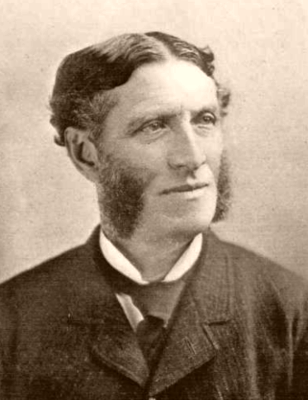
Two Poems by Matthew Arnold

Matthew Arnold (1822-1888) was a prominent English poet, cultural critic, and educator who made significant contributions to Victorian literature and thought. Born into an intellectually distinguished family, Arnold was the son of the renowned headmaster Thomas Arnold of Rugby School, which deeply influenced his perspectives on education and culture.

Arnold’s poetry is often characterized by its reflection on the spiritual and emotional challenges of the modern age, as well as its exploration of human isolation and the loss of faith in an increasingly industrialized and secular world. His most famous poem, “Dover Beach,” epitomizes these themes, portraying a world where the “Sea of Faith” has retreated, leaving humanity exposed to the harsh realities of existence. The melancholy tone and contemplative style of Arnold’s poetry have cemented his place as a leading figure of Victorian poetry, bridging the gap between Romanticism and Modernism.

In addition to his poetry, Arnold was a formidable critic and essayist, particularly known for his works on cultural and literary criticism. His collection of essays, Culture and Anarchy (1869), remains one of his most influential works. In it, Arnold argued for the importance of “culture”—which he defined as the pursuit of perfection through knowledge and appreciation of the arts—as a means of countering the anarchy of industrial society. He believed that culture could act as a unifying force, bringing together different social classes and fostering moral and intellectual improvement.

Arnold’s work as an inspector of schools for over three decades also had a lasting impact on English education. His reports and writings on education emphasized the need for broad access to quality education and the importance of fostering a well-rounded, humane curriculum.

Though his poetry often reflects a sense of loss and disillusionment, Arnold’s commitment to cultural and educational ideals demonstrates his belief in the possibility of human improvement and the power of intellectual and moral development. His contributions to both literature and cultural criticism have left a lasting legacy, influencing not only his contemporaries but also future generations of writers and thinkers.

“Dover Beach” and “The Buried Life” are a couple of his better known poems:


Dover Beach

The sea is calm tonight.
The tide is full, the moon lies fair
Upon the straits; on the French coast the light
Gleams and is gone; the cliffs of England stand,
Glimmering and vast, out in the tranquil bay.
Come to the window, sweet is the night-air!
Only, from the long line of spray
Where the sea meets the moon-blanched land,
Listen! you hear the grating roar
Of pebbles which the waves draw back, and fling,
At their return, up the high strand,
Begin, and cease, and then again begin,
With tremulous cadence slow, and bring
The eternal note of sadness in.

Sophocles long ago
Heard it on the Ægean, and it brought
Into his mind the turbid ebb and flow
Of human misery; we
Find also in the sound a thought,
Hearing it by this distant northern sea.

The Sea of Faith
Was once, too, at the full, and round earth’s shore
Lay like the folds of a bright girdle furled.
But now I only hear
Its melancholy, long, withdrawing roar,
Retreating, to the breath
Of the night-wind, down the vast edges drear
And naked shingles of the world.

Ah, love, let us be true
To one another! for the world, which seems
To lie before us like a land of dreams,
So various, so beautiful, so new,
Hath really neither joy, nor love, nor light,
Nor certitude, nor peace, nor help for pain;
And we are here as on a darkling plain
Swept with confused alarms of struggle and flight,
Where ignorant armies clash by night.


The Buried Life

Light flows our war of mocking words, and yet,
Behold, with tears mine eyes are wet!
I feel a nameless sadness o’er me roll.
Yes, yes, we know that we can jest,
We know, we know that we can smile!
But there’s a something in this breast,
To which thy light words bring no rest,
And thy gay smiles no anodyne.
Give me thy hand, and hush awhile,
And turn those limpid eyes on mine,
And let me read there, love! thy inmost soul.

Alas! is even love too weak
To unlock the heart, and let it speak?
Are even lovers powerless to reveal
To one another what indeed they feel?
I knew the mass of men conceal’d
Their thoughts, for fear that if reveal’d
They would by other men be met
With blank indifference, or with blame reproved;
I knew they lived and moved
Trick’d in disguises, alien to the rest
Of men, and alien to themselves—and yet
The same heart beats in every human breast!

But we, my love!—doth a like spell benumb
Our hearts, our voices?—must we too be dumb?

Ah! well for us, if even we,
Even for a moment, can get free
Our heart, and have our lips unchain’d;
For that which seals them hath been deep-ordain’d!

Fate, which foresaw
How frivolous a baby man would be—
By what distractions he would be possess’d,
How he would pour himself in every strife,
And well-nigh change his own identity—
That it might keep from his capricious play
His genuine self, and force him to obey
Even in his own despite his being’s law,
Bade through the deep recesses of our breast
The unregarded river of our life
Pursue with indiscernible flow its way;
And that we should not see
The buried stream, and seem to be
Eddying at large in blind uncertainty,
Though driving on with it eternally.

But often, in the world’s most crowded streets,
But often, in the din of strife,
There rises an unspeakable desire
After the knowledge of our buried life;
A thirst to spend our fire and restless force
In tracking out our true, original course;
A longing to inquire
Into the mystery of this heart which beats
So wild, so deep in us—to know
Whence our lives come and where they go.
And many a man in his own breast then delves,
But deep enough, alas! none ever mines.
And we have been on many thousand lines,
And we have shown, on each, spirit and power;
But hardly have we, for one little hour,
Been on our own line, have we been ourselves—
Hardly had skill to utter one of all
The nameless feelings that course through our breast,
But they course on for ever unexpress’d.
And long we try in vain to speak and act
Our hidden self, and what we say and do
Is eloquent, is well—but ‘t is not true!
And then we will no more be rack’d
With inward striving, and demand
Of all the thousand nothings of the hour
Their stupefying power;
Ah yes, and they benumb us at our call!
Yet still, from time to time, vague and forlorn,
From the soul’s subterranean depth upborne
As from an infinitely distant land,
Come airs, and floating echoes, and convey
A melancholy into all our day.
Only—but this is rare—
When a belovèd hand is laid in ours,
When, jaded with the rush and glare
Of the interminable hours,
Our eyes can in another’s eyes read clear,
When our world-deafen’d ear
Is by the tones of a loved voice caress’d—
A bolt is shot back somewhere in our breast,
And a lost pulse of feeling stirs again.
The eye sinks inward, and the heart lies plain,
And what we mean, we say, and what we would, we know.
A man becomes aware of his life’s flow,
And hears its winding murmur; and he sees
The meadows where it glides, the sun, the breeze.

And there arrives a lull in the hot race
Wherein he doth for ever chase
That flying and elusive shadow, rest.
An air of coolness plays upon his face,
And an unwonted calm pervades his breast.
And then he thinks he knows
The hills where his life rose,
And the sea where it goes.


The informational article above was composed in part by administering guided direction to ChatGPT. It was subsequently fact-checked, revised, and edited by the editor. The editor/publisher takes no authorship credit for this work and strongly encourages disclosure when using this or similar tools to create content. Sparks of Calliope prohibits submissions of poetry composed with the assistance of predictive AI.

Two Poems by Robert Donohue

Lundy’s Undies

Mom worked for Lundy’s, and the firm’s design
Was for the diapers used in outer space.
More of a pouch, this needed interface
The engineers committed to refine.
But Mom worked personnel, and as a sign
Of what she was supposed to take with grace,
When Mom got married, so she knew her place,
It was expected that she would resign.

Despite this treatment, Mom was full of pride,
And thought her work important as the rest.
The astronauts had nothing left to hide
When putting Lundy’s product to the test,
And voyaging where none before could dare,
Because of Mom, they had clean underwear.


Search Engine

Back in the early Nineties, just before
The internet, if what you needed was
A book that happened to be out of print
These are the steps you followed; you would see
Your local antiquarian book dealer,
Fill out a card, and when your dealer had
Collected cards from other customers,
Then he or she would purchase a want ad
In AB Bookman’s Weekly. Other dealers
Who had the book in stock then mailed in quotes,
Your dealer would present these quotes to you
For your discission, and inevitably,
In all these quotes, you always got one from
Jeff Bezos, with his warehouse of old books.


Robert Donohue‘s poetry has appeared in Pulsebeat, The Road Not Taken, and The Rye Whiskey Review, among others. He lives on Long Island, NY.

“Last Night” by Matt Wood

A solar storm hit Earth last night.
I’d seen a headline warning about it,

so I wanted to keep an eye out.
Rare auroras filled the sky

as far south as our neighborhood
as about one billion tons of plasma

collided with the atmosphere at
one million miles per hour only

to be transmuted into the frailest
of colors fluttering like Paganini’s bow

through chromatic scales of stars.
But I forgot to look.

I wish I could say I saw it, but
I went to bed without even glancing

outside. I was thinking of work,
wondering if I’d have time to get

groceries tomorrow, wishing
the weather would change,

listening to the ceiling fan while
falling asleep beside you, who

were surely dreaming something
more amazing than anything

I could have missed.


Matthew Wood lives in Colorado and works as a mechanic. His work is forthcoming in Eunoia Review.

Two Poems by M. Benjamin Thorne

The Argument

I.

When I was nine, God was a bush aflame,
a sacred secret burning thing alive
in some empty and forsaken desert.

At ten he became a name invoked
over the bodies of dead relatives
I once knew, lowered into the strange earth.

Then later he became You. You, who fashioned
all from nothing with a simple wish.

II.

I stand at Babi Yar’s edge, peering down
to where 33,771 Jews and 100,000 others
were laid low: here the woman
who saw her daughter shot just before;
there an old man still thinking his life
can be bought for four teeth’s worth of gold.

Where were You then, when the barrel roughly
nuzzled the nape of this boy’s neck?

Where were You, when this girl’s blood
exploded onto her killer’s shirt?

The scratches etched by finger-bones
on gas chamber walls—each of them spells Yahweh.
Did You provide them one last sweet breath?

There are times I wish to disbelieve in You,
banish you into superstitious myth;
but still my faith persists, because only in a universe
so infinite as to contain You could such cruelty exist.

It is the times I feel You with me
that are the most unforgiveable.


Oracles

There are times when I wish desperately
to hear your voice again for the first time
so that I could come to it again
innocent, move through your words
as stars guided the ships to Delphi
delivering their cargo (questions),
and stand before the oracle’s cave,
see the goat, cold-water-splashed, shivering, 
and know that I may enter the mystery
and feel my being answered.


M. Benjamin Thorne is an Associate Professor of Modern European History at Wingate University. Possessed of a lifelong love of history and poetry, he is interested in exploring the synergy between the two. His poems appear or are forthcoming in Autumn Sky Poetry, Drunk Monkeys, Sky Island Journal, Wilderness House Literary Review, Cathexis Northwest, and The Westchester Review. He lives and sometimes sleeps in Charlotte, NC.

Two Poems by Kelly Terwilliger

The Album of Horses

The dust jacket is falling apart.
On the front, the horse and her foal,
white and brown, brittle now. And the red painted
panels of a stable wall on the back,
ready to crumble away,
pieces of book dust
horse dust.
You dream of horses— you told me
that’s how you fall asleep at night, and I’m sure
you didn’t imagine how happy this made me,
you showing me how you let go
walking into the green field
where the horses are waiting,
where I imagine them now, resting,
leaning down for a ripped mouthful of grass
or brushing against a companion’s flank.
Slow thoughts. Slow thoughts sliding by
as the wind crosses their backs without even lifting the hairs.
The skin ripples,
twitches under some lazy buzz.
When do you drift off? We never know, do we?
Partway across the field?
Or close enough to feel the animal heat—
already, the slipping away as fleeting
as dream itself.      Palominos,
I read, are not a breed
but a color more gold than gold.


Little Clouds

Turn my pockets out and there’s sand,
there’s always sand, no matter how far I go
from where I began.
But today, there are some clumps
of what had been a scrap of paper, now a wad
of little clouds, all their ink washed away.

This fluff is like something just born,
Before all definition.
I read somewhere that people once believed
bears licked their formless newborns
into being. In their winter caves,
bears shaping tiny bears with their tongues.

The sky is white today, and soft, too soft to write on.
Someone has found a way to write in water
so the writing stays, at least a little.
You need an implement so small
that moving it to trace a shape won’t create
an eddy that carries the word away.
So far, they’ve managed a hovered J, a G, a U
within the dot of an i.

Me, I’ve always liked how words dissolve
in water, dissipate in air.

Walking home, I see a puddle the size of a quarter.
It holds the sky’s reflection,
a milky white eye
on the darkened ground.


Kelly Terwilliger is the author of two collections of poems, A Glimpse of Oranges and Riddle, Fish Hook, Thorn, Key. She lives in Eugene, Oregon, where she works in schools as an oral storyteller and teaches storytelling to children and adults.

Two Poems by A. G. Elrod

Locusts & Honey

And what if this cradle falls, if the bough breaks?
Would it be so terrible, to be estranged
and alone, attuned to echoes? The fear
and pain of inconstancy, searing scars
in the name of love, ever unwilling to relent.

Is contented isolation so frightening
as to be avoided at the price of abuse?
Should this bough break, it is doubtful
that another could be found.
And if the cradle falls, might sleep come
cold and numb, yet sweet all the same?

Can solitude truly sustain? Is this what
the ascetics sought, crawling into cracks
and clefts of unyielding waste? Is a steady diet
of locusts and honey so bitter to the taste?

Part of me longs to know, yet dreads the truth:
that solitude might be my final, fitting proof.


Prodigals

How would a perfect love to prodigals appear?
Would Desire its sacred benediction grant?
Would it fester, feeding ennui like rot?
Would we withdraw, warped and wary in disbelief?

And love’s blinding luminescence,
Does it need sorrow’s shade to shine?
The wretched only may know redemption,
And the Fallen fathom a Paradise long passed.


A. G. Elrod is a Lecturer of English in The Netherlands’ university system and a PhD candidate at Vrije University in Amsterdam.

Two Poems by Lynn White

Clock

They were traditional
retirement gifts.
Perhaps the first time
one was given in irony,
an employer with a quirky sense of humour.
But then it caught on and became the norm.

I was a small child,
only four years old
when one was given
to my father.
It was brown
all brown
with a glass front
and cream numbers and fingers.
It sat dismally on our mantelpiece
ticking away morosely
long after his death.

As I child growing up I used
the glass as a mirror,
a smiling face, a funny face,
a gurning face or a frown,
my faces livened it up a bit.

I thought I would leave it behind
when my mother died
it’s ticks and rocks seemed to slow
in sadness at the parting,
a parting as hard as that
from a lover.
Too hard.

So it’s with me still
sitting there looking morose
and releasing a memory
with every tick
and tock.


Sneek Peek

My first attempt at throwing a pot
was not successful.
My large lump of clay twisted and turned
on the wheel
till it became cup size
then egg cup size.
I rather liked my egg cup in the end,
well, not quite the end,
it’s final end came in the kiln
with bang.

Who would have thought then that potting
would become my trade,
my living,
certainly not me.
But that’s what happened for a while.
Look here’s a sneak peek
into my studio
the grainy black and white
showing it’s age.
It’s all gathering dust now
so a sneak peek is all I can offer,
just a glimpse of how things were
a long time ago.

“Sneak Peek” first appeared in Visual Verse.


Lynn White lives in north Wales. Her work is influenced by issues of social justice and events, places and people she has known or imagined. She is especially interested in exploring the boundaries of dream, fantasy and reality. She has been nominated for a Pushcart Prize, Best of the Net and a Rhysling Award. Find her on her blog or on Facebook.

“Sonnet on the Death of a Friend” by Jonathan Weinberg

When Summer’s veil is hooked on heaven’s thorn,
And bandaged evenings trespass into day,
Abandoned spirits have no place to mourn,
And I am here, and you are far away;
If I could only love you with my words,
Then let them fall from heaven like the rain,
Splashing on your face in gentle chords,
And in the morning we will meet again;
If I could love you like an open field,
Or wind-drawn ship that plows the wat’ry plain,
The thoughts of many hearts would be revealed,
And I could love you like the falling rain.
     If I could love you with a metaphor…
     But no one writes like Shakespeare anymore.


Jonathan Weinberg studied Literature at the University of Victoria, in British Columbia, and Rhetoric at the Catholic University of America, in Washington, DC. He and his wife Laura, and their children, live on a small acreage near Kansas City. He is a policy writer for the U.S. Treasury. He is the author of The Blessed Book of Beasts (Eastern Christian Publications).

Two Poems by Diane Elayne Dees

I Saw You Today

You sat on the taupe armchair
in my living room and refused
my offer of coffee or tea,
just as you always do.
I told you some silly stories
and we laughed together,
talked about sports, validated
each other’s passionate opinions.
Maybe we’re just old, we said,
but—more likely—the world
really is crazy. You listened to me,
something you never did
when you lived here. You said
nothing that was sympathetic,
yet I felt as if you heard me.

Who are you? I wondered, for
the thousandth time. I thought
of that time, thirty years ago,
when I saw you—tall and blond,
arms crossed—leaning against
the restaurant wall, waiting for me,
and I felt, for a moment,
like we were in a movie.
Marriage is a fragile thing;
I will never finish picking up
the shattered pieces of ours—
I swallow them when I breathe,
they cling to my skin, they float
around the head of the ghost-like
woman I see when I look in the mirror.

I still do not know who you are
or who we were. But I know
that we, too, are fragile,
that we will never again be
who we once were. I know
that resolution is just a word,
and that we are somehow bound
forever. I know this because,
for just a little while,
I saw you today.


Sleeping in a New Bed

We hadn’t had the bed that long
when the marriage ended.
I’d had the legs cut down,
knowing that he wouldn’t notice.
When he moved out, I had them
cut down again because my body
craves intimacy with the vibrations
of the earth. It was solid ash,
stained mahogany—durable,
but highlighted by that red-brown
tint of blood. I changed
the wall color, the art, the lamp,
the nightstand, the bedding.
The room became an oasis
of serenity, but no amount
of mauve and gray could
calm the fires of my mind
or ease the stiffness of my limbs.

But once disassembled, the bed,
a neat pile of glossy boards,
lost its power. Now I sleep
on a new bed. The wood
is a lighter tone, the headboard is solid
and sturdy. I am still close to the earth,
but I no longer lie on layers of sorrow,
betrayal and regret. A new bed
has no magic power to heal my mind
and body, but its clean, minimal
design whispers a message
as each day ends: Keep it simple,
feel the earth beneath you,
realize your strength, and—
at long last—let your body rest.


Diane Elayne Dees is the author of three chapbooks, Coronary Truth (Kelsay Books), The Last Time I Saw You (Finishing Line Press), and The Wild Parrots of Marigny (Querencia Press), as well as four Origami Poems Project microchaps. Diane, who lives in Covington, Louisiana, also publishes Women Who Serve, a blog that delivers news and commentary on women’s professional tennis throughout the world. Her author blog is Diane Elayne Dees: Poet and Writer-at-Large.

Two Poems by Sara Cosgrove

My Grandfather’s Garden

The North Country yields
the most fragrant flowers—
Tropicana, Sterling, and Peace roses.

They’ve been nurtured for a decade,
season after season.

An attentive doctor/caregiver named Stanley,
who took up gardening at the age of 70,
planted 100+ bushes and
trained them to endure our cruel winters.

The 1991 Halloween Blizzard
would’ve destroyed the buds in my grandmother’s vase
if we hadn’t raked thousands of autumn leaves,
stuffed them into large sacks
and put them to rest atop the rose bushes.

When the leaves finally scattered
and the Spring rain dissipated,
we marched through the maze with our garden hoses,
watered the fertile soil
and waited for our freshly picked bouquets to bloom.


Puppy Love

for Merry

Merry, Merry, Sugar Plum Fairy,
You lean in to love with
Revolutionary ardor.

I’m watching your tail
Wag with intent
As you nuzzle your favorite toy—
A fluorescent ball of fluff I named Fraggle Rock.

Its googly eyes are looking at you,
Looking at me.

This is our spiritual home.

When I return from a trip to the grocery store—
The only acceptable excuse for truancy—
I set the bags on the kitchen floor.

You carefully inspect the goods
Before we feast.

My selections typically meet with your approval:
Baked salmon, sweet potato mash, broiled top sirloin steak with
All the fixins.

We sit before a buffet of nutrient-dense deliciousness,
A veritable cornucopia,
Every single day.

Because we are rich,
We sleep with full bellies
And dream of our next adventure.


Sara Cosgrove is an award-winning journalist and poet. Her poems have appeared or are scheduled to appear in The Seventh QuarryMeniscusOsirisPoetry Ireland ReviewFrogpond (Haiku Society of America)Autumn Moon Haiku JournalNotre Dame ReviewGargoyleSan Antonio ReviewONE ARTIn ParenthesesPanoplyUnbroken, and Roi Fainéant. She has worked as an editor for 15 years and has studied in the United States, Cuba, and France.