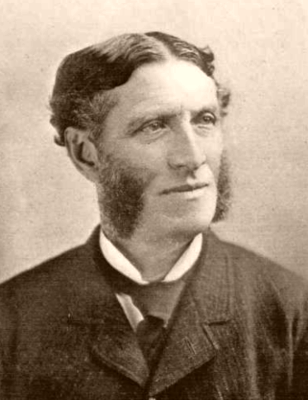
Two Poems by Richard Lovelace

Richard Lovelace (1617–1657) was a prominent Cavalier poet of the 17th century, renowned for his lyrical elegance and association with the Royalist cause during the English Civil War. Born into a well-to-do Kentish family, Lovelace was educated at the prestigious Charterhouse School and later at Gloucester Hall, Oxford, where his charm, good looks, and poetic skill quickly gained him admiration and support among the literary elite. Known for his refined manners and loyalty to King Charles I, Lovelace’s life and work were deeply influenced by his unwavering commitment to the Royalist ideals of honor, loyalty, and courtly love.

Lovelace’s poetry is marked by its musical quality, emotive depth, and dedication to the ideals of chivalry. His most famous work, To Althea, from Prison, penned while he was briefly imprisoned for his Royalist sympathies, contains the immortal lines, “Stone walls do not a prison make, / Nor iron bars a cage.” This piece and others in his collection Lucasta (1649) express his belief in inner freedom and resilience, as well as his love for a woman he called Lucasta (thought to be a poetic pseudonym for his beloved Lucy Sacheverell). Lovelace’s verses often celebrate themes of loyalty, love, and liberty, reflecting his desire for both personal and political freedom during a time of national turmoil.

Lovelace’s commitment to the Royalist cause led him to serve in the military on behalf of King Charles I, fighting in the Bishops’ Wars in Scotland and later in the Civil War. However, his loyalty came at great personal cost. After repeated imprisonments and financial losses, he spent his later years in poverty and ill health, facing the bitter disillusionment that many Cavaliers experienced after the fall of the monarchy.

Lovelace’s legacy as a poet rests on his ability to merge graceful language with Cavalier ideals. His verses capture the spirit of a turbulent era, and his enduring works offer insight into the personal sacrifices of those loyal to a lost cause. Though his fame dwindled after his death, Lovelace’s poetry was rediscovered in the 19th century, appreciated for its lyrical beauty and its emblematic portrayal of honor and love. His work, including the two poems featured below, remains a touchstone of the Cavalier tradition, influencing later poets and reminding readers of the values of courage, loyalty, and resilience.


To Althea, From Prison

When Love with unconfinèd wings
Hovers within my Gates,
And my divine Althea brings
To whisper at the Grates;
When I lie tangled in her hair,
And fettered to her eye,
The Gods that wanton in the Air,
Know no such Liberty.

When flowing Cups run swiftly round
With no allaying Thames,
Our careless heads with Roses bound,
Our hearts with Loyal Flames;
When thirsty grief in Wine we steep,
When Healths and draughts go free,
Fishes that tipple in the Deep
Know no such Liberty.

When (like committed linnets) I
With shriller throat shall sing
The sweetness, Mercy, Majesty,
And glories of my King;
When I shall voice aloud how good
He is, how Great should be,
Enlargèd Winds, that curl the Flood,
Know no such Liberty.

Stone Walls do not a Prison make,
Nor Iron bars a Cage;
Minds innocent and quiet take
That for an Hermitage.
If I have freedom in my Love,
And in my soul am free,
Angels alone that soar above,
Enjoy such Liberty.


To Lucasta, Going to the Wars

Tell me not (Sweet) I am unkind,
         That from the nunnery
Of thy chaste breast and quiet mind
         To war and arms I fly.

True, a new mistress now I chase,
         The first foe in the field;
And with a stronger faith embrace
         A sword, a horse, a shield.

Yet this inconstancy is such
         As you too shall adore;
I could not love thee (Dear) so much,
         Lov’d I not Honour more.


The informational article above was composed in part by administering guided direction to ChatGPT. It was subsequently fact-checked, revised, and edited by the editor. The editor/publisher takes no authorship credit for this work and strongly encourages disclosure when using this or similar tools to create content. Sparks of Calliope prohibits submissions of poetry composed with the assistance of predictive AI.
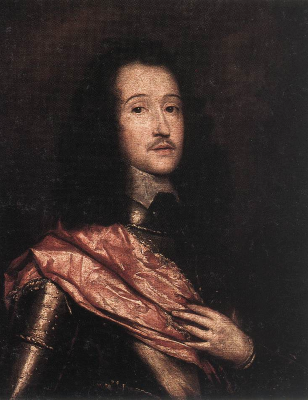
Two Poems by Wilfred Owen

Wilfred Owen (1893–1918) was a British poet whose powerful works provide some of the most poignant insights into the horrors of World War I. Born in Oswestry, Shropshire, England, Owen grew up in a lower-middle-class family. His early education sparked an interest in poetry, and he was influenced by Romantic poets such as John Keats. However, it was his experiences as a soldier during World War I that would most profoundly shape his poetic voice and themes.

Owen enlisted in the British Army in 1915, at the age of 22. He was initially enthusiastic about joining the war effort, driven by a sense of duty and patriotism. His perspectives, however, drastically shifted after witnessing the brutal realities of trench warfare. In 1917, he suffered from shell shock (now known as post-traumatic stress disorder) and was sent to Craiglockhart War Hospital in Edinburgh, where he met fellow poet Siegfried Sassoon. This meeting proved crucial, as Sassoon became a mentor and friend, encouraging Owen to channel his experiences of war into his poetry.

Owen’s poems, written during the last two years of his life, are marked by their vivid imagery and intense emotional force. In stark contrast to romanticized portrayals of war, his poems expose war’s brutality and the suffering of soldiers. Works such as “Dulce et Decorum Est” and “Anthem for Doomed Youth” found below are renowned for their bold depictions of the physical and psychological trauma experienced by combatants. His use of half-rhyme, vivid descriptions, and shocking realism set his work apart from other war poetry of the time.

Tragically, Owen was killed in action on November 4, 1918, just one week before the Armistice that ended World War I. His death cut short a promising literary career, but his legacy endures through his powerful poetry, which continues to resonate with readers. Published posthumously, his work has become some of the most significant literary accounts of World War I, forever altering the perception of war in English literature.


Dulce et Decorum Est

Bent double, like old beggars under sacks,
Knock-kneed, coughing like hags, we cursed through sludge,
Till on the haunting flares we turned our backs,
And towards our distant rest began to trudge.
Men marched asleep. Many had lost their boots,
But limped on, blood-shod. All went lame; all blind;
Drunk with fatigue; deaf even to the hoots
Of gas-shells dropping softly behind.

Gas! GAS! Quick, boys!—An ecstasy of fumbling
Fitting the clumsy helmets just in time,
But someone still was yelling out and stumbling
And flound’ring like a man in fire or lime.—
Dim through the misty panes and thick green light,
As under a green sea, I saw him drowning.

In all my dreams before my helpless sight,
He plunges at me, guttering, choking, drowning.

If in some smothering dreams, you too could pace
Behind the wagon that we flung him in,
And watch the white eyes writhing in his face,
His hanging face, like a devil’s sick of sin;
If you could hear, at every jolt, the blood
Come gargling from the froth-corrupted lungs,
Obscene as cancer, bitter as the cud
Of vile, incurable sores on innocent tongues,—
My friend, you would not tell with such high zest
To children ardent for some desperate glory,
The old Lie: Dulce et decorum est
Pro patria mori.


Anthem for Doomed Youth

What passing-bells for these who die as cattle?
      — Only the monstrous anger of the guns.
      Only the stuttering rifles' rapid rattle
Can patter out their hasty orisons.
No mockeries now for them; no prayers nor bells; 
      Nor any voice of mourning save the choirs,—
The shrill, demented choirs of wailing shells;
      And bugles calling for them from sad shires.

What candles may be held to speed them all?
      Not in the hands of boys, but in their eyes
Shall shine the holy glimmers of goodbyes.
      The pallor of girls' brows shall be their pall;
Their flowers the tenderness of patient minds,
And each slow dusk a drawing-down of blinds. 


The informational article above was composed in part by administering guided direction to ChatGPT. It was subsequently fact-checked, revised, and edited by the editor. The editor/publisher takes no authorship credit for this work and strongly encourages disclosure when using this or similar tools to create content. Sparks of Calliope prohibits submissions of poetry composed with the assistance of predictive AI.
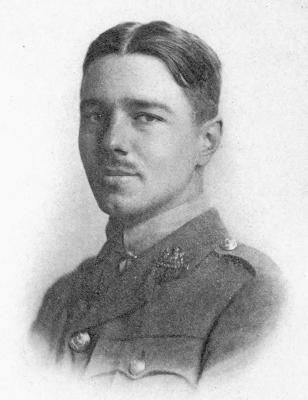
Two Poems by John Milton

John Milton (1608-1674)

John Milton (1608-1674) was a towering figure in English literature, best known for his epic poem Paradise Lost. Born in London to a prosperous scrivener, Milton received an exceptional education, attending St. Paul’s School and later Christ’s College, Cambridge. His deep classical knowledge, coupled with a fervent religious belief, profoundly shaped his literary and political career.

Milton’s poetry is marked by its rich language, intellectual depth, and complex themes, often exploring human existence, divine justice, and individual liberty. Paradise Lost, published in 1667, stands as his magnum opus and one of the greatest works of English literature. The epic poem recounts the biblical story of the Fall of Man, delving into themes of free will, obedience, and the nature of good and evil. With its grand style and powerful blank verse, Paradise Lost not only reflects Milton’s mastery of classical epic conventions but also his innovative approach to poetic form and narrative.

In addition to his literary achievements, Milton was deeply involved in the political and religious upheavals of 17th-century England. A staunch Puritan and republican, he served as a civil servant under Oliver Cromwell’s Commonwealth and wrote several influential pamphlets advocating for freedom of speech, press, and divorce, most notably Areopagitica (1644). His political writings reflect his commitment to individual rights and a deep suspicion of tyranny in all its forms.

Milton’s later years were marked by personal and physical hardship. He became completely blind in 1652, yet continued to write and dictate his works, producing Paradise Regained and Samson Agonistes in his final years. Despite his blindness, Milton’s literary vision remained clear, his works continuing to inspire readers and writers with their exploration of the human condition, freedom, and divine justice. His influence can be seen in the works of later poets and thinkers, securing his place as one of the most important voices in English literature.

While Milton was most famous for his epic Paradise Lost, he wrote shorter poems such as these as well:


An Epitaph on the Admirable Dramatic Poet W. Shakespeare

What needs my Shakespeare for his honored bones
The labor of an age in piled stones?
Or that his hallowed reliques should be hid
Under a star-ypointing pyramid?
Dear son of Memory, great heir of Fame,
What need’st thou such weak witness of thy name?
Thou in our wonder and astonishment
Hast built thy self a livelong monument.
For whilst, to th’ shame of slow-endeavoring art,
Thy easy numbers flow, and that each heart
Hath from the leaves of thy unvalued book
Those Delphic lines with deep impression took,
Then thou, our fancy of itself bereaving,
Dost make us marble with too much conceiving,
And so sepulchred in such pomp dost lie
That kings for such a tomb would wish to die.


On His Blindness

When I consider how my light is spent
    Ere half my days in this dark world and wide,
    And that one talent which is death to hide
    Lodg’d with me useless, though my soul more bent
    To serve therewith my Maker, and present
    My true account, lest he returning chide,
    “Doth God exact day-labour, light denied?”
    I fondly ask. But Patience, to prevent
    That murmur, soon replies: “God doth not need
    Either man’s work or his own gifts: who best
    Bear his mild yoke, they serve him best. His state
    Is kingly; thousands at his bidding speed
    And post o’er land and ocean without rest:
    They also serve who only stand and wait.”


The informational article above was composed in part by administering guided direction to ChatGPT. It was subsequently fact-checked, revised, and edited by the editor. The editor/publisher takes no authorship credit for this work and strongly encourages disclosure when using this or similar tools to create content. Sparks of Calliope prohibits submissions of poetry composed with the assistance of predictive AI.
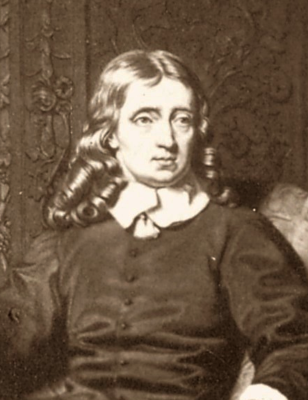
Two Poems by Matthew Arnold

Matthew Arnold (1822-1888) was a prominent English poet, cultural critic, and educator who made significant contributions to Victorian literature and thought. Born into an intellectually distinguished family, Arnold was the son of the renowned headmaster Thomas Arnold of Rugby School, which deeply influenced his perspectives on education and culture.

Arnold’s poetry is often characterized by its reflection on the spiritual and emotional challenges of the modern age, as well as its exploration of human isolation and the loss of faith in an increasingly industrialized and secular world. His most famous poem, “Dover Beach,” epitomizes these themes, portraying a world where the “Sea of Faith” has retreated, leaving humanity exposed to the harsh realities of existence. The melancholy tone and contemplative style of Arnold’s poetry have cemented his place as a leading figure of Victorian poetry, bridging the gap between Romanticism and Modernism.

In addition to his poetry, Arnold was a formidable critic and essayist, particularly known for his works on cultural and literary criticism. His collection of essays, Culture and Anarchy (1869), remains one of his most influential works. In it, Arnold argued for the importance of “culture”—which he defined as the pursuit of perfection through knowledge and appreciation of the arts—as a means of countering the anarchy of industrial society. He believed that culture could act as a unifying force, bringing together different social classes and fostering moral and intellectual improvement.

Arnold’s work as an inspector of schools for over three decades also had a lasting impact on English education. His reports and writings on education emphasized the need for broad access to quality education and the importance of fostering a well-rounded, humane curriculum.

Though his poetry often reflects a sense of loss and disillusionment, Arnold’s commitment to cultural and educational ideals demonstrates his belief in the possibility of human improvement and the power of intellectual and moral development. His contributions to both literature and cultural criticism have left a lasting legacy, influencing not only his contemporaries but also future generations of writers and thinkers.

“Dover Beach” and “The Buried Life” are a couple of his better known poems:


Dover Beach

The sea is calm tonight.
The tide is full, the moon lies fair
Upon the straits; on the French coast the light
Gleams and is gone; the cliffs of England stand,
Glimmering and vast, out in the tranquil bay.
Come to the window, sweet is the night-air!
Only, from the long line of spray
Where the sea meets the moon-blanched land,
Listen! you hear the grating roar
Of pebbles which the waves draw back, and fling,
At their return, up the high strand,
Begin, and cease, and then again begin,
With tremulous cadence slow, and bring
The eternal note of sadness in.

Sophocles long ago
Heard it on the Ægean, and it brought
Into his mind the turbid ebb and flow
Of human misery; we
Find also in the sound a thought,
Hearing it by this distant northern sea.

The Sea of Faith
Was once, too, at the full, and round earth’s shore
Lay like the folds of a bright girdle furled.
But now I only hear
Its melancholy, long, withdrawing roar,
Retreating, to the breath
Of the night-wind, down the vast edges drear
And naked shingles of the world.

Ah, love, let us be true
To one another! for the world, which seems
To lie before us like a land of dreams,
So various, so beautiful, so new,
Hath really neither joy, nor love, nor light,
Nor certitude, nor peace, nor help for pain;
And we are here as on a darkling plain
Swept with confused alarms of struggle and flight,
Where ignorant armies clash by night.


The Buried Life

Light flows our war of mocking words, and yet,
Behold, with tears mine eyes are wet!
I feel a nameless sadness o’er me roll.
Yes, yes, we know that we can jest,
We know, we know that we can smile!
But there’s a something in this breast,
To which thy light words bring no rest,
And thy gay smiles no anodyne.
Give me thy hand, and hush awhile,
And turn those limpid eyes on mine,
And let me read there, love! thy inmost soul.

Alas! is even love too weak
To unlock the heart, and let it speak?
Are even lovers powerless to reveal
To one another what indeed they feel?
I knew the mass of men conceal’d
Their thoughts, for fear that if reveal’d
They would by other men be met
With blank indifference, or with blame reproved;
I knew they lived and moved
Trick’d in disguises, alien to the rest
Of men, and alien to themselves—and yet
The same heart beats in every human breast!

But we, my love!—doth a like spell benumb
Our hearts, our voices?—must we too be dumb?

Ah! well for us, if even we,
Even for a moment, can get free
Our heart, and have our lips unchain’d;
For that which seals them hath been deep-ordain’d!

Fate, which foresaw
How frivolous a baby man would be—
By what distractions he would be possess’d,
How he would pour himself in every strife,
And well-nigh change his own identity—
That it might keep from his capricious play
His genuine self, and force him to obey
Even in his own despite his being’s law,
Bade through the deep recesses of our breast
The unregarded river of our life
Pursue with indiscernible flow its way;
And that we should not see
The buried stream, and seem to be
Eddying at large in blind uncertainty,
Though driving on with it eternally.

But often, in the world’s most crowded streets,
But often, in the din of strife,
There rises an unspeakable desire
After the knowledge of our buried life;
A thirst to spend our fire and restless force
In tracking out our true, original course;
A longing to inquire
Into the mystery of this heart which beats
So wild, so deep in us—to know
Whence our lives come and where they go.
And many a man in his own breast then delves,
But deep enough, alas! none ever mines.
And we have been on many thousand lines,
And we have shown, on each, spirit and power;
But hardly have we, for one little hour,
Been on our own line, have we been ourselves—
Hardly had skill to utter one of all
The nameless feelings that course through our breast,
But they course on for ever unexpress’d.
And long we try in vain to speak and act
Our hidden self, and what we say and do
Is eloquent, is well—but ‘t is not true!
And then we will no more be rack’d
With inward striving, and demand
Of all the thousand nothings of the hour
Their stupefying power;
Ah yes, and they benumb us at our call!
Yet still, from time to time, vague and forlorn,
From the soul’s subterranean depth upborne
As from an infinitely distant land,
Come airs, and floating echoes, and convey
A melancholy into all our day.
Only—but this is rare—
When a belovèd hand is laid in ours,
When, jaded with the rush and glare
Of the interminable hours,
Our eyes can in another’s eyes read clear,
When our world-deafen’d ear
Is by the tones of a loved voice caress’d—
A bolt is shot back somewhere in our breast,
And a lost pulse of feeling stirs again.
The eye sinks inward, and the heart lies plain,
And what we mean, we say, and what we would, we know.
A man becomes aware of his life’s flow,
And hears its winding murmur; and he sees
The meadows where it glides, the sun, the breeze.

And there arrives a lull in the hot race
Wherein he doth for ever chase
That flying and elusive shadow, rest.
An air of coolness plays upon his face,
And an unwonted calm pervades his breast.
And then he thinks he knows
The hills where his life rose,
And the sea where it goes.


The informational article above was composed in part by administering guided direction to ChatGPT. It was subsequently fact-checked, revised, and edited by the editor. The editor/publisher takes no authorship credit for this work and strongly encourages disclosure when using this or similar tools to create content. Sparks of Calliope prohibits submissions of poetry composed with the assistance of predictive AI.