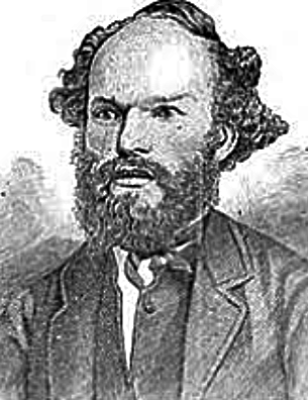
Everyone has certain things to be thankful for which come to mind around this time of year, and were Scottish born Canadian poet James McIntyre still alive, his might be achieving immortal literary fame despite being named by some critics as “The Worst Poet in History.”
James McIntyre (1828-1906) was a 19th-century Canadian poet, famously known as the “Cheese Poet” due to his unconventional choice of subjects for his verses. Born in Forres, Scotland, McIntyre emigrated to Canada in 1841, settling in Ingersoll, Ontario, where he worked as a stonemason.
Despite lacking formal education, McIntyre possessed a keen interest in poetry. His poetic endeavors gained recognition when he began composing verses that celebrated the dairy industry, particularly his ode to cheese. McIntyre’s light-hearted and whimsical poems often centered around everyday life, nature, and his surroundings.
One of his most well-known works, “Ode on the Mammoth Cheese,” humorously pays homage to a mammoth cheese produced in Ingersoll. McIntyre’s verses, characterized by their playful and sometimes satirical tone, garnered him local fame, earning him the title of the “Cheese Poet.”
While McIntyre’s poetry may not have been embraced by literary elites of his time, his work resonated with the ordinary people of Ontario. His poems were published in local newspapers, contributing to his popularity in the region. Despite the seemingly mundane nature of his chosen themes, McIntyre’s poems reflect a genuine love for his community and a unique perspective on the world around him during his lifetime.
James McIntyre’s legacy endures as a charming and eccentric, though not overly-talented, figure in Canadian literary history. His ability to find inspiration in the everyday, even in the humble cheese, sets him apart as a poet who celebrated the ordinary in an extraordinary way. McIntyre’s unconventional approach to poetry has perhaps left an indelible mark, ensuring that he is remembered not only as the “Cheese Poet” but also as a distinctive voice in the rich tapestry of Canadian literature.
Below are a couple examples of McIntyre’s odes.
Thanksgiving Ode, November 15, 1888
September came and with it frost The season’s pasture it seemed lost, And the wondrous yield of corn Of its green beauty it was shorn.
Frost it came like early robber, But gentle rains came in October, Which were absorbed by grateful soil; With green once more the pastures smile.
And cows again are happy seen Enjoying of the pastures green, And flow of milk again they yield From the sweet feed of grassy field.
And we have now a fine November, Warmer far than in September; The apple, which is queen of fruits, Was a good crop and so is roots.
The rains they did replenish springs, And it gratitude to each heart brings, When we reflect on bounteous season, For grateful feelings all have reason.
Ode on the Mammoth Cheese
Weight over seven thousand pounds.
We have seen thee, queen of cheese, Lying quietly at your ease, Gently fanned by evening breeze, Thy fair form no flies dare seize.
All gaily dressed soon you’ll go To the great Provincial show, To be admired by many a beau In the city of Toronto.
Cows numerous as a swarm of bees, Or as the leaves upon the trees, It did require to make thee please, And stand unrivalled, queen of cheese.
May you not receive a scar as We have heard that Mr. Harris Intends to send you off as far as The great world’s show at Paris.
Of the youth beware of these, For some of them might rudely squeeze And bite your cheek, then songs or glees We could not sing, oh! queen of cheese.
We’rt thou suspended from balloon, You’d cast a shade even at noon, Folks would think it was the moon About to fall and crush them soon.
The informational article above was composed in part by administering guided direction to ChatGPT. It was subsequently fact-checked, revised, and edited by the editor. The editor/publisher takes no authorship credit for this work and strongly encourages disclosure when using this or similar tools to create content. Sparks of Calliope prohibits submissions of poetry composed with the assistance of predictive AI.
Sir Walter Raleigh (1552-1618) stands as a Renaissance luminary celebrated for his profound impact on poetry and literature, alongside his adventures in exploration and his complex life at the English court.
Born in Devon, England, Raleigh initially pursued a military career, where he showcased bravery and intellect in campaigns across France and Ireland. Yet, it was his charisma and intellectual prowess that enchanted Queen Elizabeth I, elevating him to a cherished courtier. Beyond his martial pursuits, Raleigh’s pen proved his might.
Raleigh emerged as a prolific and celebrated poet, his verses adorned with eloquence and poetic finesse. His literary masterpiece, “The History of the World,” attested to his intellectual acumen. However, it was his lyrical poetry that secured his status as a poetic icon.
Amid his poetic pursuits, Raleigh sponsored expeditions to the New World in the late 16th century, notably the ill-fated Roanoke Colony venture in present-day North Carolina. These ventures, though challenging, laid the foundations for future English colonization in the Americas.
Raleigh’s cultural influence extended beyond verse. He introduced tobacco to England, a legacy that endures, and popularized the “Raleigh cloak” in fashion.
Yet, Raleigh’s life took a dramatic turn with his secret marriage to a lady-in-waiting, leading to a fall from favor and imprisonment in the Tower of London.
During King James I’s reign, Raleigh embarked on a perilous journey to South America in search of El Dorado. His defiance of the King’s orders ultimately led to his arrest and tragic execution.
Sir Walter Raleigh’s enduring legacy as a poet remains etched in history, his verses continuing to inspire. He exemplified the indomitable spirit of a Renaissance man who also left an indelible mark on the world of letters, as evidenced in his poems below.
The Nymph’s Reply to the Shepherd
If all the world and love were young,
And truth in every Shepherd’s tongue,
These pretty pleasures might me move,
To live with thee, and be thy love.
Time drives the flocks from field to fold,
When Rivers rage and Rocks grow cold,
And Philomel becometh dumb,
The rest complains of cares to come.
The flowers do fade, and wanton fields,
To wayward winter reckoning yields,
A honey tongue, a heart of gall,
Is fancy’s spring, but sorrow’s fall.
Thy gowns, thy shoes, thy beds of Roses,
Thy cap, thy kirtle, and thy posies
Soon break, soon wither, soon forgotten:
In folly ripe, in reason rotten.
Thy belt of straw and Ivy buds,
The Coral clasps and amber studs,
All these in me no means can move
To come to thee and be thy love.
But could youth last, and love still breed,
Had joys no date, nor age no need,
Then these delights my mind might move
To live with thee, and be thy love.
A Vision Upon the Fairie Queen
Methought I saw the grave where Laura lay,
Within that temple where the vestal flame
Was wont to burn; and, passing by that way,
To see that buried dust of living fame,
Whose tomb fair Love, and fairer Virtue kept:
All suddenly I saw the Fairy Queen;
At whose approach the soul of Petrarch wept,
And, from thenceforth, those Graces were not seen:
For they this queen attended; in whose stead
Oblivion laid him down on Laura’s hearse:
Hereat the hardest stones were seen to bleed,
And groans of buried ghosts the heavens did pierce:
Where Homer’s spright did tremble all for grief,
And cursed the access of that celestial thief!
The informational article above was composed in part by administering guided direction to ChatGPT. It was subsequently fact-checked, revised, and edited by the editor. The editor/publisher takes no authorship credit for this work and strongly encourages disclosure when using this or similar tools to create content. Sparks of Calliope prohibits submissions of poetry composed with the assistance of predictive AI.
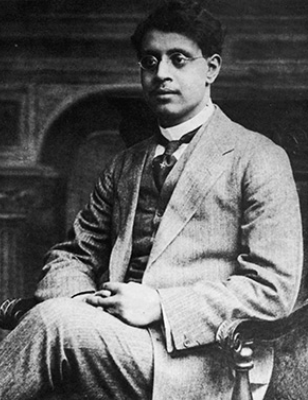
Sukumar Ray (1887-1923), a luminary in Bengali literature, graced the literary world during the late 19th and early 20th centuries with his unique blend of wit, humor, and poetic brilliance. Born into a family steeped in literary tradition, Ray inherited a legacy that would see him become a renowned poet, writer, and illustrator in his own right.
Sukumar Ray embarked on his academic journey at the prestigious Presidency College in Kolkata and later pursued higher education at the University of London in England. During his time abroad, he immersed himself in the study of fine arts, linguistics, and literature. The Western humor and literary traditions he encountered played a pivotal role in shaping his distinct brand of humor.
Upon his return to India, Sukumar Ray wholeheartedly embraced his creative calling, leaving an indelible mark as a poet, writer, and illustrator. His magnum opus, “Abol Tabol” (1923), remains a masterpiece of nonsense literature that continues to enchant readers of all ages. Filled with bizarre characters, whimsical rhymes, and satirical critiques of contemporary society, “Abol Tabol” stands as a timeless classic in Bengali literature.
Tragically, Sukumar Ray’s promising literary journey was abruptly cut short when he passed away at the tender age of 35, on September 10, 1923. Nevertheless, his legacy endures through his writings, which continue to evoke joy and laughter across generations. His talent for infusing humor with keen social observations and his gift for wordplay have established him as an enduring literary figure in Bengali literature.
The following two poems, “Baburam the Snake Charmer” and “Uncle’s Invention,” are examples of Ray’s unique literary talents.
Baburam the Snake Charmer
Hullo, there Baburam – what have you got in there? Snakes? Aha – and do you think there’s one that you could spare? You know, I’d love to have one, but let me tell you this– The ones that bite aren’t right for me – nor the ones that hiss. I’d also skip the ones that butt As well the ones that whistle Or the ones that slink about, Or show their fangs, or bristle. As for eating habits, I think it would be nice To go for ones that only take a meal of milk and rice. I’m sure you know the kind of snake I want from what I’ve said, Do let me have one, Baburam, so I could bash its head.
Uncle’s Invention
Chandidas’s uncle has invented a device Which is causing everyone to praise it to the skies. When Uncle was a year old, or maybe even younger, He came out with a lusty yell that sounded just like ‘Goonga.’ At such an age most other tots just manage ‘Glug’ and ‘Mum,’ So ‘Goonga’ like a thunderbolt, struck everybody dumb. And all who heard, said ‘Here’s a boy – provided he survives— Will one day surely bring about a change in human lives.’ It seems the day is here at last, and victory is won With what will make a five-mile walk seem like only one. I’ve seen the contrivance myself and say with confidence, Never had invention had such greater significance. Let me tell you how it strikes the eyes of a beholder: First of all, one notes that you must strap it to your shoulder. An arm extends, and from its end one notes there hangs a hook To which you bait some food – stuff which you either buy or cook. Naturally the choice depends upon you predilections (It’s wiser to restrict yourself to hookable confections). The sight of morsel dangling close provokes the urge to eat Which, transcribed to your motive force, soon propels the feet. Before you know you’re on the go, your mind, intent on feeding, But since the food is travelling too you never stop your speeding. The outcome, I need hardly add, will change our whole existence, Because we’ll walk for nourishment, and never mind the distance. No wonder there’s a move afoot to honor Uncle soon For bestowing on humanity an everlasting boon.
The first draft of the informational article above was composed in part by administering guided direction to ChatGPT. It was subsequently fact-checked, revised, and edited by the editor. The editor/publisher takes no authorship credit for this work and strongly encourages disclosure when using this or similar tools to create content. Sparks of Calliope prohibits submissions of poetry composed with the assistance of predictive AI.
These translations from the original Bengali were found on the web without attribution and are used here under the fair use doctrine for educational purpose.
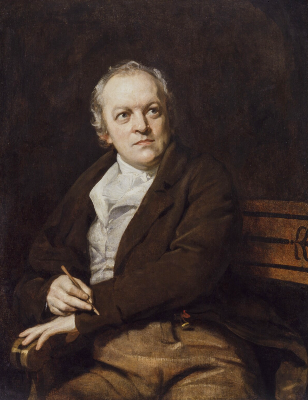
Arguably known as much for his painting skills as for his poetry, British Romantic poet William Blake (1757-1827) was recognized for neither during his lifetime. Blake has been posthumously recognized for the philosophical undercurrents in his self-proclaimed prophetic works.
Blake was said to be influenced at one point, as were many writers of his time, by the ideals of the American and French Revolutions. His vocal criticism of organized religion and idiosyncratic viewpoints likely did nothing to help him gain prominence in literary circles during his lifetime; however, the rise and fall of many writers’ reputations throughout the centuries has more to do with the ideologies and sentiments of modern critics than actual fair analysis of one’s work in the context of their own time and circumstance.
The third of seven children, Blake was homeschooled by his mother after age 10. He entered into an apprenticeship for seven years to become a professional engraver, after which he became a student at the Royal Academy. In 1781, he married the illiterate Catherine Boucher, who he taught not only to read and write, but how to engrave. She subsequently helped him in his craft for the rest of his life.
Blake’s most recognizable poems include “The Tyger” and “The Chimney Sweeper: When My Mother Died I Was Very Young,” both of which are found below.
The Tyger
Tyger Tyger, burning bright,
In the forests of the night;
What immortal hand or eye,
Could frame thy fearful symmetry?
In what distant deeps or skies.
Burnt the fire of thine eyes?
On what wings dare he aspire?
What the hand, dare seize the fire?
And what shoulder, & what art,
Could twist the sinews of thy heart?
And when thy heart began to beat.
What dread hand? & what dread feet?
What the hammer? what the chain,
In what furnace was thy brain?
What the anvil? what dread grasp.
Dare its deadly terrors clasp?
When the stars threw down their spears
And water’d heaven with their tears:
Did he smile his work to see?
Did he who made the Lamb make thee?
Tyger Tyger burning bright,
In the forests of the night:
What immortal hand or eye,
Dare frame thy fearful symmetry?
The Chimney Sweeper: When My Mother Died I Was Very Young
When my mother died I was very young,
And my father sold me while yet my tongue
Could scarcely cry ” ‘weep! ‘weep! ‘weep! ‘weep!”
So your chimneys I sweep & in soot I sleep.
There’s little Tom Dacre, who cried when his head
That curled like a lamb’s back, was shaved, so I said,
“Hush, Tom! never mind it, for when your head’s bare,
You know that the soot cannot spoil your white hair.”
And so he was quiet, & that very night,
As Tom was a-sleeping he had such a sight!
That thousands of sweepers, Dick, Joe, Ned, & Jack,
Were all of them locked up in coffins of black;
And by came an Angel who had a bright key,
And he opened the coffins & set them all free;
Then down a green plain, leaping, laughing they run,
And wash in a river and shine in the Sun.
Then naked & white, all their bags left behind,
They rise upon clouds, and sport in the wind.
And the Angel told Tom, if he’d be a good boy,
He’d have God for his father & never want joy.
And so Tom awoke; and we rose in the dark
And got with our bags & our brushes to work.
Though the morning was cold, Tom was happy & warm;
So if all do their duty, they need not fear harm.
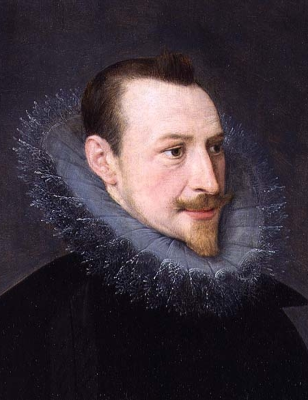
A contemporary of William Shakespeare and Ben Jonson, British Renaissance poet Edmund Spenser (1552-1599) is probably best known as the author of “The Fairie Queen,” an epic fantasy poem celebrating the monarch of the time, Queen Elizabeth I.
Spenser, however, did much more than write a flattering poem paying tribute to the queen and her family line. He also wrote many sonnets and is considered one of the founders and most respected craftsmen of English verse.
Born in London and twice married, Spenser’s life was spent writing and socializing in literary circles. His foray into politics was suppressed during his lifetime, possibly due to his incendiary viewpoints regarding the Irish. His prose pamphlet entitled “A View of the Present State of Ireland” argued for destroying the customs and language of the Irish people, by violence if necessary, to force them into a more submissive stance toward the English. He died in London at age 46 and was buried in Poets’ Corner in Westminister Abbey.
Aside from his most famous (and very lengthy) epic fantasy poem, “The Fairie Queen,” the following two sonnets are from his collection Amoretti and are among the most notable poems Spenser wrote.
Amoretti LXXIX: Men Call You Fair
Men call you fair, and you do credit it,
For that your self ye daily such do see:
But the true fair, that is the gentle wit,
And vertuous mind, is much more prais’d of me.
For all the rest, how ever fair it be,
Shall turn to naught and lose that glorious hue:
But only that is permanent and free
From frail corruption, that doth flesh ensue.
That is true beauty: that doth argue you
To be divine, and born of heavenly seed:
Deriv’d from that fair Spirit, from whom all true
And perfect beauty did at first proceed.
He only fair, and what he fair hath made,
All other fair, like flowers untimely fade.
Amoretti LIV: Of This Worlds Theatre in Which We Stay
Of this worlds Theatre in which we stay,
My love lyke the Spectator ydly sits
Beholding me that all the pageants play,
Disguysing diversly my troubled wits.
Sometimes I joy when glad occasion fits,
And mask in myrth lyke to a Comedy:
Soone after when my joy to sorrow flits,
I waile and make my woes a Tragedy.
Yet she beholding me with constant eye,
Delights not in my merth nor rues my smart:
But when I laugh she mocks, and when I cry
She laughes, and hardens evermore her hart.
What then can move her? if not merth nor mone,
She is no woman, but a sencelesse stone.
Best known just as Lord Byron, British poet George Gordon Byron (1788 -1824) was a contemporary of Percy Bysshe Shelley during the English Romantic period. Byron is best known for poems like “Don Juan” and for his philandering love life.
Byron was notoriously bad at handling his finances and prone to engage in desperate and indiscriminate love affairs, which include rumors of homosexual and incestual encounters.
Byron was quite famous and beloved during the Regency period, enjoying prominence in London society and the rare appreciation not always afforded a poet’s work during their lifetime. However, his money and relationship issues eventually led to his self-imposed exile from England for the remainder of his life. He traveled Europe, tarried in Italy, but ended up dying of illness while fighting against the Turks in the Greek War of Independence. Byron’s body was returned to England for burial in Westminster Abbey, but this burial was refused due to the poet’s “questionable morality.” Byron was ultimately buried in the Church of St. Mary Magdelene, with a memorial to him finally being placed in Westminster Abbey in 1969, 145 years after his death.
Aside from his most famous (and very lengthy) poem, “Don Juan,” the following two poems are among Lord Byron’s most beloved and enduring.
She Walks in Beauty
She walks in beauty, like the night
Of cloudless climes and starry skies;
And all that’s best of dark and bright
Meet in her aspect and her eyes;
Thus mellowed to that tender light
Which heaven to gaudy day denies.
One shade the more, one ray the less,
Had half impaired the nameless grace
Which waves in every raven tress,
Or softly lightens o’er her face;
Where thoughts serenely sweet express,
How pure, how dear their dwelling-place.
And on that cheek, and o’er that brow,
So soft, so calm, yet eloquent,
The smiles that win, the tints that glow,
But tell of days in goodness spent,
A mind at peace with all below,
A heart whose love is innocent!
And Thou art Dead, as Young and Fair
And thou art dead, as young and fair
As aught of mortal birth;
And form so soft, and charms so rare,
Too soon return’d to Earth!
Though Earth receiv’d them in her bed,
And o’er the spot the crowd may tread
In carelessness or mirth,
There is an eye which could not brook
A moment on that grave to look.
I will not ask where thou liest low,
Nor gaze upon the spot;
There flowers or weeds at will may grow,
So I behold them not:
It is enough for me to prove
That what I lov’d, and long must love,
Like common earth can rot;
To me there needs no stone to tell,
‘T is Nothing that I lov’d so well.
Yet did I love thee to the last
As fervently as thou,
Who didst not change through all the past,
And canst not alter now.
The love where Death has set his seal,
Nor age can chill, nor rival steal,
Nor falsehood disavow:
And, what were worse, thou canst not see
Or wrong, or change, or fault in me.
The better days of life were ours;
The worst can be but mine:
The sun that cheers, the storm that lowers,
Shall never more be thine.
The silence of that dreamless sleep
I envy now too much to weep;
Nor need I to repine
That all those charms have pass’d away,
I might have watch’d through long decay.
The flower in ripen’d bloom unmatch’d
Must fall the earliest prey;
Though by no hand untimely snatch’d,
The leaves must drop away:
And yet it were a greater grief
To watch it withering, leaf by leaf,
Than see it pluck’d to-day;
Since earthly eye but ill can bear
To trace the change to foul from fair.
I know not if I could have borne
To see thy beauties fade;
The night that follow’d such a morn
Had worn a deeper shade:
Thy day without a cloud hath pass’d,
And thou wert lovely to the last,
Extinguish’d, not decay’d;
As stars that shoot along the sky
Shine brightest as they fall from high.
As once I wept, if I could weep,
My tears might well be shed,
To think I was not near to keep
One vigil o’er thy bed;
To gaze, how fondly! on thy face,
To fold thee in a faint embrace,
Uphold thy drooping head;
And show that love, however vain,
Nor thou nor I can feel again.
Yet how much less it were to gain,
Though thou hast left me free,
The loveliest things that still remain,
Than thus remember thee!
The all of thine that cannot die
Through dark and dread Eternity
Returns again to me,
And more thy buried love endears
Than aught except its living years.
Poet Laureate of the United Kingdom under Queen Victoria from 1843-1850, British poet William Wordsworth (1770-1850) was a major poet of the English Romantic period, friend to fellow Romantic poet Samuel Taylor Coleridge, and another “classical” poet whose success and veneration belies the real criticism and challenges he endured.
A faithful supporter of the Church of England, some of the criticism directed at Wordsworth, both then and now, is due to his adherence to his religious beliefs when the literary elite found it more fashionable to espouse secular themes and values prevalent during the Enlightenment (and currently enjoying renewed popularity). Wordsworth lived for a time in France and was at first enamored with the ideas of Republicanism which brought about the French Revolution, but then became horrified by the atrocities witnessed during the “Reign of Terror.” These early experiences undoubtedly influenced his work. As he progressed in his career, Wordsworth was fortunate enough to witness his earlier works gaining appreciation over time as the views of the Enlightenment gave way to 19th-century Romanticism.
While his semi-autobiographical poem, “The Prelude,” is often considered his best work, Wordsworth’s talent is also widely recognized in shorter works, including “I Wandered Lonely as a Cloud” and “Composed upon Westminster Bridge, September 3, 1802” found here below.
I Wandered Lonely as a Cloud
I wandered lonely as a cloud
That floats on high o’er vales and hills,
When all at once I saw a crowd,
A host, of golden daffodils;
Beside the lake, beneath the trees,
Fluttering and dancing in the breeze.
Continuous as the stars that shine
And twinkle on the milky way,
They stretched in never-ending line
Along the margin of a bay:
Ten thousand saw I at a glance,
Tossing their heads in sprightly dance.
The waves beside them danced; but they
Out-did the sparkling waves in glee:
A poet could not but be gay,
In such a jocund company:
I gazed—and gazed—but little thought
What wealth the show to me had brought:
For oft, when on my couch I lie
In vacant or in pensive mood,
They flash upon that inward eye
Which is the bliss of solitude;
And then my heart with pleasure fills,
And dances with the daffodils.
Composed upon Westminster Bridge, September 3, 1802
Earth has not any thing to show more fair:
Dull would he be of soul who could pass by
A sight so touching in its majesty:
This City now doth, like a garment, wear
The beauty of the morning; silent, bare,
Ships, towers, domes, theatres, and temples lie
Open unto the fields, and to the sky;
All bright and glittering in the smokeless air.
Never did sun more beautifully steep
In his first splendour, valley, rock, or hill;
Ne’er saw I, never felt, a calm so deep!
The river glideth at his own sweet will:
Dear God! the very houses seem asleep;
And all that mighty heart is lying still!
An important influence of later poets such as Robert Browning and W. B. Yeats and a contemporary of John Keats, Percy Bysshe Shelley (1792-1822) is widely considered a major poet of the English Romatic period, and has been described by one modern critic as “a lyric poet without rival.”
An atheist who only lived to the age of 29, the challenges overcome to attain literary prominence were not enough to prevent his success, although much of his acclaim came after his tragic death in a boating accident in the Gulf of La Spezia, near modern day Italy. Both Shelley’s first wife and his second wife’s sister committed suicide, arguably in part due to their complicated relationship with the poet. His second wife was Mary Godwin Shelley of Frankenstein fame.
Much of Percy Shelley’s poetry was overtly political, if not radical for the times, and published posthumously to avoid the persecution and prosecution that surely would have commenced if such material was published in his lifetime. In addition to the poets mentioned previously, a diverse group of luminaries including Mahatma Ghandi, Karl Marx, and George Bernard Shaw were said to be admirers of his work. Shelley’s literary reputation was more marginal than one would expect during and after his lifetime, even into the 20th century when critics such as T.S. Eliot and W. H. Auden fiercely disparaged his work. But as similar viewpoints to his increased in favor in the mid to late 1960s, Shelley’s critical reputation has unsurprisingly improved.
The following two poems, “Ozymandias” and “To a Skylark,” are among Shelley’s most recognized.
Ozymandias
I met a traveller from an antique land, Who said—”Two vast and trunkless legs of stone Stand in the desert….Near them, on the sand, Half sunk a shattered visage lies, whose frown, And wrinkled lip, and sneer of cold command, Tell that its sculptor well those passions read Which yet survive, stamped on these lifeless things, The hand that mocked them, and the heart that fed; And on the pedestal, these words appear: My name is Ozymandias, King of Kings; Look on my Works, ye Mighty, and despair! Nothing besides remains. Round the decay Of that colossal Wreck, boundless and bare The lone and level sands stretch far away.
To a Skylark
Hail to thee, blithe Spirit!
Bird thou never wert,
That from Heaven, or near it,
Pourest thy full heart
In profuse strains of unpremeditated art.
Higher still and higher
From the earth thou springest
Like a cloud of fire;
The blue deep thou wingest,
And singing still dost soar, and soaring ever singest.
In the golden lightning
Of the sunken sun,
O’er which clouds are bright’ning,
Thou dost float and run;
Like an unbodied joy whose race is just begun.
The pale purple even
Melts around thy flight;
Like a star of Heaven,
In the broad day-light
Thou art unseen, but yet I hear thy shrill delight,
Keen as are the arrows
Of that silver sphere,
Whose intense lamp narrows
In the white dawn clear
Until we hardly see, we feel that it is there.
All the earth and air
With thy voice is loud,
As, when night is bare,
From one lonely cloud
The moon rains out her beams, and Heaven is overflow’d.
What thou art we know not;
What is most like thee?
From rainbow clouds there flow not
Drops so bright to see
As from thy presence showers a rain of melody.
Like a Poet hidden
In the light of thought,
Singing hymns unbidden,
Till the world is wrought
To sympathy with hopes and fears it heeded not:
Like a high-born maiden
In a palace-tower,
Soothing her love-laden
Soul in secret hour
With music sweet as love, which overflows her bower:
Like a glow-worm golden
In a dell of dew,
Scattering unbeholden
Its aëreal hue
Among the flowers and grass, which screen it from the view:
Like a rose embower’d
In its own green leaves,
By warm winds deflower’d,
Till the scent it gives
Makes faint with too much sweet those heavy-winged thieves:
Sound of vernal showers
On the twinkling grass,
Rain-awaken’d flowers,
All that ever was
Joyous, and clear, and fresh, thy music doth surpass.
Teach us, Sprite or Bird,
What sweet thoughts are thine:
I have never heard
Praise of love or wine
That panted forth a flood of rapture so divine.
Chorus Hymeneal,
Or triumphal chant,
Match’d with thine would be all
But an empty vaunt,
A thing wherein we feel there is some hidden want.
What objects are the fountains
Of thy happy strain?
What fields, or waves, or mountains?
What shapes of sky or plain?
What love of thine own kind? what ignorance of pain?
With thy clear keen joyance
Languor cannot be:
Shadow of annoyance
Never came near thee:
Thou lovest: but ne’er knew love’s sad satiety.
Waking or asleep,
Thou of death must deem
Things more true and deep
Than we mortals dream,
Or how could thy notes flow in such a crystal stream?
We look before and after,
And pine for what is not:
Our sincerest laughter
With some pain is fraught;
Our sweetest songs are those that tell of saddest thought.
Yet if we could scorn
Hate, and pride, and fear;
If we were things born
Not to shed a tear,
I know not how thy joy we ever should come near.
Better than all measures
Of delightful sound,
Better than all treasures
That in books are found,
Thy skill to poet were, thou scorner of the ground!
Teach me half the gladness
That thy brain must know,
Such harmonious madness
From my lips would flow
The world should listen then, as I am listening now.
As Poet Laureate for Queen Victoria, English poet Alfred Tennyson was well acquainted with literary success. At the age of 20, he received the Chancellor’s Gold Medal from Cambridge for his poem, “Timbuktu.” One year later, he published his first poetry collection, Poems, Chiefly Lyrical, which included some of the best pieces he wrote. Appointed Poet Laureate in 1850 after the death of William Wordsworth, Tennyson held the position for 42 years, until his death in 1892.
But even the most successful of poets (and people) must learn to deal with the challenges and disappointments that are inevitable in a life well lived. Tennyson’s critics often argued that Tennyson’s poetry was overly sentimental. His second volume of poetry received such a negative critical reception that Tennyson didn’t publish again for 10 years. His literary career continued through personal and professional hardship, experiencing both the inspirational highs and lows often glossed over in the success stories we collectively celebrate.
The following two poems were highlights of Tennyson’s writing career. “The Charge of the Light Brigade” is a narrative poem written by in 1854 by Tennyson as Poet Laureate to memorialize the costly failed charge executed by the British Light Brigade during the Crimean War. Written just three years before he died, “Crossing the Bar” was desired by Tennyson to be included as the last poem in all future editions of his poetry.
The Charge of the Light Brigade
I.
Half a league, half a league, Half a league onward, All in the valley of Death Rode the six hundred. ‘Forward, the Light Brigade! Charge for the guns!’ he said: Into the valley of Death Rode the six hundred.
II.
‘Forward, the Light Brigade!’ Was there a man dismay’d? Not tho’ the soldier knew Some one had blunder’d: Their’s not to make reply, Their’s not to reason why, 15 Their’s but to do and die: Into the valley of Death Rode the six hundred.
III.
Cannon to right of them, Cannon to left of them, Cannon in front of them Volley’d and thunder’d; Storm’d at with shot and shell, Boldly they rode and well, Into the jaws of Death, Into the mouth of Hell Rode the six hundred.
IV.
Flash’d all their sabres bare,
Flash’d as they turn’d in air
Sabring the gunners there,
Charging an army, while
All the world wondered.
Plunged in the battery-smoke
Right through the line they broke;
Cossack and Russian
Reeled from the sabre stroke
Shattered and sundered.
Then they rode back, but not
Not the six hundred.
V.
Cannon to right of them,
Cannon to left of them,
Cannon behind them
Volleyed and thundered;
Stormed at with shot and shell,
While horse and hero fell.
They that had fought so well
Came through the jaws of Death,
Back from the mouth of hell,
All that was left of them,
Left of six hundred.
VI.
When can their glory fade?
O the wild charge they made!
All the world wondered.
Honour the charge they made!
Honour the Light Brigade,
Noble six hundred!
Crossing the Bar
Sunset and evening star,
      And one clear call for me!
And may there be no moaning of the bar,
      When I put out to sea,

   But such a tide as moving seems asleep,
      Too full for sound and foam,
When that which drew from out the boundless deep
      Turns again home.

   Twilight and evening bell,
      And after that the dark!
And may there be no sadness of farewell,
      When I embark;

   For tho' from out our bourne of Time and Place
      The flood may bear me far,
I hope to see my Pilot face to face
      When I have crost the bar.
A highly regarded poet and social figure of the 1920s, Edna St. Vincent Millay was the first woman to receive the Pulitzer Prize for Poetry. She received the award in 1923 for her poem “Ballad of the Harp Weaver.” Despite being subjected to the ignorant criticism of traditional forms prevalent in the Modernist movement, Millay received the Frost Medal for her lifetime contribution to American Poetry in 1943.
Millay’s reputation as a major poet posthumously improved as identity politics gained influence in literary circles beginning in the 1960s and 1970s. Millay’s feminist activism and her unconventional (for the time) sexual escapades led critics to occasionally overlook the traditional writing style they usually regarded with such loathing.
The following two poems were highlights of Millay’s writing career. “Renascence” was submitted to a poetry contest in The Lyric Year in 1912 when Millay was 20. The poem was selected as the winner by the contest backer before it was shortly thereafter decided the poem did not meet the arbitrary criterion created by the other judges of being “socially relevant.” “Renascence” was ultimately awarded fourth place in that contest. The second poem featured here, “What lips my lips have kissed, and where, and why,” is widely regarded as Millay’s most famous poem.
Renascence
All I could see from where I stood
Was three long mountains and a wood;
I turned and looked another way,
And saw three islands in a bay.
So with my eyes I traced the line
Of the horizon, thin and fine,
Straight around till I was come
Back to where I’d started from;
And all I saw from where I stood
Was three long mountains and a wood.
Over these things I could not see;
These were the things that bounded me;
And I could touch them with my hand,
Almost, I thought, from where I stand.
And all at once things seemed so small
My breath came short, and scarce at all.
But, sure, the sky is big, I said;
Miles and miles above my head;
So here upon my back I’ll lie
And look my fill into the sky.
And so I looked, and, after all,
The sky was not so very tall.
The sky, I said, must somewhere stop,
And—sure enough!—I see the top!
The sky, I thought, is not so grand;
I ‘most could touch it with my hand!
And reaching up my hand to try,
I screamed to feel it touch the sky.
I screamed, and—lo!—Infinity
Came down and settled over me;
Forced back my scream into my chest,
Bent back my arm upon my breast,
And, pressing of the Undefined
The definition on my mind,
Held up before my eyes a glass
Through which my shrinking sight did pass
Until it seemed I must behold
Immensity made manifold;
Whispered to me a word whose sound
Deafened the air for worlds around,
And brought unmuffled to my ears
The gossiping of friendly spheres,
The creaking of the tented sky,
The ticking of Eternity.
I saw and heard, and knew at last
The How and Why of all things, past,
And present, and forevermore.
The Universe, cleft to the core,
Lay open to my probing sense
That, sick’ning, I would fain pluck thence
But could not,—nay! But needs must suck
At the great wound, and could not pluck
My lips away till I had drawn
All venom out.—Ah, fearful pawn!
For my omniscience paid I toll
In infinite remorse of soul.
All sin was of my sinning, all
Atoning mine, and mine the gall
Of all regret. Mine was the weight
Of every brooded wrong, the hate
That stood behind each envious thrust,
Mine every greed, mine every lust.
And all the while for every grief,
Each suffering, I craved relief
With individual desire,—
Craved all in vain! And felt fierce fire
About a thousand people crawl;
Perished with each,—then mourned for all!
A man was starving in Capri;
He moved his eyes and looked at me;
I felt his gaze, I heard his moan,
And knew his hunger as my own.
I saw at sea a great fog bank
Between two ships that struck and sank;
A thousand screams the heavens smote;
And every scream tore through my throat.
No hurt I did not feel, no death
That was not mine; mine each last breath
That, crying, met an answering cry
From the compassion that was I.
All suffering mine, and mine its rod;
Mine, pity like the pity of God.
Ah, awful weight! Infinity
Pressed down upon the finite Me!
My anguished spirit, like a bird,
Beating against my lips I heard;
Yet lay the weight so close about
There was no room for it without.
And so beneath the weight lay I
And suffered death, but could not die.
Long had I lain thus, craving death,
When quietly the earth beneath
Gave way, and inch by inch, so great
At last had grown the crushing weight,
Into the earth I sank till I
Full six feet under ground did lie,
And sank no more,—there is no weight
Can follow here, however great.
From off my breast I felt it roll,
And as it went my tortured soul
Burst forth and fled in such a gust
That all about me swirled the dust.
Deep in the earth I rested now;
Cool is its hand upon the brow
And soft its breast beneath the head
Of one who is so gladly dead.
And all at once, and over all
The pitying rain began to fall;
I lay and heard each pattering hoof
Upon my lowly, thatched roof,
And seemed to love the sound far more
Than ever I had done before.
For rain it hath a friendly sound
To one who’s six feet underground;
And scarce the friendly voice or face:
A grave is such a quiet place.
The rain, I said, is kind to come
And speak to me in my new home.
I would I were alive again
To kiss the fingers of the rain,
To drink into my eyes the shine
Of every slanting silver line,
To catch the freshened, fragrant breeze
From drenched and dripping apple-trees.
For soon the shower will be done,
And then the broad face of the sun
Will laugh above the rain-soaked earth
Until the world with answering mirth
Shakes joyously, and each round drop
Rolls, twinkling, from its grass-blade top.
How can I bear it; buried here,
While overhead the sky grows clear
And blue again after the storm?
O, multi-colored, multiform,
Beloved beauty over me,
That I shall never, never see
Again! Spring-silver, autumn-gold,
That I shall never more behold!
Sleeping your myriad magics through,
Close-sepulchred away from you!
O God, I cried, give me new birth,
And put me back upon the earth!
Upset each cloud’s gigantic gourd
And let the heavy rain, down-poured
In one big torrent, set me free,
Washing my grave away from me!
I ceased; and through the breathless hush
That answered me, the far-off rush
Of herald wings came whispering
Like music down the vibrant string
Of my ascending prayer, and—crash!
Before the wild wind’s whistling lash
The startled storm-clouds reared on high
And plunged in terror down the sky,
And the big rain in one black wave
Fell from the sky and struck my grave.
I know not how such things can be;
I only know there came to me
A fragrance such as never clings
To aught save happy living things;
A sound as of some joyous elf
Singing sweet songs to please himself,
And, through and over everything,
A sense of glad awakening.
The grass, a-tiptoe at my ear,
Whispering to me I could hear;
I felt the rain’s cool finger-tips
Brushed tenderly across my lips,
Laid gently on my sealed sight,
And all at once the heavy night
Fell from my eyes and I could see,—
A drenched and dripping apple-tree,
A last long line of silver rain,
A sky grown clear and blue again.
And as I looked a quickening gust
Of wind blew up to me and thrust
Into my face a miracle
Of orchard-breath, and with the smell,—
I know not how such things can be!—
I breathed my soul back into me.
Ah! Up then from the ground sprang I
And hailed the earth with such a cry
As is not heard save from a man
Who has been dead, and lives again.
About the trees my arms I wound;
Like one gone mad I hugged the ground;
I raised my quivering arms on high;
I laughed and laughed into the sky,
Till at my throat a strangling sob
Caught fiercely, and a great heart-throb
Sent instant tears into my eyes;
O God, I cried, no dark disguise
Can e’er hereafter hide from me
Thy radiant identity!
Thou canst not move across the grass
But my quick eyes will see Thee pass,
Nor speak, however silently,
But my hushed voice will answer Thee.
I know the path that tells Thy way
Through the cool eve of every day;
God, I can push the grass apart
And lay my finger on Thy heart!
The world stands out on either side
No wider than the heart is wide;
Above the world is stretched the sky,—
No higher than the soul is high.
The heart can push the sea and land
Farther away on either hand;
The soul can split the sky in two,
And let the face of God shine through.
But East and West will pinch the heart
That can not keep them pushed apart;
And he whose soul is flat—the sky
Will cave in on him by and by.
What lips my lips have kissed, and where, and why
What lips my lips have kissed, and where, and why,
I have forgotten, and what arms have lain
Under my head till morning; but the rain
Is full of ghosts tonight, that tap and sigh
Upon the glass and listen for reply,
And in my heart there stirs a quiet pain
For unremembered lads that not again
Will turn to me at midnight with a cry.
Thus in the winter stands the lonely tree,
Nor knows what birds have vanished one by one,
Yet knows its boughs more silent than before:
I cannot say what loves have come and gone,
I only know that summer sang in me
A little while, that in me sings no more.

 Sparks of Calliope