5 Best Classic English Poets

Here at Sparks of Calliope, we define “classic” poets as poets who are widely read, have been studied academically, and whose work is in the public domain. Classic is commonly defined as “a body of work of recognized and established value.” This is not to be confused with the other definition of classic as involving the study of Ancient Greek and Latin literature. Here is a quick list of the top 5 British classic poets with links to biographies and a couple of samples from each. We would love to get your take on this order in the comments!

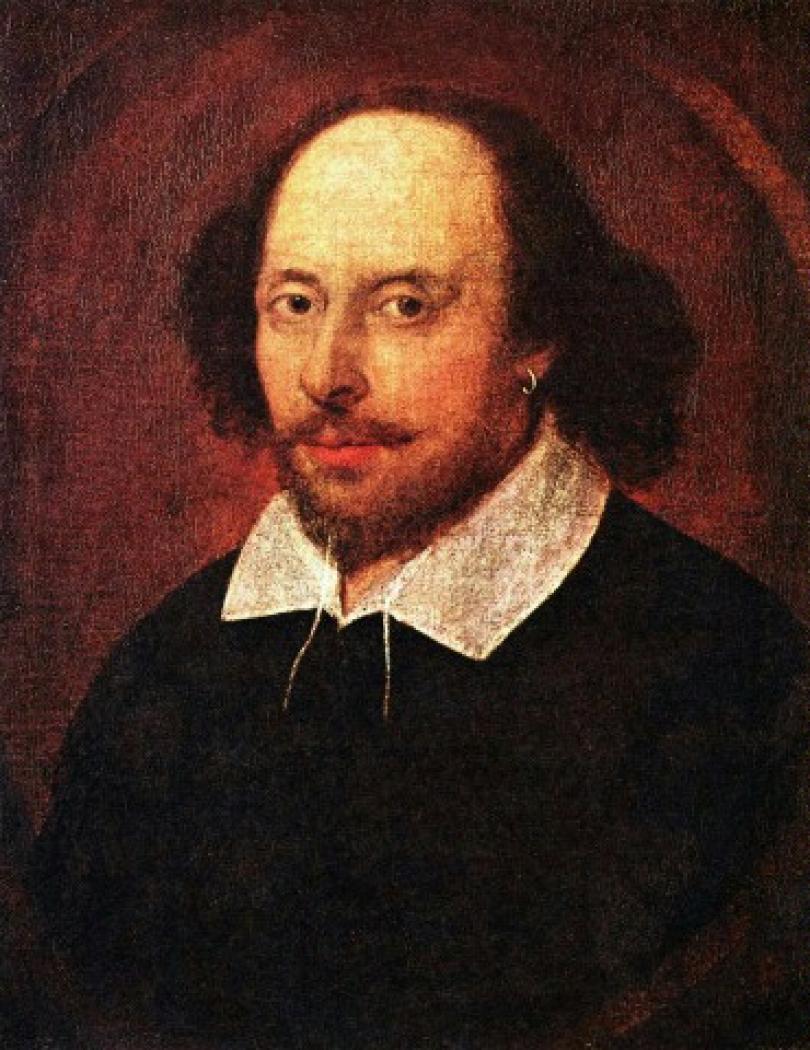
  1. William Shakespeare (1564-1616)

Undoubtedly the most famous poet of all time in the English-speaking world, William Shakespeare’s works are still being reproduced, adapted, and referenced in popular culture more than 400 years after his death. His famous plays overshadow his poetry, but do not detract from his recognition as a skillful poet in his own right. His literary influence on Western Civilization can hardly be overstated. We chose to feature “Sonnet 116” and “Sonnet 18” as two of his most popular poems.

2. George Gordon Byron, 6th Baron Byron (1788-1824)
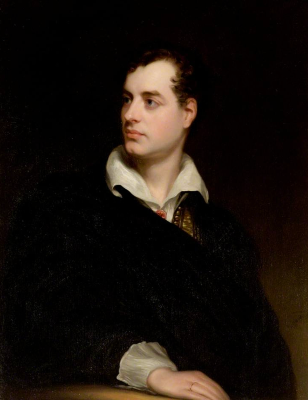
Lord Byron was the English version of Giacomo Casanova. Most famous for his lengthy poem entitled “Don Juan,” we chose “She Walks in Beauty” and “And Thou Art Dead, as Young and Fair” to represent the best of his work. Despite his current place of esteem in the hearts of his countrymen, his unpopularity with certain portions of the population during his lifetime led him to self-exile, and he died from illness while fighting the Turks in the Greek War of Independence.

3. John Keats (1795-1821)
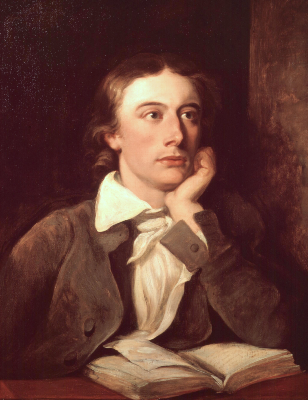
Admired for literary works of profound depth despite his young age and short time on this earth, John Keats is the poster child for the Romantic movement. We chose “Ode to a Nightingale” and “Ode to a Grecian Urn” to demonstrate his emotional depth and skillful use of imagery. While his life was cut short due to tuberculosis–he died at the age of 25–he nevertheless managed to write works which continue to inspire and earn him a place among the top five British poets of all time.

4. Percy Bysshe Shelley (1792-1822)
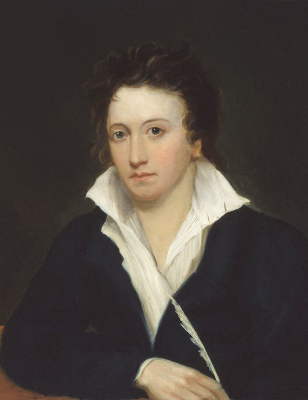
Described by one modern critic as “a lyric poet without rival,” Percy Shelley’s place as one of the best all-time classic British poets is not undisputed. Both T. S. Elliot and W. H. Auden are on record as fierce critics of his work. The notorious historical figure Karl Marx, on the other hand, was said to be an admirer. An atheist and political activist, Percy Shelley did not live to see much of his work published. However, the quality of his work earns him a place on our list. We chose “Ozymandias” and “To a Skylark” to showcase his talent.

5. John Milton (1608-1674)
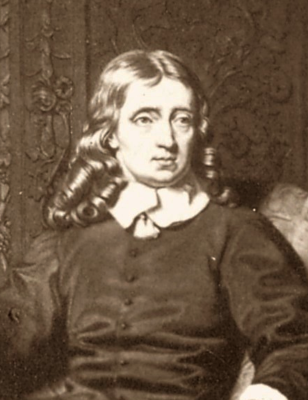
His most famous work, Paradise Lost, is so lengthy that seldom appears in samplings such as this; however, John Milton wrote shorter poems that are worthy examples of his abilities. He wrote his poems from a position of deeply-held religious beliefs and with a highly educated background. His works are highly intellectual if not profoundly philosophical, exploring themes such as divine justice and individual liberty along with other aspects of human existence. We decided upon “An Epitaph on the Admirable Dramatic Poet W. Shakespeare” and “On His Blindness” to highlight his writing ability.

Did we get our order right? What would yours be instead? How would you round out the top 10? We look forward to reading your comments!

Two Poems by John Milton

John Milton (1608-1674)

John Milton (1608-1674) was a towering figure in English literature, best known for his epic poem Paradise Lost. Born in London to a prosperous scrivener, Milton received an exceptional education, attending St. Paul’s School and later Christ’s College, Cambridge. His deep classical knowledge, coupled with a fervent religious belief, profoundly shaped his literary and political career.

Milton’s poetry is marked by its rich language, intellectual depth, and complex themes, often exploring human existence, divine justice, and individual liberty. Paradise Lost, published in 1667, stands as his magnum opus and one of the greatest works of English literature. The epic poem recounts the biblical story of the Fall of Man, delving into themes of free will, obedience, and the nature of good and evil. With its grand style and powerful blank verse, Paradise Lost not only reflects Milton’s mastery of classical epic conventions but also his innovative approach to poetic form and narrative.

In addition to his literary achievements, Milton was deeply involved in the political and religious upheavals of 17th-century England. A staunch Puritan and republican, he served as a civil servant under Oliver Cromwell’s Commonwealth and wrote several influential pamphlets advocating for freedom of speech, press, and divorce, most notably Areopagitica (1644). His political writings reflect his commitment to individual rights and a deep suspicion of tyranny in all its forms.

Milton’s later years were marked by personal and physical hardship. He became completely blind in 1652, yet continued to write and dictate his works, producing Paradise Regained and Samson Agonistes in his final years. Despite his blindness, Milton’s literary vision remained clear, his works continuing to inspire readers and writers with their exploration of the human condition, freedom, and divine justice. His influence can be seen in the works of later poets and thinkers, securing his place as one of the most important voices in English literature.

While Milton was most famous for his epic Paradise Lost, he wrote shorter poems such as these as well:


An Epitaph on the Admirable Dramatic Poet W. Shakespeare

What needs my Shakespeare for his honored bones
The labor of an age in piled stones?
Or that his hallowed reliques should be hid
Under a star-ypointing pyramid?
Dear son of Memory, great heir of Fame,
What need’st thou such weak witness of thy name?
Thou in our wonder and astonishment
Hast built thy self a livelong monument.
For whilst, to th’ shame of slow-endeavoring art,
Thy easy numbers flow, and that each heart
Hath from the leaves of thy unvalued book
Those Delphic lines with deep impression took,
Then thou, our fancy of itself bereaving,
Dost make us marble with too much conceiving,
And so sepulchred in such pomp dost lie
That kings for such a tomb would wish to die.


On His Blindness

When I consider how my light is spent
    Ere half my days in this dark world and wide,
    And that one talent which is death to hide
    Lodg’d with me useless, though my soul more bent
    To serve therewith my Maker, and present
    My true account, lest he returning chide,
    “Doth God exact day-labour, light denied?”
    I fondly ask. But Patience, to prevent
    That murmur, soon replies: “God doth not need
    Either man’s work or his own gifts: who best
    Bear his mild yoke, they serve him best. His state
    Is kingly; thousands at his bidding speed
    And post o’er land and ocean without rest:
    They also serve who only stand and wait.”


The informational article above was composed in part by administering guided direction to ChatGPT. It was subsequently fact-checked, revised, and edited by the editor. The editor/publisher takes no authorship credit for this work and strongly encourages disclosure when using this or similar tools to create content. Sparks of Calliope prohibits submissions of poetry composed with the assistance of predictive AI.