He’s as tall as she is comely and so he strides the valley floor. He kicks the hills out of the way and bows to open each and any door for his young bride of angelic cachet; endowed in Grace by blessed decree. For surely she is comely.
He’s as smart as she is winsome and so he squares the nth degree. He keeps bridges in suspension with histories of what will be, will be, and advises all without pretension on things out of hand or in some. For certain she is winsome.
He’s as clever as she is beautiful and nimble with his hands and wit. He will never knuckle under to overt pressure, pushed by peer or twit, and arguments of lightning or thunder will find him indisputable. For truly she is beautiful.
He’s as resolute as she is charming and answers rightly before asked. He figures out all the angles no matter the risk, or matter is tasked: immune to lures, free from all that spangles, he’s down, undone by her eyes disarming. Undeniably charming.
Jonathan Kinsman styles himself as 8th grade Provocateur de Litterature & Grand Grammarian, 3rd Degree; Master of the Revels & Singular of Nouns.
A few years ago, I got a phone call, a voice from the past, my ex-sister-in-law saying my former wife had died alone in a hotel room in Las Vegas, She finally took enough pills to do the job.
Then she segued to her son, now a grown man, You’re his godfather, she reminded me, he needs you.
I remembered holding him as an infant in a light filled church somewhere in Orange County.
I hope you kept his grandfather away from him, I said.
Within the hour he called, telling me about his life as a cross-country truck driver, and how he struggled with his own demons, drugs, and alcohol.
I didn’t have much advice to give him except to suggest he get into therapy and rehab, and said I would pray for him.
Just before he hung up, he called me Uncle Mike, and I wondered if it stuck in his throat the way it landed in my ear.
But what bothered me the most was the description of my ex, dead in Vegas alone on the bed, black garbage bags next to her filled with newspaper and rags, There was nothing, really, in the bags, her sister-in-law said.
But I knew better— she filled them with her rage until there was no room left.
The Face in the Mirror
You’re not the first person to tell me the surprise you felt looking in the mirror; the fine etched youth turned to trenches surrounding your eyes; a treasure of beauty and lust gone, buried within a fading smile; seeing your parents’ faces between the lines. The last time we met, you said, “I’m turning into my mother. I didn’t want to, but there it is, filling my house with antiques and cooking her favorite foods.” As if any of us could escape age or time or see something new as the years climb.
Michael Minassian is a Contributing Editor for Verse-Virtual, an online poetry journal. His poetry collections: Time is Not a River,Morning Calm, and A Matter of Timing, as well as a new chapbook, Jack Pays a Visit, are all available on Amazon. For more information, visit: https://michaelminassian.com
in this season i sigh as winter falls into snow at evening morning a clean sky but oh, the nights…
then i dream as spring breathes into afternoons that bloom everything green…
when i sing as summer flows into a molten sun lingering at dusk among purple clouds…
at last i whisper as autumn shuffles into tipsy among dry leaves later sidewalks cool after rain…
i live as each cycle circles into the sand of my hourglass…
Sister Lou Ella Hickman, OVISS, has a master’s in theology from St. Mary’s University in San Antonio and is a former teacher and librarian. She is a certified spiritual director as well as a poet and writer. Her poems have appeared in numerous magazines such as America, US Catholic, Commonweal,The Christian Century,Presence, Prism, and several anthologies. She was a Pushcart nominee in 2017 and 2020. Five poems from her book, she: robed and words, set to music by James Lee III were performed on May 11, 2021 as part of a concert held at Y92 in New York City. The group of songs is entitled “Chavah’s Daughters Speak.” Another concert was held in Cleveland, Ohio on March 28, 2023.
The Cheetah is a blanket – Polyester, furry, black spots Spackled on a field of orange. It kept my mother warm and swaddled During spells of delirium as cancer Tore through her bones.
The cheetah came from her bedroom Which she visited aided by a holding hand When the cancer retreated its decimation And allowed her to climb our house’s Narrow wood stairway carpeted in burgundy Fabric slabs my father laid with Fidel, his employee.
She thumbed her notebooks there – All scribbled with short stories and poems To share at the writers’ group meetings She could no longer attend, too weak To compose, there seemed nothing to share.
Finished with her inspection, she sat slanted on her bed, A floppy queen-sized one with her imprint still visible From decades of sleep while that of her husband’s Long gone after ten years in the grave. She would ask the aide to open a closet to choose Outfits for the changing season to hang on the downstairs rack Crammed to the side of her hospital bed beneath the chandelier That had glittered for Christmas dinner and special guests and now Illuminates medications, hearing aids, flowers, books, and distilled water.
Soon those visits stopped as the cancer pounced From its lair to spread and bind her to the hospital bed For many days into nights – the cheetah covering her from Clavicle well past the phalanges of her feet When air-conditioning froze or the thermostat failed To abate the winter drafts’ creep through warped windows.
The cheetah warmed her until the day before she died, And when she died it comforted me through the winter-tide That followed her death. I dreamt of her home of fifty years Often: strangers to evict or my mother answering the door Confused, dislocated as if cognizant she was imprisoned Temporarily in one of my dreams. But soon the house Dreams were engulfed by my Present, the cheetah Clutter.
Yesterday, the cheetah was bagged and unloaded. A space is open in my linen chest, my dreams Relieved of hauntings from a home no longer. Now, unexpected tears spring from quiet dens.
The Evergreens
I stand in an open field. Sorrow blows the tops of tallgrass, Sun’s flickering rays sieved through Evergreens’ blue at the apogee of summer, Cradling newborns in their limbs and trunks.
I raise my open palms to block the wind. Turn and narrow my eyes upon the evergreens With promise to shelter these fragile newborns, Protect against the inevitable winter’s blows.
I allow sorrow’s gales to buffet me, Question how long I can stand To marvel and imbibe summer’s fleeting fecundity, The evergreens’ potent promises, Before Fall flags the end of all of this With its gaudy, tattered tartan of gold, rose, and nectarine.
“The Cheetah” and “The Evergreens” previously appeared in Lothlorien Poetry Journal
Christopher Sahar is a musician who enjoys writing poetry as an avocation. Born and raised in New Jersey, he received his B.A. in English from Oberlin College and his Master’s in Music Theory and Composition from Queens College/City University of New York. He resides in the Astoria, Queens, section of New York City, where he works as a church musician, educator, and occasionally earns income from music compositions and freelance writing. A composer, his works have been performed both in the United States and Europe, and he has written a libretti and lyrics for operatic and vocal works.
Walter Gretzky died two days before my Dad. They were both born in 1938. Other than that, they had almost nothing in common.
My Dad and me also had very little in common except our first names and our last
the propensity to drink as a means of dealing with anxiety and a deep and abiding love in Jesus Christ.
My childhood was a hopeless struggle, founded on pleasing my Dad, protecting my Mom and becoming the next Wayne Gretzky.
My Dad was deeply damaged. He was torn between trying to save us from this damage and sharing how it felt.
Finally, we became a family, found the courage to leave the source of our abuse.
I started to live my life and make my own mistakes and then, eventually, become sane.
Decades later, after a few vain attempts to make peace I found out my Dad was very ill.
I couldn’t go see him. In the times of Covid, 5 provinces away it just wasn’t possible.
From decades gone by the distance may as well have been a million miles, even in the same room.
My Dad died. The pain he felt and the pain he inflicted cannot be reconciled.
I never got to tell him how much he hurt me. I never got to say I forgave him. I never got to say goodbye.
“Ode to My Dad” first appeared in Canadian Stories.
Patrick Connors charted on the Toronto Poetry Map with his first chapbook, Scarborough Songs, released by Lyricalmyrical Press in 2013. Other publication credits include: The Toronto Quarterly, Spadina Literary Review, Sharing Spaces, Tamaracks, and Tending the Fire. His first full collection, The Other Life, was released in 2021 by Mosaic Press. His new chapbook, Worth the Wait, was released this Spring by Cactus Press. You can follow him on X, Instagram, or Facebook.
My mother taught me to stew fruit. To core and peel. Add raisins. A bit of brown sugar, cinnamon. Simmer till soft.
For this family treat, she used mostly blemished fruit, apples and pears she deemed perfectly good, save for a few brown spots.
At my own counter, paring knife in hand, I remember Mom in her green Formica kitchen humming while she sliced the bruises off battered fruit, never doubting for a moment she could make something sweet with whatever was left.
Before You Needed a Chair in the Shower
We often spent Sunday afternoons at scenic spots. We liked those sprawling parks, created from old estates with grand houses and grounds.
Now I leave you home when I drive away with my neighbor Shelley, already widowed.
You couldn’t navigate this leaf-covered trail with your cane. While I can still step quickly uphill, over exposed tree roots.
Shelley, cheerful beside me, suggests a stop after our walk at the market down the road, the kind of place we would have visited before your first trip to the ER.
Returning to the car, I think of your stammering steps from couch to table, the groaning effort to sit back down in a chair, and wish it wasn’t so painful to mention how much we both miss what we used to do together.
Jacqueline Jules is the author of Manna in the Morning (Kelsay Books, 2021) and Itzhak Perlman’s Broken String, winner of the 2016 Helen Kay Chapbook Prize from Evening Street Press. Her poetry has appeared in over 100 publications including The Sunlight Press, Gyroscope Review, and One Art. She is also the author of two poetry books for young readers: Tag Your Dreams: Poems of Play and Persistence. (Albert Whitman, 2020) and Smoke at the Pentagon: Poems to Remember (Bushel & Peck, 2023). Visit www.jacquelinejules.com.
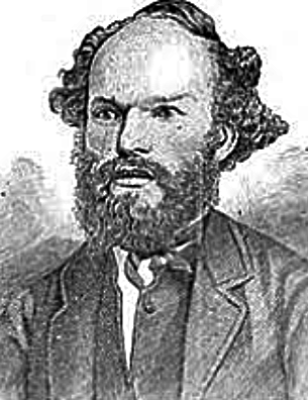
Everyone has certain things to be thankful for which come to mind around this time of year, and were Scottish born Canadian poet James McIntyre still alive, his might be achieving immortal literary fame despite being named by some critics as “The Worst Poet in History.”
James McIntyre (1828-1906) was a 19th-century Canadian poet, famously known as the “Cheese Poet” due to his unconventional choice of subjects for his verses. Born in Forres, Scotland, McIntyre emigrated to Canada in 1841, settling in Ingersoll, Ontario, where he worked as a stonemason.
Despite lacking formal education, McIntyre possessed a keen interest in poetry. His poetic endeavors gained recognition when he began composing verses that celebrated the dairy industry, particularly his ode to cheese. McIntyre’s light-hearted and whimsical poems often centered around everyday life, nature, and his surroundings.
One of his most well-known works, “Ode on the Mammoth Cheese,” humorously pays homage to a mammoth cheese produced in Ingersoll. McIntyre’s verses, characterized by their playful and sometimes satirical tone, garnered him local fame, earning him the title of the “Cheese Poet.”
While McIntyre’s poetry may not have been embraced by literary elites of his time, his work resonated with the ordinary people of Ontario. His poems were published in local newspapers, contributing to his popularity in the region. Despite the seemingly mundane nature of his chosen themes, McIntyre’s poems reflect a genuine love for his community and a unique perspective on the world around him during his lifetime.
James McIntyre’s legacy endures as a charming and eccentric, though not overly-talented, figure in Canadian literary history. His ability to find inspiration in the everyday, even in the humble cheese, sets him apart as a poet who celebrated the ordinary in an extraordinary way. McIntyre’s unconventional approach to poetry has perhaps left an indelible mark, ensuring that he is remembered not only as the “Cheese Poet” but also as a distinctive voice in the rich tapestry of Canadian literature.
Below are a couple examples of McIntyre’s odes.
Thanksgiving Ode, November 15, 1888
September came and with it frost The season’s pasture it seemed lost, And the wondrous yield of corn Of its green beauty it was shorn.
Frost it came like early robber, But gentle rains came in October, Which were absorbed by grateful soil; With green once more the pastures smile.
And cows again are happy seen Enjoying of the pastures green, And flow of milk again they yield From the sweet feed of grassy field.
And we have now a fine November, Warmer far than in September; The apple, which is queen of fruits, Was a good crop and so is roots.
The rains they did replenish springs, And it gratitude to each heart brings, When we reflect on bounteous season, For grateful feelings all have reason.
Ode on the Mammoth Cheese
Weight over seven thousand pounds.
We have seen thee, queen of cheese, Lying quietly at your ease, Gently fanned by evening breeze, Thy fair form no flies dare seize.
All gaily dressed soon you’ll go To the great Provincial show, To be admired by many a beau In the city of Toronto.
Cows numerous as a swarm of bees, Or as the leaves upon the trees, It did require to make thee please, And stand unrivalled, queen of cheese.
May you not receive a scar as We have heard that Mr. Harris Intends to send you off as far as The great world’s show at Paris.
Of the youth beware of these, For some of them might rudely squeeze And bite your cheek, then songs or glees We could not sing, oh! queen of cheese.
We’rt thou suspended from balloon, You’d cast a shade even at noon, Folks would think it was the moon About to fall and crush them soon.
The informational article above was composed in part by administering guided direction to ChatGPT. It was subsequently fact-checked, revised, and edited by the editor. The editor/publisher takes no authorship credit for this work and strongly encourages disclosure when using this or similar tools to create content. Sparks of Calliope prohibits submissions of poetry composed with the assistance of predictive AI.
Broken wing and cowering beside the ancient door While hollow echoes oscillate the empty chime within Concrete eyes of living death unable to explore The mystery that lies between intention and begin
Once young now in between the thread of life and mystery Of hands that held the fire’s tongue now singed and cooled apart The bell between chimes hollow still into an empty sea Of lifeless space, abandoned halls, the chambers of the heart
The shade within, the black beneath is comfort from the light Of life and scars and broken vows escorted through the noise Of busy days with concrete eyes unable to ignite A heated beat of pulsing veins and all hedonic joys
A scentless world of stone and shade and unacknowledged wrongs Of lust unlived and songs unsung for hollow vows to keep For sterile haunts of hallowed halls and abstinence prolonged Safety from unveiling bright where naked hungers steep
And now it comes, the door unlatched of final mystery What if? Her taste unknown escapes in final injury
Broken Wall
it took such effort of will to pull down this wall to meet you where you were to elevate my affections to equal yours
and now I stand beside the broken wall and carry these heavy affections that you once shared, only to find that I follow you in the cold and at a distance
A. G. Elrod is a Lecturer of English in The Netherlands university system and a PhD candidate in the Digital Humanities.
In troubled times of bleak divide
Where icy rifts grow twice as wide,
To gather is the gift that brings
A blast of warmth from blissful things
No earthly soul should be denied.
To toast and chat sat side by side
With feasting kin all unified
In thanks will give the spirit wings
In troubled times.
Just as the moon’s bloom turns the tide,
Just as the sun-soaked swallows glide,
Just as the dawn-kissed choir sings,
We’ll dine like kings as laughter rings
And hopes and highs and hearts collide
In troubled times.
Susan Jarvis Bryant is originally from England and now lives on the coastal plains of Texas. She has poetry published in a variety of places. Susan is the winner of the 2020 International SCP Poetry Competition and was nominated for the 2022 Pushcart Prize.
I have you leaning up against my side,
Our boys and girls around us on the couch.
Below the window, watching from outside,
Our younger selves, age twelve, crawl up and crouch.
The boy and girl each took a time machine,
The dial set to travel here today.
We met below that window, saw this scene,
And learned that you would be my wife someday.
The woman here whose head leans next to mine
Was also she who you’d grow up to be.
Our older selves thus showed the clearest sign:
No need to ask you, “Will you marry me?”
Back home, they’ll seek each other out and meet,
And here we are—the circle’s now complete.
Back to Sleep
In very early years, now far behind,
When I returned to earth at midnight deep
From nightmare scares within my frightened mind,
My mother rocked and sang me back to sleep.
I hid in bed from monster and from man
As blackened shadows seemed to slowly creep,
But once I finally to her bedroom ran,
My mother rocked and sang me back to sleep.
No sounds outside from people, beasts, or cars,
Her voice and arms would soothe me as I’d weep;
I saw her by the light of moon and stars—
My mother rocked and sang me back to sleep.
The happiest of moments in this was
When I collapsed into a sleeping heap,
Contented, safely dreaming, all because
My mother rocked and sang me back to sleep
“Younger Selves” and “Back to Sleep” were originally published by The Society of Classical Poets.
Joshua C. Frank works in the field of statistics and lives near Austin, Texas. His poetry has also been published in TheSociety of Classical Poets, Snakeskin, Atop the Cliffs, and The Asahi Haikuist Network, and his short fiction has been published in Nanoism.
 Sparks of Calliope