Two Poems by Stephen House

recycling

the rubbish pickers in my Indonesian area
work late every night
searching through bins and rubbish piles
to retrieve plastic
they load on to a cart

i see them if i get home late
or rise early at dawn
sometimes have a chat
or bring out plastic bottles
i save in my room

it has always made sense to take part in their work
as they make money from what i offer
and i’m somehow involved with their recycling
for the garbage situation here is grim

the last month i’ve noticed they now collect paper
i’m sure they didn’t before
so i ask two of them about it one morning at 3am
as i arrive back in my street from a bar

and in our combined two languages
me slightly drunk from beer
they tell me times are tougher than ever before
and the paper helps out a little

it is easy to forget
how difficult life is for some
and i’m reminded as they share
there are days spent hungry
and illness can’t be treated
as a doctor is unaffordable

and so now in my saving up refuse way
i keep all of my scrap paper for them
and take it out with my plastic bottles
as they shuffle in dark for their living

“recycling” first appeared in Dissonance Magazine


dead men’s clothes

dead men’s clothes hang sadly limp
in a world of once-worn wares
beaten by time in her tin shed shell
she rubs her eyes
blinks twice
gapes
smeared pink lipstick
pasty rutted face
cloudy eyes in stance of age
acceptance of a sort

into her desert store of only what remains
i have come on my meandering way
threadbare fear of disintegrating middle age
another tick in time on a lonely icy day
muddled from substances
coming down
no room or bed tonight for me
or friend or family near

i try on a humble vest of era long gone
add a coat of wool in olive grandpa green
she smiles slight a knowing hint
at where i may have roamed to be
fingers sleeve with bony stroke
no one comes here anymore she says with only gaze
once it was different she breathes silently

thrift-shop queen won’t see me pay
gives sincerely her woven generosity
holds lost dreams in wrinkled brow
set in stone her quiet tenacity

our brittle selves meet and we freeze within our haze
knowing well our own mortality
reality of humanity probably

i am warm now walking on my never knowing way
through another vacant dustbowl extremity
i slow to stop
glance back
now safe in mothball tweed
she waves from pebbled path
stepped outside of her reality
and in my dead men’s clothes i signal back a simple nod
another moment wise
victorious
wandering and alive

“dead men’s clothes” first appeared in The Blue Nib


Stephen House has won many awards and nominations as a poet, playwright, and actor. He’s had 20 plays produced with many published by Australian Plays Transform. He’s received several international literature residencies from The Australia Council for the Arts, and an Asialink India literature residency. He’s had two chapbooks published by ICOE Press Australia: real and unreal poetry and The Ajoona Guest House monologue. His next book drops soon. He performs his acclaimed monologues widely.
Two Poems by James G. Piatt

As I Search

As I search into memories gone,
the heavens hide those thoughts
which darkness dwells upon
and the evil spirits cast their lots
I pause upon such dark things
for they will surely besmirch
the creative thoughts which sing
and drown them as I search.


Those in Need

Some hear church bells each misty day
Echoing in the misty halls along a street
And mark each saddened face along the way
And mark each cry of misery that they meet,
In every weeping voice of every man,
In every maiden’s tear, they hear
Every sorrowful voice, they scan.
The despondent men that sob,
And the homeless ladies that cry
Causes every church bell to peal
An elegy as saints thunder a sigh.
Sorrow flows through minds that feel
Into shattered allies and broken roads
Where caring people tend to briny tears,
And went to places where sadness flowed
To ease troubles, need, and fears.


James G. Piatt, a retired professor and octogenarian, is a twice Best of Net nominee and four times Pushcart nominee. His Poem, “Teach Me,” published by Long Story Short, was selected as its poem of the year in 2014. He has had five poetry books, The Silent Pond, Ancient Rhythms, LIGHT, Solace Between the Lines, and Serenity, over 1750 poems, five novels, and thirty-five short stories published in scores of national and international literary magazines, anthologies and books, He earned his doctorate from BYU, and his BS and MA from California State Polytechnic University, SLO.

Translations of Dimitrie Anghel by Ana Neagu

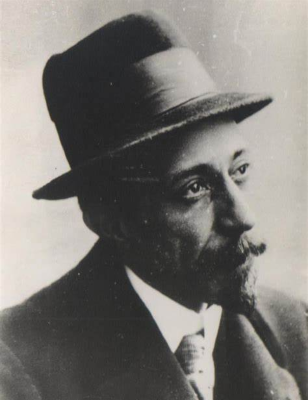
Romanian poet Dimitrie Anghel (1872-1914)

A Romanian poet who fell in love with and seduced his friend’s wife, Dimitrie Anghel wrote many notable poems in addition to essays and prose in his home country. Ostracized in literary and social circles for the affair–and the divorce and devastation it subsequently caused–he shot himself in the chest after a domestic dispute where he wounded his now wife, Natalia, mistakenly thinking he had killed her.

Below are “The One” and “Travellers,” two translations of Anghel’s poems by Ana Neagu, a Romanian student in the MA Literary Program at the University of Bucharest.


The One

The beehives are buzzing in the glade
Under the giant azure bell,
All the land, from east to west,
Sounds as if a wind harp
Was somewhere hanging by a bough…

If you’d sit uneasy at the crossroads,
For the murmur comes from everywhere,
Like a mysterious guide,
It would lure you, and lead you,
Without your consent, the flower scent…

The glade is like a giant flower,
Changing rainbows of colors,
But it’s not just one, but thousands,
Spreading errant sparks
That ignite in the air and go out.

Like miniature temples
Honoring a secret cult,
In this beautiful Heaven,
Designedly made by nature,
You’ll find the white hives under their eaves.

Tireless run the bees in the light
Flitting to and fro,
A strand of strawflower is bending,
Sweet clover is rising
While lifeblood slowly turns to gold.

But, look, through the entrance,
The Bee Queen, the one among so many, steps into the light
And the drone lovers drunk on sunlight
Hearing her imperious call
Jump out of their drowsy form.

Lifting in the air, she draws a line,
A tinsel lightning on the blue sky,
And the groom bands come swarming,
Forming and breaking the line on her tail,
But she rises higher and higher to the glory of the skies.

Higher, higher still, and hurtling,
The bridegrooms race to catch her up,
But she’s a swift gold dot,
A dot is the beeyard in the glave,
A flower fallen from a bough.

Little by little, their thinned band breaks,
The powerless abandon their quest,
And in the dazzling fall,
Longingly gaze one last time
Upon the spark that only one still follows.

That one only has the queen,
But after this second of love,
She flies down satisfied
And he falls back in the sea of light
Under the giant azure bell.


Travellers

There’s silence and we travel, faces bathed in the moon…
Jingle bells are ringing through the night,
The wheelers trot like wildfire and I get scared when I see,
For a moment, the leaders bolting on the side
Chased by their shadows which set the pace…
At times the path is turning blue
When they ride down the hills and the moon hides out
A floral scent from God knows where
Reaches the carriage and we leave it behind
“It must be some girl’s spell, master,
Yes, a spell,” the coachman says smiling
And the bay steeds are now slower
And our words, my good friend,
Are getting fewer and sadder,
As we both know behind us
Something’s come undone
And it’s not the road, but the poor life;
The sweet perfume travelling the night
‘s no flower scent, nor spell, but
The longing of a traveller,
Which follows him wherever,
And wants to escape under high skies on the high seas…

“Lunar” by Jennifer LeBlanc

We have come so far, it is over.
–Sylvia Plath, “Edge”

I’m at my weakest
every autumn, most likely then

to do what I ought not
to in love, have come

hungry to the allure of folding
into bed after first frost.

I have fled toward nothing
more instinctual than it,

this seeking of cover, partnered,
in advance of winter, each single

body entwined like weak strands
that sturdy in a thread,

dead of the bleakest season
as immaterial to them as logic to a child.

When I was coiled around a dream
rising from him next to me,

white heat of desire
warming me, slowly, serpent-like,

an ember melting through snow
one cold crystal at a time,

each little fear went the way of nightmares
upon waking. I will bring him

a pitcher of milk in the morning.
He will tell me

our troubles are over now, each empty
hand held up to accept both of mine

like puzzled quadrants
of a moon. What was she

but a cold witness
to the disorder of our goodbyes,

the scarf he kept
to remember me by and how he

put it gently into his coat pocket.
I wished I could be as easily

folded back into his safekeeping,
back with the stones and shells

we stole from Orleans, all of them
summering in sand and salt,

back into the contract
only the moon ever sealed.

I envy her stubborn constancy,
inescapable commitment

to a barren body.


Jennifer LeBlanc earned an MFA in Creative Writing from Lesley University. Her first full-length book, Descent, was published by Finishing Line Press (2020) and was named a Distinguished Favorite in Poetry (2021) by the Independent Press Award. Individual poems have been published or are forthcoming in journals such as ConsequenceSolstice, The Adirondack ReviewCAIRNThe Main Street Rag, and Melusine. Jennifer is a poetry reader for Kitchen Table Quarterly

Two Poems by Martin Elster

At Dusk (Corvus brachyrhynchos)

Just before dark, the dark shapes come,
winging between apartment blocks,
rasping in discordant keys
between the naked maples, flocks
of formlessness, each flapping from
some further tracery of trees.

The rabble shriek, as if in battle,
en route to their roost to sleep away
the cold. Swooping across each lawn
and rooftop, ravenous for prey,
winter’s talons aim to rattle
hollow bones until the dawn.

Most head southeast, some head northwest,
or ensconce themselves in the little stand
of hardwoods beyond my windows. The gale
whistles its airs across the land,
testing all creatures, however dressed—
in fur or feathers. Some will fail,

even those with coats like night.
While on my walk today, I found
three frozen in an empty lot.
Those coal-black snowflakes ranging around
the city through the slanting light
don’t give their fallen any thought.

Or, if they do, how might it show?
They stain the sky, flying, crying,
champions at not colliding—
murderous birds not keen on dying—
with a cryptic script I’ll never know,
streaking, scribbling, heaven-writing.

“At Dusk (Corvus brachyrhynchos)” first appeared in The Road Not Taken.


That Bitter Night

We could have driven but hiked to the drugstore—
for a lark — on the bitterest night
spring ever whipped up. You held my hand
the whole way. A skin of ice as slick
as Teflon shellacked the streets and sidewalks.

In a coat as heavy and huge as a house,
you led the way as I helped you along.
As for myself, I felt as light
as a snowflake, for our bond seemed strong,
way stronger than this Baltic weather!

Did the old pharmacist assume
we were homeless when our noses were dripping?
The cashier, too, acted toffee-nosed,
seeing us so bundled up.

Elated we’d made it back alive,
we’d cuddled on the couch and laughed
about that bumptious bloke, lulled
by the whimseys of the wind, our shivers
melting away like frost in May.

Now it’s summer. We laugh no longer.
You’re the glaze that glassed the roads,
and I’m the heavy coat you bore
that bitter night you held my hand.

“That Bitter Night” first appeared in The Wild Word.


Martin Elster, who never misses a beat, was for many years a percussionist with the Hartford Symphony Orchestra. In addition to playing and composing music, Martin finds contentment in long walks in the woods or the city and in writing poetry, which often alludes to creatures and plants he encounters on his walks. Martin’s poems have appeared in numerous literary journals and anthologies in the U.S. and abroad. His honors include Rhymezone’s poetry contest (2016) co-winner, the Thomas Gray Anniversary Poetry Competition (2014) winner, the Science Fiction Poetry Association’s poetry contest (2015) third place, five Pushcart nominations, and a Best of the Net nomination. A full-length collection, Celestial Euphony, was published by Plum White Press in 2019.

Two Poems by DS Maolalai

Sweet summer

you get off work late
in the late stretch of evening,
with the sun down so low
it could just be some guy going home.

but it’s pleasantly warm
and it’s easy and, hell, you get off
the train early. take a walk
downtown, enjoy this
afternoon eight o’clock
with its lying down shadow
and sprawled about sunset,
and the bright junelight shining
like spit on a candy–
coloured flowers.

squirrels snake circles
around trees
reflexively,
eyes wide
and lively
as half-sucked
lollipops.

bees hum in the air
like honey, and a whispery breeze
with the quiet smile of violet candy,
or maybe just
the smell of violets,
coming over a garden
where some lady is trimming her flowers,
sunburn and kind eyes and a sunhat
and tiredness at the length of the day,
always willing to scatter nuts on her doorstep for the squirrels
or offer the kids next door
candy,
hard candy
that tastes like cut leaves.


Slander

I call you
to the office
to look at a
poem – don’t
do this normally
but I need
someone’s eye
as to whether
what I’ve written
counts as slander.

you read it,
mouth quietly,
and tell me
that it’s nice;
suggest one change
to soften a sentence.

I nod, very satisfied,
and let you go out.

I change it
and look.
change it back.


DS Maolalai has received eleven nominations for Best of the Net and eight for the Pushcart Prize. His poetry has been released in three collections: Love is Breaking Plates in the Garden (Encircle Press, 2016), Sad Havoc Among the Birds (Turas Press, 2019), and Noble Rot (Turas Press, 2022).

Two Poems by John Whitney Steele

What If

each moment were a snowflake
landing on a shoreless sea,
each drop of water a monument
standing for eternity,
your life story
raindrops on a windowpane,
your legacy, a streak or two
struck through each time it rains?


The Best of It

Exhaustion, my old friend
who used to visit now and then
offering a brief respite from the fray

has moved in as if he’s here to stay.
Unable to dissuade my dreary friend
I embrace him as my inner sloth.

Knowing he’s the slowest beast on earth,
a hairy hammock born with a fixed grin,
I smile as I indulge my mortal sin.


John Whitney Steele is a psychologist, yoga teacher, assistant editor of Think: A Journal of Poetry, Fiction and Essays, and graduate of the MFA Poetry Program at Western Colorado University. An award-winning poet, his chapbook, The Stones Keep Watch, and his full-length collection of poetry, Shiva’s Dance were recently published by Kelsay Books. John lives in Boulder, Colorado and enjoys hiking in the mountains.

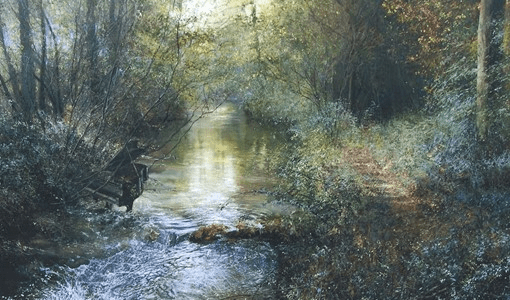
“Drifting Notes” by Sultana Raza

Inspired by Alan Senez’s painting, “Les Annees de Pelerinages.” Featured with permission.

Time abandoned, history lost in swirls,
Lost tunes trill eternally in vain,
Driving weeping branches, gradually insane.
Along river bank, notes writhe and curl.

In ethereal dimension, as player shifts,
Phantoms gather, nodding heads enthralled,
Wayward spumes of tunes start to drift.
In the ‘no time’, glissandos pitched, and called.

Musical shivers of rivulets, streams,
Dotted by light, drops bathed in gold,
Help dried leaves to hope and dream,
As unseen vibes transform their mold.

Eighty-eight molecules of wild spirits whirl,
Octaves reach crescendo at zenith of the sun,
As new formations in time’s streams unfurl,
Zephyrs whisper that soulful tunes have won.


Sultana Raza has published poems in 150+ journals, including Columbia Journal, The New Verse News, Copperfield ReviewLondon Grip, The Society of Classical Poets, Dissident Voice, and The Peacock Journal. Her fiction has received an honorable mention in Glimmer Train Review, and has been published in SetuColdnoon Journal, Knot Magazine, Entropy, and ensemble (in French). Of Indian origin, she has read her fiction/poems in India, Switzerland, France, Luxembourg, England, Ireland, the US, WorldCon 2018, CoNZealand 2019, and Chicon8. Find her on Facebook here.

Two Poems by Johnny Payne

Dulcet

My love’s voice leaves me stricken with an ache
to hear her half-tones rankle my shook bones
disease from which I won’t be vaccinated
not even if her charms seem overblown.
Call me a smitten fool, a bitten clod.
Dig a dirt bier, stuff me in that bung
cover me with peat moss and second-hand sod
but let me listen to my lady’s lungs.
If I were a deaf-mute, I might have no chance
but even then, I’d listen for her song
to stir me into sentience, make me prance
as if a glockenspiel began to bong.
Horns of the gods hard-tootle their decree
that my girl’s pipes were made to remake me.


Figs

Laden with ripe and unripe figs, the tree
I rest beneath, blooming, sap-soaked and strong
its leaves like turquoise, with a glassy gleam
provides shade for whoever comes along.
I haven’t stirred yet. I’ve been lying prone
watching gray cloud-shreds whirl and retreat
as though bruised flesh pelted by random stones
from cosmic reaches by a hand unseen.
My fit has fled. I’m ready to rush home.
She’ll cradle my head, kiss the phantom wound
well-made with wasted words twice hard as bone
watch me revive from an afternoon swoon.
I watch for the next new-ripe fig to drop
into my hands, to crush to dark pulp.


Johnny Payne has recently published work in Neon Door, Fast Flesh, Verdad Magazine, Gasher Journal, Sparks of Calliope, Society for Classical Poets, The Chained Muse, Collidescope, Peregrine Journal, The New Lyre, Pulsebeat, Wine Cellar Press, and Soundings East.  His most recent published novels are The Hard Side of the River and Confessions of a Gentleman Killer, which won the IBPA Gold Medal for Horror in 2021.  His books of poetry Vassal and Heaven of Ashes were published by Mouthfeel Press. He has directed his plays Death by Zephyr and Cannibals for Slingshot Players, Los Angeles.

Two Poems by Nolo Segundo

A Passing Glance

The other day
as I turned the corner
onto my quiet street

I saw a woman so perfect,
she snatched my breath away
as she waited to cross the road.

It was like seeing a movie star
or a beauty queen close up–
my heart ached a bit, I confess,
when I thought, once, a long time
ago, I might have had a chance….

But now I’m just an old man
driving an old car to an old house.
I drove slowly and could see
her gracefully crossing the street
in my rear-view mirror, much
like a dream fading quickly away …
suddenly, from somewhere far
beyond my mind, I realized
the truth of what I saw: that
it was all just stupid illusion–
she was young and beautiful,
I, old and lame, but those were
just markers on the wheel of time.

The wheel would turn,
my body would die, hers would age,
no longer enrapturing men—in truth
she was already an old woman which
I could not see, nor could I see the
sweet child still playing within her.

When there are no more days left,
our souls will be free of the wheel,
and all the world’s illusions will
seem as distant, fading dreams.

“Passing Glance” first appeared in A Thin Slice of Anxiety.


An Old Poet’s Walk Through an Old Graveyard

He always liked to walk among the dead—
for him it was a secret pleasure to imagine
the lives of once breathing, thinking beings.
He would stop at each tombstone, curious
perhaps more than reverent, for he had long
known the body was just a set of clothes
the soul wears in a world where appearances
matter more it seems than what lay inside…

The old man liked to compare his years to
those chalked on each stone, continually
amazed that so many had died with fewer
years on their belts, so to speak—not
that he thought his 74 winters was a lot:
yet seen backwards in time, all the summers
and all the snows and all the fallings of dried
out leaves dying dressed in color like kings,
all those memories wouldn’t fill a large
basket in that living library called memory.

There was a newish-looking gravestone with
one of those weather-resistant photos of a
handsome young man who died in his 24th
year—the old man always wondered how
the young die– by a rare illness, or suicide,
or was he doing something he should not
have been doing, and karma took notice?

In the years practicing his little lauded hobby
the old poet found old graveyards to be best,
for old graveyards have markers of lives that
turned to dust a long, long time ago: 100, 200
years for some– but for the old poet it was as
though they had died yesterday, because they
were new to him, and his mind’s eye could see
them all living life large again in their own slice
of time, in their own worlds, with beauty and
pain, with loss and joy, with grace and fear….

There were so many folks to visit: each one
whose little stone house he stopped by he
introduced himself to, said hello, wished
them well, and wondered about what sort
of life the woman who died at 36 had lead,
or the really old man of 98 with the funny,
old fashioned name—did he regret missing
the century mark, the old poet wondered.

Some graves he did not like to see, for
they were the graves of babes, who
left the world less than a year after
they had entered it with such promise–
some died within weeks or months,
a few died the day they were born–
all spoke in stone of hearts broken,
of hope stolen, of love taken away….


Nolo Segundo, pen name of L. J. Carber, only became a widely published poet in his mid-70’s in over 130 literary journals in the U.S., Canada, England, Romania, Scotland, Portugal, Sweden, India, Hong Kong, Turkey, and three trade book collections: The Enormity of  Existence [2020], Of Ether and Earth [2021] and Soul Songs [2022]. These titles and much of his work reflect the awareness he’s had for over 50 years since having an NDE whilst almost drowning in a Vermont river: that he has, or rather, IS a consciousness that predates birth and survives death, what poets once called a soul. Nominated for the Pushcart Prize and Best of the Net, he’s a retired teacher [America, Japan, Taiwan, Cambodia] who has been married to a smart and beautiful Taiwanese woman for 43 years.