Two Poems by Ben Jonson

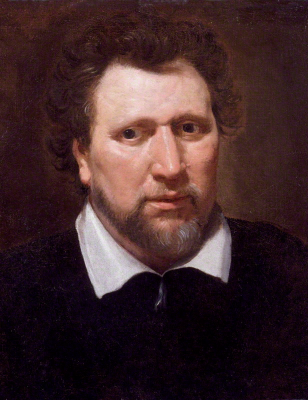
Ben Jonson by Abraham Blyenberch, c. 1617

A contemporary of William Shakespeare, English poet Ben Jonson’s most successful period as a literary figure probably occurred from 1605 to 1620.

Jonson was known as much if not more so as a playwright than as a poet. Not only was Jonson in the same location at the same time doing the same thing as William Shakespeare, but Shakespeare actually acted in Every Man in His Humour, one of Jonson’s most famous plays. His poetry was notable as well, with Song of Celia and On My First Son being two poems often regarded among his best. Jonson died in August 1637 at the age of 65. Upon his death, he was buried in Westminster Abbey, where his funeral was attended by nobility of the time.


On My First Son

Farewell, thou child of my right hand, and joy;
      My sin was too much hope of thee, lov’d boy.
Seven years thou wert lent to me, and I thee pay,
      Exacted by thy fate, on the just day.

Oh, could I lose all father now! For why
      Will man lament the state he should envy?
To have so soon ‘scaped world’s and flesh’s rage,
      And if no other misery, yet age!

Rest in soft peace, and, asked, say, Here doth lie
      Ben Jonson his best piece of poetry.
For whose sake henceforth all his vows be such
      As what he loves may never like too much.


Song to Celia

Drink to me only with thine eyes,
      And I will pledge with mine;
Or leave a kiss but in the cup,
      And I’ll not look for wine.
The thirst that from the soul doth rise
      Doth ask a drink divine;
But might I of Jove’s nectar sup,
      I would not change for thine.

I sent thee late a rosy wreath,
      Not so much honouring thee
As giving it a hope, that there
      It could not withered be.
But thou thereon didst only breathe,
      And sent’st it back to me;
Since when it grows, and smells, I swear,
      Not of itself, but thee.
Two Poems by Rudyard Kipling

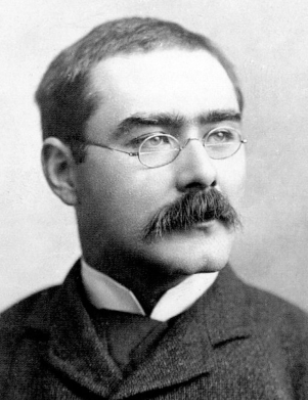
Joseph Rudyard Kipling, 1895

While arguably best known for his collection of short stories entitled The Jungle Book (1894), English writer Rudyard Kipling is also widely recognized as a talented poet. Voted the UK’s most popular poem in a 1996 poll conducted by the BBC, Kipling’s “If—” still resonates more than 125 after its 1895 conception.

Kipling’s Diamond Jubilee poem, “Recessional” might have some familiar lines to even casual observers. The phrase “lest we forget,” commonly associated with Remembrance Sunday in the UK and even Memorial Day in the U.S., originated from this poem.

It is often argued that both of these poems are far more complex in sentiment than Kipling is often given credit for. Decide for yourself after reading each of these classic pieces, provided here below.


If—

If you can keep your head when all about you
      Are losing theirs and blaming it on you,
If you can trust yourself when all men doubt you,
      But make allowance for their doubting too;
If you can wait and not be tired by waiting,
      Or being lied about, don’t deal in lies,
Or being hated, don’t give way to hating,
      And yet don’t look too good, nor talk too wise:

If you can dream—and not make dreams your master;
      If you can think—and not make thoughts your aim;
If you can meet with Triumph and Disaster
      And treat those two impostors just the same;
If you can bear to hear the truth you’ve spoken
      Twisted by knaves to make a trap for fools,
Or watch the things you gave your life to, broken,
      And stoop and build ’em up with worn-out tools:

If you can make one heap of all your winnings
      And risk it on one turn of pitch-and-toss,
And lose, and start again at your beginnings
      And never breathe a word about your loss;
If you can force your heart and nerve and sinew
      To serve your turn long after they are gone,
And so hold on when there is nothing in you
      Except the Will which says to them: ‘Hold on!’

If you can talk with crowds and keep your virtue,
      Or walk with Kings—nor lose the common touch,
If neither foes nor loving friends can hurt you,
      If all men count with you, but none too much;
If you can fill the unforgiving minute
      With sixty seconds’ worth of distance run,
Yours is the Earth and everything that’s in it,
      And—which is more—you’ll be a Man, my son!


Recessional

God of our fathers, known of old,
      Lord of our far-flung battle-line,
Beneath whose awful Hand we hold
      Dominion over palm and pine—
Lord God of Hosts, be with us yet,
Lest we forget—lest we forget!

The tumult and the shouting dies;
      The Captains and the Kings depart:
Still stands Thine ancient sacrifice,
      An humble and a contrite heart.
Lord God of Hosts, be with us yet,
Lest we forget—lest we forget!

Far-called, our navies melt away;
      On dune and headland sinks the fire:
Lo, all our pomp of yesterday
      Is one with Nineveh and Tyre!
Judge of the Nations, spare us yet,
Lest we forget—lest we forget!

If, drunk with sight of power, we loose
      Wild tongues that have not Thee in awe,
Such boastings as the Gentiles use,
      Or lesser breeds without the Law—
Lord God of Hosts, be with us yet,
Lest we forget—lest we forget!

For heathen heart that puts her trust
      In reeking tube and iron shard,
All valiant dust that builds on dust,
      And guarding, calls not Thee to guard,
For frantic boast and foolish word—
Thy mercy on Thy People, Lord!