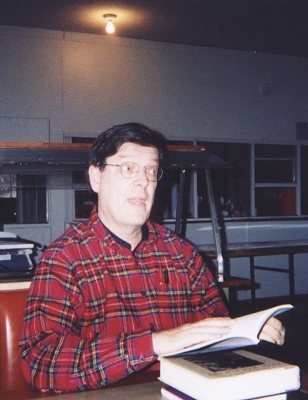
It would seem unfitting to me not to mention Dr. W. Nicholas Knight–who died this past year–when educating others about William Shakespeare. His obituary explains:
“Nick was a popular professor of English, first at Indiana University Bloomington, then Wesleyan University in Connecticut, and lastly Missouri University of Science and Technology, previously the University of Missouri – Rolla. He earned his B.A. in English from Amherst College, M.A. from the University of California at Berkeley, and Ph.D. from Indiana University. He knew his students well, encouraging them in their endeavors and writing. Three of the known signatures of William Shakespeare were discovered or authenticated by Nick. Professor Knight rendered college more accessible by teaching community college courses at night, sponsoring the Black Student Union, taking senior citizens on field trips to St. Louis, teaching Shakespeare in prison, and mentoring English majors whose parents thought they should major in engineering. Nick Knight’s representative works include his book Shakespeare’s Hidden Life and his off-Broadway play “The Death of J.K.” He was active in Arts Rolla, Rotary Club, and the National Endowment for the Humanities.”
My whole conceptualization of who I was to become professionally was first modeled after this man. He was my favorite professor, my advisor, my mentor, and my friend. I was witness not only to Dr. Knight’s knowledgeable passion for all things Shakespeare but also to his passion for Civil War miniature soldiers, model trains, and the fascinating historical knowledge these things represented. Whether he was retelling his story of almost running over Robert Frost with his car at Amherst, giddily boasting of the number of U.S. Poet Laureates he had driven around in his car, or showing off the blurb John Updike had written for his Arthurian poetry collection, he made the undergraduate experience of this literature lover nothing short of magical.
(I was also reminded by former classmates of his story of personal friendship with Superman actor Christopher Reeve, and how the character of Clark Kent in those movies was supposedly modeled after Dr. Knight. The resemblance and mannerisms are uncanny…).
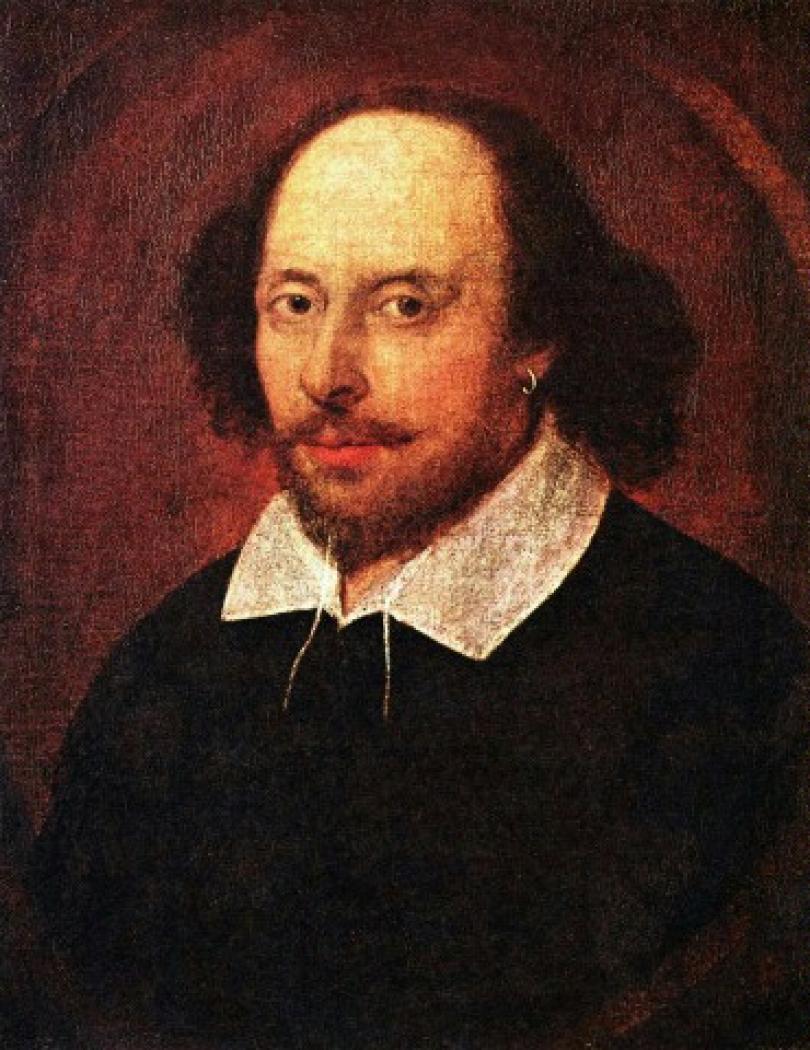 More than any other individual, William Shakespeare is the face of classical English Poetry and Literature. In addition to writing some of the most renowned plays in human history, Shakespeare is also the father of the Shakespearean sonnet. Below are two of the most familiar of the 154 sonnets he authored; 116 was most recently in the news as having been recited at the royal wedding of Princess Beatrice of York.
 Sparks of Calliope