“Thanksgiving Matters” by Susan Jarvis Bryant

a rondeau

In troubled times of bleak divide
Where icy rifts grow twice as wide,
To gather is the gift that brings
A blast of warmth from blissful things
No earthly soul should be denied.

To toast and chat sat side by side
With feasting kin all unified
In thanks will give the spirit wings
          In troubled times.

Just as the moon’s bloom turns the tide,
Just as the sun-soaked swallows glide,
Just as the dawn-kissed choir sings,
We’ll dine like kings as laughter rings
And hopes and highs and hearts collide
          In troubled times.


Susan Jarvis Bryant is originally from England and now lives on the coastal plains of Texas. She has poetry published in a variety of places. Susan is the winner of the 2020 International SCP Poetry Competition and was nominated for the 2022 Pushcart Prize.

Two Poems by Joshua C. Frank

Younger Selves

I have you leaning up against my side,
Our boys and girls around us on the couch.
Below the window, watching from outside,
Our younger selves, age twelve, crawl up and crouch.

The boy and girl each took a time machine,
The dial set to travel here today.
We met below that window, saw this scene,
And learned that you would be my wife someday.

The woman here whose head leans next to mine
Was also she who you’d grow up to be.
Our older selves thus showed the clearest sign:
No need to ask you, “Will you marry me?”

Back home, they’ll seek each other out and meet,
And here we are—the circle’s now complete.


Back to Sleep

In very early years, now far behind,
When I returned to earth at midnight deep
From nightmare scares within my frightened mind,
My mother rocked and sang me back to sleep.

I hid in bed from monster and from man
As blackened shadows seemed to slowly creep,
But once I finally to her bedroom ran,
My mother rocked and sang me back to sleep.

No sounds outside from people, beasts, or cars,
Her voice and arms would soothe me as I’d weep;
I saw her by the light of moon and stars—
My mother rocked and sang me back to sleep.

The happiest of moments in this was
When I collapsed into a sleeping heap,
Contented, safely dreaming, all because
My mother rocked and sang me back to sleep

“Younger Selves” and “Back to Sleep” were originally published by The Society of Classical Poets.


Joshua C. Frank works in the field of statistics and lives near Austin, Texas.  His poetry has also been published in The Society of Classical PoetsSnakeskinAtop the Cliffs, and The Asahi Haikuist Network, and his short fiction has been published in Nanoism.

Two Poems by Gary Borck

Ancient Roman Fort

Man can hardly count the generations past,
since your great monument first dwarfed the land.
To mortal man whose days are passing fast
your growing hours are numerous grains of sand;
yet by our God made hands, your walls were cast,
and we made in the image of the One
have met the dust, while you stand tall and grand,
with age much closer to the ancient sun,
than we who join the race, but briefly run.


Flowers

2024 Pushcart Prize Nominee

No bride could steal more awed and envying eyes,
than your jewelled garb and brightly petalled shades.
No scent brings on more searching suitors, nigh.
Whom better serves a maiden’s hair array?
What hue was not conceived that God bequeathed,
so you may festoon all the meadow’s green?
Through bees your dust of virile, rampant seed
spreads blooms around the banks of lulling streams.
Shy lover’s hearts are snatched and then unveiled
by the piercing beauty of your dainty hand.
What summer scene, in winter’s more bewailed,
than where your striking splendour sprouts and stands?
No pleasanter a look or fragrance, reigns,
when your majestic bouquet sweeps the plains.


Gary Borck is from the UK and teaches in China. He loves to read and write poetry, (attempt to) write novels, and ramble in natural surroundings. Several of his poems have appeared in Grand Little Things and the Society of Classical Poets.

Two Poems by Felicia Nimue Ackerman

Old Age Be Not Sugarcoated

Your language has me groaning.
I hate to be a scold,
But please don’t call me older
Instead of simply old.
And even worse is senior.
It makes me quite irate.
I haven’t been a senior
Since 1968!

“Old Age Be Not Sugarcoated” originally appeared in Light.


A Crispy Thanksgiving

I’m grateful for crispy-skinned turkey
And pumpkin pie topped with whipped cream
And freshly made biscuits with butter,
A dinner fulfilling my dream.

I’m grateful for loose-fitting garments
That cover my bulge without fail.
I’m grateful that one of my cronies
Has tactfully hidden my scale.

“A Crispy Thanksgiving” originally appeared in Lighten Up Online.


Felicia Nimue Ackerman is a professor of philosophy at Brown University and has had over 260 poems published in a wide range of places, including eighteen in past issues of Sparks of Calliope.

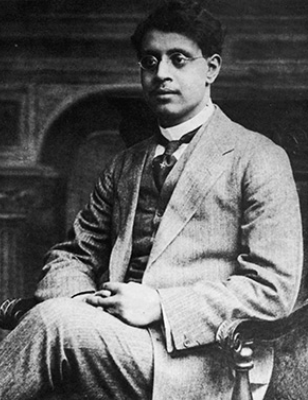
Two Poems by Sukumar Ray

Sukumar Ray (1887-1923)

Sukumar Ray (1887-1923), a luminary in Bengali literature, graced the literary world during the late 19th and early 20th centuries with his unique blend of wit, humor, and poetic brilliance. Born into a family steeped in literary tradition, Ray inherited a legacy that would see him become a renowned poet, writer, and illustrator in his own right.

Sukumar Ray embarked on his academic journey at the prestigious Presidency College in Kolkata and later pursued higher education at the University of London in England. During his time abroad, he immersed himself in the study of fine arts, linguistics, and literature. The Western humor and literary traditions he encountered played a pivotal role in shaping his distinct brand of humor.

Upon his return to India, Sukumar Ray wholeheartedly embraced his creative calling, leaving an indelible mark as a poet, writer, and illustrator. His magnum opus, “Abol Tabol” (1923), remains a masterpiece of nonsense literature that continues to enchant readers of all ages. Filled with bizarre characters, whimsical rhymes, and satirical critiques of contemporary society, “Abol Tabol” stands as a timeless classic in Bengali literature.

Tragically, Sukumar Ray’s promising literary journey was abruptly cut short when he passed away at the tender age of 35, on September 10, 1923. Nevertheless, his legacy endures through his writings, which continue to evoke joy and laughter across generations. His talent for infusing humor with keen social observations and his gift for wordplay have established him as an enduring literary figure in Bengali literature.

The following two poems, “Baburam the Snake Charmer” and “Uncle’s Invention,” are examples of Ray’s unique literary talents.


Baburam the Snake Charmer

Hullo, there Baburam – what have you got in there?
Snakes? Aha – and do you think there’s one that you could spare?
You know, I’d love to have one, but let me tell you this–
The ones that bite aren’t right for me – nor the ones that hiss.
I’d also skip the ones that butt
As well the ones that whistle
Or the ones that slink about,
Or show their fangs, or bristle.
As for eating habits, I think it would be nice
To go for ones that only take a meal of milk and rice.
I’m sure you know the kind of snake I want from what I’ve said,
Do let me have one, Baburam, so I could bash its head.


Uncle’s Invention

Chandidas’s uncle has invented a device
Which is causing everyone to praise it to the skies.
When Uncle was a year old, or maybe even younger,
He came out with a lusty yell that sounded just like ‘Goonga.’
At such an age most other tots just manage ‘Glug’ and ‘Mum,’
So ‘Goonga’ like a thunderbolt, struck everybody dumb.
And all who heard, said ‘Here’s a boy – provided he survives—
Will one day surely bring about a change in human lives.’
It seems the day is here at last, and victory is won
With what will make a five-mile walk seem like only one.
I’ve seen the contrivance myself and say with confidence,
Never had invention had such greater significance.
Let me tell you how it strikes the eyes of a beholder:
First of all, one notes that you must strap it to your shoulder.
An arm extends, and from its end one notes there hangs a hook
To which you bait some food – stuff which you either buy or cook.
Naturally the choice depends upon you predilections
(It’s wiser to restrict yourself to hookable confections).
The sight of morsel dangling close provokes the urge to eat
Which, transcribed to your motive force, soon propels the feet.
Before you know you’re on the go, your mind, intent on feeding,
But since the food is travelling too you never stop your speeding.
The outcome, I need hardly add, will change our whole existence,
Because we’ll walk for nourishment, and never mind the distance.
No wonder there’s a move afoot to honor Uncle soon
For bestowing on humanity an everlasting boon.


The first draft of the informational article above was composed in part by administering guided direction to ChatGPT. It was subsequently fact-checked, revised, and edited by the editor. The editor/publisher takes no authorship credit for this work and strongly encourages disclosure when using this or similar tools to create content. Sparks of Calliope prohibits submissions of poetry composed with the assistance of predictive AI.

These translations from the original Bengali were found on the web without attribution and are used here under the fair use doctrine for educational purpose.

Two Poems by Alexander Lazarus Wolff

On the Wings of a Ray

The sunlight spirals from the sky, falling
down to the viridian ground on which
a couple sits who bask in light; the rich,
radiant rays are silken, a dove’s wing.

The emanations begin to thin, slanting
and sliding through a torn cloud, fading
to fuchsia that flows like water, shading
the sky as if it were canvas, granting

reprieve from the sun’s scorn. I watch—alone—
as the couple stands, gathers their things, kiss,
and walk away. Who’s there for me to miss?
By now, the moon has eclipsed the sun, has shown

faintly, its beam delicate strands of pearl.
Luminescence traces my skin, the moon—
my sole mate—evokes cognitions that noon
denies with harsh light. The mind will unfurl

as if it were a map. Its details, though,
are an endless catacomb: the thoughts stopped
at the root; psychic roads that sprawl are chopped
in half. In moonlit night, I’ve come to know

that from which I run: I confess that I
desire someone to tell me more than words—
love is as fleeting as a flock of birds,
and that dove has wheeled to the blown, black sky.

The cool caress of midnight comes again,
but there’s no comfort. The night wind’s whisper
is not so temperate, as though it were
fingers of ice grazing my tender skin.

While slow, light strengthens and the moon sinks
into a washed-out blue that spreads across
the sky. Dawn blazes, the knell for the loss
of night. The day has come and the mind blanks

at the sight. The night thoughts have all but drained;
the day has dawned. As for my loneliness,
perhaps today will give me one to miss.
Though, I’ve only a moon that’s all but waned.


Life

I’ve come to learn that some will care little
if life crumbles to glass shards, to brittle
fragments that slice your soft skin, the trickle

of blood that stains the white fabric of life.
Days rise and recede, a repeat of strife,
the ascendance of the moon’s sickle—a knife

tearing through the black tapestry of night.
Under the weak leakage of lunar light,
my pen traces the page; I try to write

the story of a better time. I’m told
that I should not desire control, to hold
the past and future in my palm. I’ve sold

my soul, I confess, to know how things end.
To where will the river of my time wend?
Such thoughts assail at night, and I can lend

only a guess as flimsy as cellophane.
Now, as the morning rises to attain
the sky, I’m left fatigued and with a train

of thought derailed, the steel is warped; the wood
rotted. Today, I hope to do more than brood.
I’ve come to learn that life must be withstood.


Alexander Lazarus Wolff‘s writing has appeared in The Best American Poetry website, Poets.org, The Citron Review, NDQ, Society of Classical Poets, South Florida Poetry Journal, Serotonin, and elsewhere. He graduated with honors from the College of William & Mary, where he won The Academy of American Poets Prize. He is a poetry editor for The Plentitudes. An MFA candidate, he teaches and studies at the University of Houston, where he is the recipient of three fellowships. You can find him and more of his work on Facebook, on Instagram/Twitter: @wolffalex108, and at alexanderlazaruswolff.com.
Two Poems by Felicia Nimue Ackerman

Professor Superstar Turns 65

Today is your 65th birthday.
Your status is ever so clear.
Your colleagues have set up a tribute
Extolling your shining career.

They bask in the secondhand honor
That flows from their honoring you.
They thrill to the visiting speakers,
Who radiate eminence too.

“Society’s far too unequal,”
Your colleagues are prone to lament.
But strictly within their profession,
They worship the top one percent.

“Professor Superstar Turns 65” first appeared in The Chronicle of Higher Education.


Dessert is Counted Sweetest

after Emily Dickinson’s “Success”

Dessert is counted sweetest
By those who need to diet.
When doctors won’t stop nagging,
I fantasize a riot.
Not one of all the cakes and pies
I might forgo today
Could fail to bring me pleasure–
Though later, much dismay.

“Dessert is Counted Sweetest” first appeared in The Emily Dickinson International Society Bulletin.


Felicia Nimue Ackerman is a professor of philosophy at Brown University and has had over 250 poems published in a wide range of places, including sixteen in past issues of Sparks of Calliope.

Two Poems by Janice Canerdy

Do Not Enter; Do Not Exit

A sad-faced little man sits all alone.
His pricey suit is wrinkled, and his tie
is loosened. He’s exhausted to the bone.
His once-bright eyes no longer shine. His sigh
is inward. No one hears his weary cry.

“For thirty years I’ve had the same career,”
he mumbles to his lap. “I’ve known success,
but failing health has wrought a gnawing fear
that I can’t persevere. My happiness
may hinge on new employment with less stress.”

The lavish lifestyle he’s accustomed to,
he wishes to maintain. He can’t retire,
stay home, read books, and watch tv in lieu
of working; but the next job might require
REAL people skills. His circumstance is dire.

For decades, from behind his smiling mask,
he’s been convincing clients that he cares
about their futures, that his most-loved task
is helping them succeed. He never bares
his real self. Now, alone, he sits and stares.

If he stops getting richer, he will lose
his fiancée, who’s shallow, just like him,
and money-grubbing. He knows he must choose
to move—that he must jump in, sink, or swim.
His vision of the future’s looking dim.

He’s like a man ‘twixt doors with taunting signs.
The “Do Not Exit,” he cannot ignore,
for his predicament it well defines.
The “Do Not Enter” sign afflicts him more.
“Now what?” It seems he’s questioning the floor.


There’s Much to Be Said for Porch Swings

My porch swing is a special place
where past and present intersect.
While swaying at a peaceful pace,
on days of childhood I reflect.

Where past and present intersect,
with eyes closed I soon drift away.
On days of childhood, I reflect.
I see three happy kids at play.

With eyes closed I soon drift away,
I think of yards with rope-held swings.
I see three happy kids at play
on carefree days the summer brings.

I think of yards with rope-held swings
while swaying at a peaceful pace.
On carefree days the summer brings,
my porch swing is a special place.


Janice Canerdy is a retired high-school English teacher from Potts Camp, Mississippi. Her poems have appeared in numerous publications, including Light Quarterly, The Road Not Taken, Lyric, Parody, Bitterroot, the Society of Classical Poets Journal, Westward Quarterly, Lighten Up Online, Halcyon Days, Penwood Review, the Mississippi Poetry Society Journal, Whispering Angel Books, and Quill Books. Her book, Expressions of Faith (Christian Faith Publishing), was published in 2016.

Two Poems by Joshua C. Frank

The Ballad of the Heroic Mother

a true story

A toddler into water fell
And sank as quick as rock.
At nine feet deep, she couldn’t yell
Or jump or thrash in shock.

Her mother heard the splash portend
Her daughter’s water grave;
She dove into the pool’s deep end,
Her little girl to save.

She grabbed her daughter, held her tight,
And with a presto prayer
Sprang toward the shimmering sun of white
To give her girl some air.

She held her up while sinking down,
And knew to save her daughter
That she herself might well soon drown
So inched toward shallow water.

Seconds before her lungs gave out,
Her face felt heat and air.
Her feet on ground, she breathed a shout:
“Success!” An answered prayer!

The whole crowd cheered the mom en masse;
She gained a hero’s glory.
She told the public-speaking class—
I still think of the story.


Signs of a Broken Home

“The bigger the issue, the smaller you write.  Remember that.  You don’t write about the horrors of war.  No.  You write about a kid’s burnt socks lying on the road.” -Richard Price

At the foot of the dumpster lay signs on the ground,
But I wonder why these were there lying around.

I would never have guessed that there someone had laid
The sign: “Home is where all the best memories are made.”

And a heartbreaking counterpoint next to it lay:
“We create our tomorrow by dreaming today.”

There are people who write of the horrors of war,
But a child’s burnt socks on a road will say more.

At the foot of the dumpster lay signs on the ground,
But I wonder why these were there lying around.


Joshua C. Frank works in the field of statistics and lives near Austin, Texas.  His poetry has also been published in The Society of Classical PoetsSnakeskinAtop the Cliffs, and The Asahi Haikuist Network, and his short fiction has been published in Nanoism.

Two Poems by Felicia Nimue Ackerman

Spend an Afternoon with Annie

Annie’s always calm and cheerful,
Speaks no ill of friend or foe,
Always prudent and productive,
Meets temptation with a no.

Never gossips, never grumbles,
Eats fresh fruit instead of cake.
Spend an afternoon with Annie–
See how long you stay awake.


Lenore in the Sunlight

I wake at dawn and face the sun,
Whose rays caress my head.
I glory in the morning light,
Though I can’t leave my bed.

My will is strong, my body weak.
Please help me stay alive.
It’s much too soon for me to die;  
I’m only ninety-five.

“Spend an Afternoon with Annie” and “Lenore in the Sunlight” first appeared in The Providence Journal.


Felicia Nimue Ackerman is a professor of philosophy at Brown University and has had over 230 poems published in a wide range of places, including several in past issues of Sparks of Calliope.